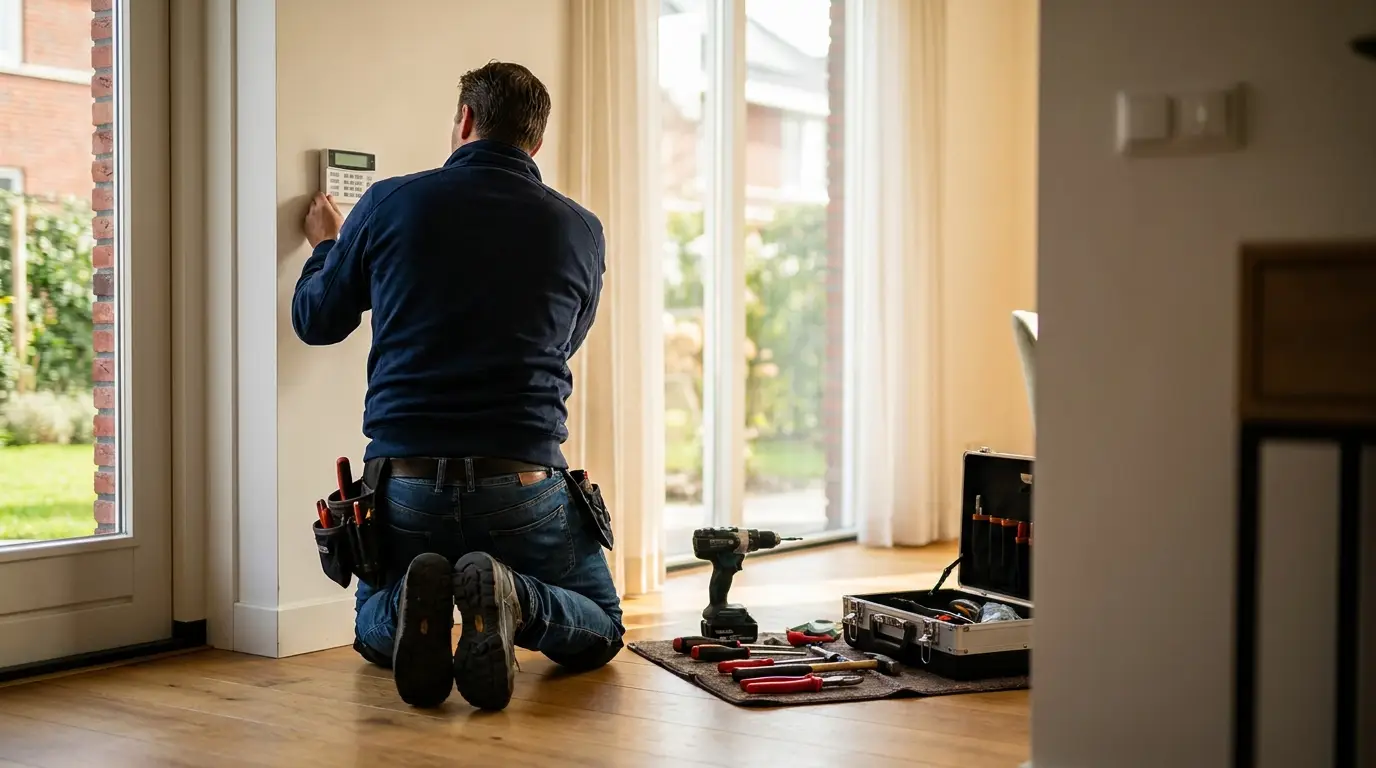
Cost of installing or replacing an alarm system: everything you need to know
An alarm system gives your home extra protection against burglary. The cost depends heavily on the type of system, the number of sensors, and whether you also take out a monitoring center subscription. Professional installation ensures every entry point is correctly connected and monitored.
In this article
- ›Average cost of installing an alarm system
- ›Price overview by type of system
- ›Material and labor costs
- ›Hire a contractor or install it yourself?
- ›How does the installation work?
- ›Money-saving tips
- ›Frequently asked questions
Need a contractor for this?
Describe your job and get quotes from contractors near you.
average price
€1,200
installation including materials
average hourly rate
€60
contractor hourly rate (€55–75/hour)
turnaround time
1–2 days
depending on scope
€ Average price by type
| Alarm system type | Range | Average price |
|---|---|---|
| Wireless starter systembasic kit with door/window sensors and siren, DIY-friendly installation | €300 – €700 | €500avg. |
| Wireless system with installation (most popular)complete kit including professional installation and commissioning | €750 – €1,500 | €1,100avg.incl. installation |
| Professional hardwired systemfixed wiring, multiple zones, suitable for BORG certification | €1,200 – €2,500 | €1,800avg.incl. installation |
| Smart home alarm systemlinked to cameras, smart locks, and a home automation platform | €1,500 – €3,500 | €2,500avg.incl. installation |
| Replacing an existing systemnew control panel, reusing sensors where possible | €500 – €1,200 | €850avg.incl. installation |
Prices are estimates including standard installation; a monitoring center subscription (€15–€40/month) isn't included. Based on Google price research.
Material and labor costs
A licensed security technician's hourly rate averages €55–€75/hour. Rates may be higher with BORG-certified companies or urgent jobs.
Hiring a contractor vs. doing it yourself
| Job | Do it yourself | Via a contractor | Savings doing it yourself |
|---|---|---|---|
| Installing a wireless starter systemPairing plug-and-play sensors via a smartphone app | DoableNo technical knowledge required; instructions are clear and step by step | €300–€700 | up to €300 |
| Installing a hardwired alarm systemRunning fixed wiring through walls and connecting zones to the control panel | Not recommendedRequires electrical knowledge; mistakes make the system unreliable | €1,200–€2,500 | No recommended savings |
| Getting BORG or KNP certificationHaving the system approved for an insurance quality mark | Not recommendedCertification is only possible through a licensed and registered security company | €800–€1,800 | No legal savings possible |
| Connecting a smart home alarm systemIntegration with cameras, smart locks, and a home automation platform | With experienceTechnical knowledge of networks and home automation protocols is required | €1,500–€3,500 | up to €500 |
| Replacing an existing alarm systemRemoving the old control panel and connecting a new one to existing sensors | With experienceKnowledge of the existing wiring and zone layout is required | €500–€1,200 | up to €250 |
A licensed security technician is essential as soon as you need BORG or KNP certification: most home contents insurers require this quality mark for a premium discount or compensation after a burglary. Professional help is also required for hardwired systems: running cables through walls and connecting multiple zones to the control panel takes electrical knowledge that the average DIYer lacks. If you don't have the right tools (multimeter, cable detector, drilling equipment), you also risk damaging pipes or wiring, or ending up with a system that doesn't work when the alarm goes off. Wireless plug-and-play systems without a certification requirement, however, are easy to install yourself: a smartphone app guides you step by step through placing sensors and setting up zones.
The full process step by step
Security scan and consultation
The security technician walks through your home and maps all risk points: front and back doors, outbuildings, skylights, and blind spots. Based on this, they determine the number of sensors and zones needed and the desired security level, including whether BORG certification or a monitoring center connection is necessary. You'll receive an itemized quote.
45–60 minutes
System choice and material availability
Based on the advice, you choose a wireless, hardwired, or smart home system. The technician checks whether the control panel, sensors, sirens, and any monitoring module are in stock and schedules the installation. For custom work or larger homes, delivery may take a few business days.
1–3 business days delivery
Mounting sensors, sirens, and control panel
Door and window sensors are mounted at strategic points. Motion detectors are placed in a corner at about 2.2 meters high for optimal coverage. The outdoor siren is mounted on the exterior wall where others can see it. With hardwired systems, cables are concealed in a cable raceway or through the cavity wall. The alarm control panel goes in a shielded location that isn't directly visible.
3–8 hours
Programming, zones, and user codes
The technician programs all zones in the control panel: which sensors are active in which mode (home, away, night). Personal user codes and any app connection are set up. With a monitored system, the communication line (IP or GPRS) is tested and registered with the monitoring center.
1–2 hours
Test run and setting the false alarm threshold
Each sensor is tested individually by walking the routes a burglar would take. The technician checks the sensitivity threshold of motion sensors to prevent false alarms caused by pets or drafts. Siren volume and switching times are adjusted to your living situation.
30–60 minutes
User instructions and handover
You'll get practical instructions on arming and disarming, resetting a false alarm, and managing user codes. All settings, zone layouts, and codes are recorded in a handover report. With BORG systems, you'll receive the certificate you can submit to your insurer.
20–30 minutes
6 smart money-saving tips
Frequently asked questions
How much does it cost to install an alarm system on average?
On average, you'll pay €750 to €1,700 for a fully installed alarm system in the Netherlands. A simple wireless system starts at around €500; a professional hardwired system linked to a monitoring center can run up to €2,500.
How long does it take to install an alarm system?
A wireless system is usually installed within 3 to 5 hours. Hardwired work takes 1 to 2 days, depending on the number of sensors and the size of the home.
Do I need a permit for an alarm system?
No, you don't need a permit. Do inform the municipality if you install an outdoor siren, so a false alarm doesn't immediately lead to a police response.
Can I install an alarm system myself?
Wireless systems are suitable for self-installation using an app. For hardwired systems or BORG/KNP certification (Dutch security certification schemes), a recognized security company is required.
What are the monthly costs of an alarm system?
Without a subscription: €0 per month (notifications to your phone only). With a monitoring center subscription (24/7 monitoring): on average €15 to €40 per month.
Does insurance cover the cost of an alarm system?
Many home contents insurers offer a discount (5–15%) for a certified alarm system, but they rarely cover the purchase itself. Ask your insurer about the exact conditions.
Related jobs
Ready to have your alarm system professionally installed?
Describe your job and receive quotes from verified security contractors near you.
Within 24 hours
response from a contractor
Verified
all contractors checked
Competitive price
compare quotes