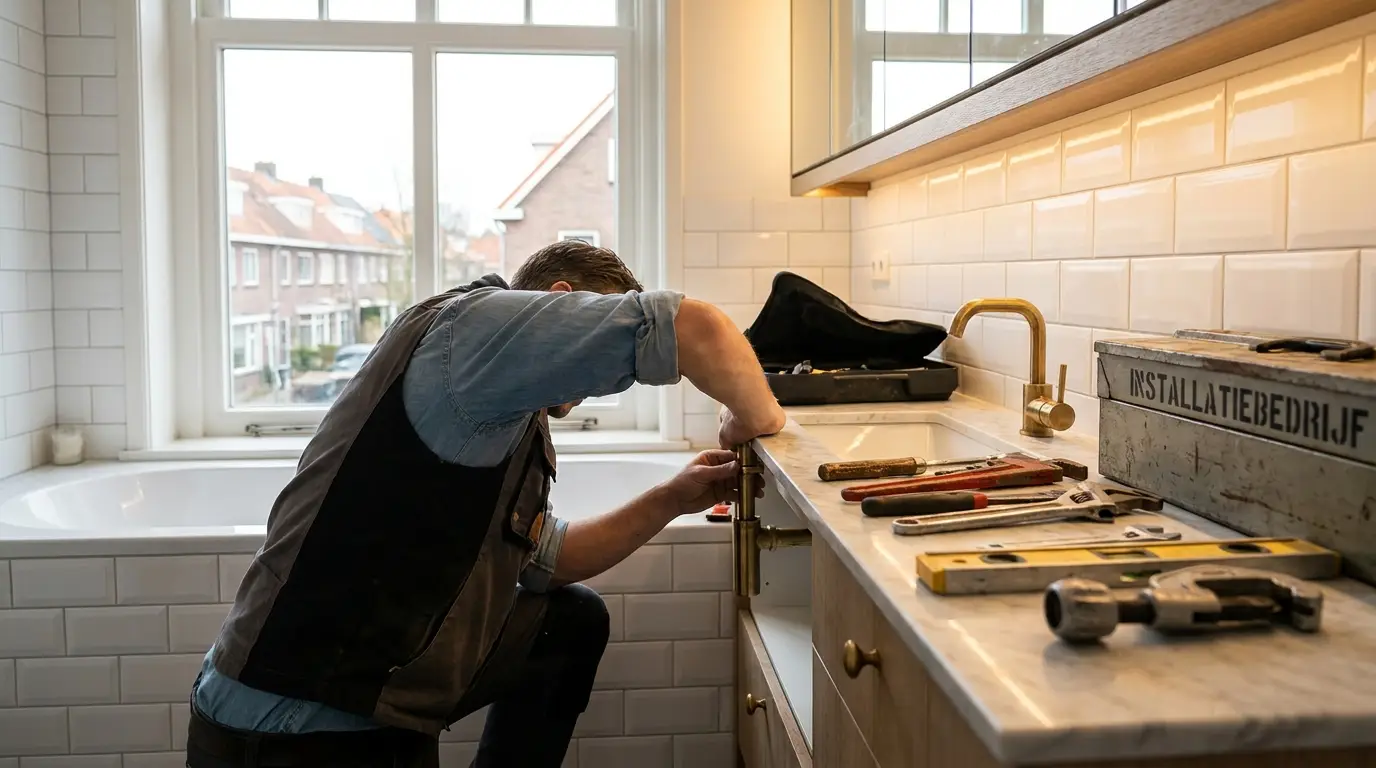
Cost of remodeling a bathroom and toilet room: everything you need to know
Remodeling a bathroom or toilet room is one of the most extensive jobs in a home. The cost depends heavily on the size of the room, your choice of materials and fixtures, and whether plumbing needs to be moved. In this overview, you'll find current prices, a breakdown of material and labor costs, and practical tips to save money wisely.
In this article
- ›Average cost of remodeling a bathroom
- ›Cost by type of renovation
- ›Material and labor costs
- ›Hiring a contractor vs. doing it yourself
- ›How does a bathroom renovation work?
- ›Money-saving tips for your bathroom remodel
- ›Frequently asked questions
Need a contractor for this?
Describe your job and get quotes from contractors near you.
average price
€9,500
complete bathroom renovation incl. fixtures
average hourly rate
€60
plumber (€50–75/hour)
turnaround time
3–7 days
depending on scope
€ Average price by type
| Type of bathroom renovation | Range | Average price |
|---|---|---|
| Refreshing a toilet roomnew toilet, tiles, lighting (same plumbing) | €1,500 – €4,000 | €2,500avg.incl. installation |
| Refreshing a bathroomnew fixtures, painting, no plumbing rerouting | €3,500 – €6,000 | €4,500avg.incl. installation |
| Complete renovation (most popular)new fixtures, tiles, plumbing, lighting, and ventilation | €6,000 – €12,000 | €9,000avg.incl. installation |
| Bathroom + toilet room togethera combined renovation offers economies of scale | €8,000 – €18,000 | €12,000avg.incl. installation |
| Luxury bathroomwalk-in shower, freestanding tub, radiant floor heating, premium tiles | €15,000 – €30,000 | €20,000avg.incl. installation |
Prices include labor costs and standard fixtures; luxury materials or rerouted plumbing increase the cost. Based on Google price research.
Material and labor costs
Plumber hourly rate averages €55–75/hour. Tile setters typically charge €45–60/hour.
Hiring a contractor vs. doing it yourself
| Job | Do it yourself | Via a contractor | Savings doing it yourself |
|---|---|---|---|
| Demolishing old fixtures and tilesRemoving and disposing of the toilet, shower, tub, and wall tiles | DoableNo special permit required; rent a mini dumpster and wear protective clothing | €300–€700 | up to €700 |
| Laying floor and wall tilesSetting new tiles, grouting, and caulking | With experienceTechnically doable for handy DIYers; a watertight finish around the shower and tub requires precision | €800–€2,000 | up to €2,000 |
| Installing water supply and drain linesConnecting the toilet, shower, tub, and sink to the plumbing system | Not recommendedRequires a licensed plumber; incorrect connections lead to leaks, water damage, and a voided warranty on fixtures | €1,200–€3,500 | No recommended savings |
| Bathroom electrical workLighting, outlets (IP rating), ventilation, and radiant floor heating | Not recommendedLegally required to be done by a licensed electrician; wet rooms fall under NEN 1010 with strict safety zones | €400–€1,200 | No legal savings possible |
| Hanging the bathroom vanity and mirrorInstalling the base cabinet, medicine cabinet, and accessories | DoableEasy to do with basic tools; use the right anchors for tiled walls | €150–€350 | up to €350 |
When remodeling a bathroom or toilet room, two parts of the job are legally reserved for licensed contractors: the water supply and drain plumbing must be done by a certified plumber, and all electrical work in wet rooms (zones 0, 1, and 2 under NEN 1010, the Dutch standard for electrical installations) must be done by a licensed electrician. Plumbing mistakes cause hidden leaks that only show up after months and can lead to tens of thousands of euros in damage; electrical mistakes pose an immediate risk to life. For these two parts, a contractor is essential, even if you do the rest yourself. What you can do yourself to save money: demolishing the old fixtures and tiles, hauling in materials and removing debris (rent a mini dumpster), setting the new tiles if you have some DIY experience, and installing furniture and accessories after the plumber has finished their work. This realistically saves you €1,000 to €3,000 on the total bill without compromising on safety or quality.
The full process step by step
Intake, design, and quote
The plumber or general contractor visits to measure the bathroom and go over your wishes: layout, choice of fixtures, tile plan, ventilation, and whether plumbing needs to be moved. You'll receive an itemized quote with clear line items for materials and labor.
1–2 hours (visit) + 1–2 weeks (quote and approval)
Ordering materials and scheduling delivery
Fixtures, tiles, the bathroom vanity, and installation materials are ordered. Standard tiles can be delivered within a week; special sizes or custom fixtures can take 3–6 weeks. The start date of the remodel is matched to the delivery.
1–4 weeks (depending on material lead time)
Demolition and clearing the room
The old fixtures (toilet, shower, tub, sink), tiles, and any partition walls are removed. Pipes are capped and debris is hauled away in a mini dumpster. If you do the demolition yourself, make sure the water supply is shut off beforehand.
day 1 (4–8 hours)
Plumbing and electrical
The plumber installs new water supply and drain lines or moves existing connection points to the desired locations. At the same time, the electrician runs the wiring for lighting, ventilation, outlets (IP55 or IP67 depending on the zone), and any electric radiant floor heating. This is the most technical part of the renovation.
days 1–3
Floor finishing and tiling
The floor is waterproofed (screed or tiling with a waterproof underlayment). Then the floor and wall tiles are set, including a watertight seal in the shower area and around the tub. After drying, the grout is applied and the contractor caulks all seams with sanitary caulk.
days 2–5
Installing and connecting fixtures
The toilet, shower (glass shower door), tub, sink, and bathroom vanity are installed and connected to the plumbing. The plumber tests all connections for leaks and pressure. Exhaust ventilation is set to the minimum capacity (15 m³/h for a toilet room, 50 m³/h for a bathroom).
days 5–6
Inspection and handover
The contractor walks through the bathroom with you: all connections, the grout, the levelness of the tiling, and the operation of ventilation and lighting are checked. Any minor issues are fixed right away. You'll receive the warranty documents for the fixtures and, if applicable, the electrical inspection certificate.
1–2 hours
6 smart money-saving tips
Frequently asked questions
How much does remodeling a bathroom and toilet room cost on average?
On average €9,500 for a complete renovation. Range: €3,500 for a simple refresh up to well over €25,000 for a luxury bathroom with premium finishes.
How long does a bathroom remodel take?
It takes 3 to 7 workdays for a standard renovation. More complex jobs involving rerouted plumbing or reconfiguring the room can take 1 to 2 weeks.
Do I need a permit for a bathroom renovation?
No, in the vast majority of cases no building permit is required. A permit is only needed for major structural changes or changes to the floor plan.
Can I remodel a bathroom myself to save money?
You can do tiling and painting yourself if you're handy, but plumbing and electrical work must be done by a licensed plumber or electrician. If you do everything yourself, you'll save 30 to 50% on labor costs.
What are the biggest cost items in a bathroom renovation?
The three biggest cost items are the fixtures themselves (toilet, shower, tub, sink), the tiles including tiling, and the plumber's labor costs. Together they typically make up 80% of the total budget.
Is it cheaper to renovate the bathroom and toilet room at the same time?
Yes, tackling both rooms at once saves on labor costs because the contractor combines their work. On average, you'll save 10 to 20% compared to two separate jobs.
Related jobs
Ready to have your bathroom or toilet room remodeled?
Describe your job and receive quotes from verified plumbers near you.
Within 24 hours
response from a contractor
Verified
all contractors checked
Competitive price
compare quotes