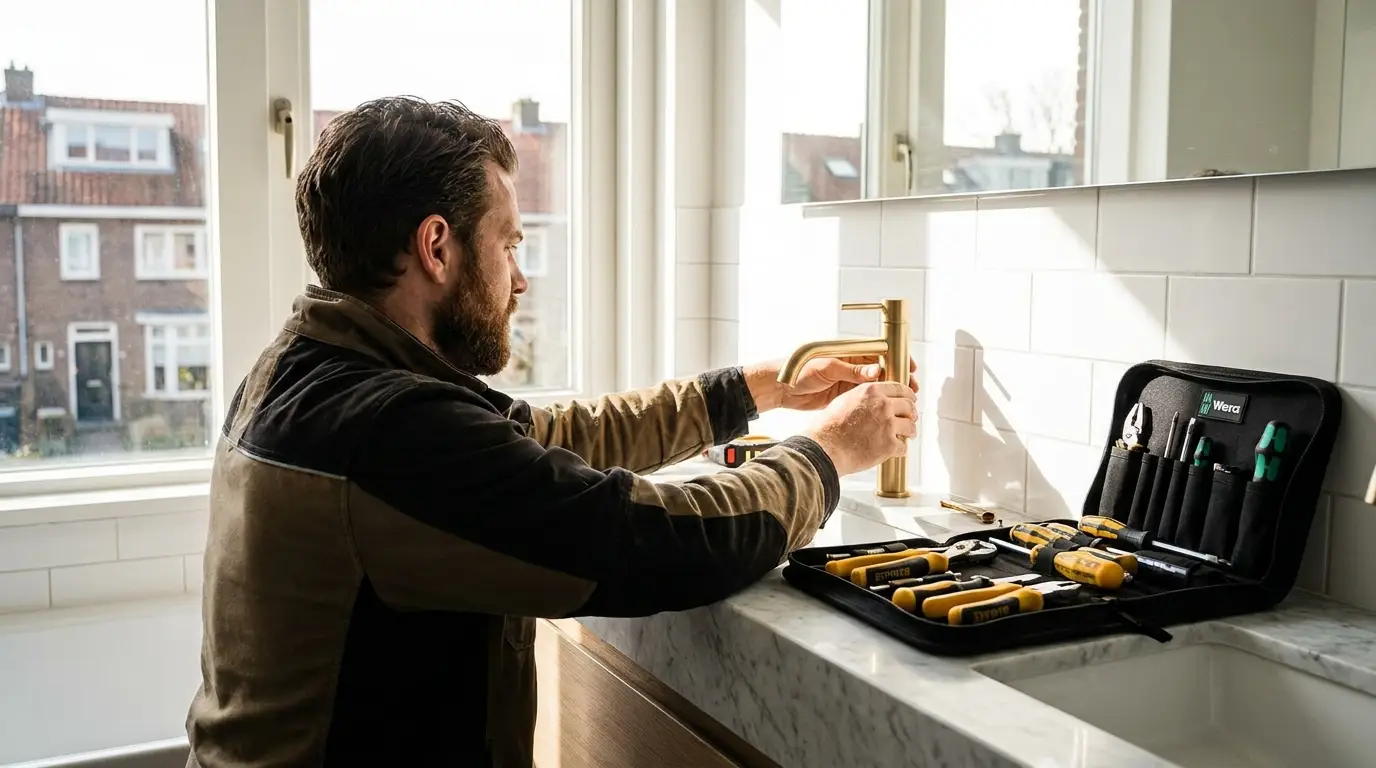
Cost of installing or renovating a bathroom: everything you need to know
Renovating a bathroom or installing a new one is one of the bigger remodeling jobs in your home. The cost depends on the size of the room, the materials you choose, and the scope of the work: from a simple facelift to a complete demolition and rebuild. In this overview, you'll find current prices, a breakdown by type of renovation, and handy tips to save money.
In this article
- ›What does a bathroom renovation cost?
- ›Prices by type of renovation
- ›Material and labor costs
- ›Hiring a contractor vs. doing it yourself
- ›Bathroom renovation step by step
- ›Money-saving tips
- ›Frequently asked questions
Need a contractor for this?
Describe your job and get quotes from contractors near you.
average price
€8,000
complete, including materials and labor
average hourly rate
€55
contractor hourly rate (€45–80/hour)
turnaround time
5–10 days
depending on scope
€ Average price by type
| Type of bathroom renovation | Range | Average price |
|---|---|---|
| Small faceliftreplacing fixtures, painting, accessories (no demolition) | €2,000 – €5,000 | €3,500avg.incl. installation |
| Partial renovationnew fixtures + tiles, existing layout kept | €5,000 – €10,000 | €7,500avg.incl. installation |
| Full renovation (most popular)complete demolition and rebuild, new layout, new plumbing | €8,000 – €18,000 | €12,000avg.incl. installation |
| Luxury renovationcustom work, premium materials, rain shower, freestanding tub | €15,000 – €35,000 | €22,000avg.incl. installation |
| Building a new bathroomnew bathroom in a room without existing plumbing | €10,000 – €25,000 | €16,000avg.incl. installation |
Prices are estimates for a standard Dutch bathroom of 4–9 m²; plumbing, permits, and custom finishes can raise the final price. Based on Google price research.
Material and labor costs
Plumber hourly rate on average €50–80/hour. Tile setter: on average €45–70/hour. Rates exclude VAT and materials.
Hiring a contractor vs. doing it yourself
| Job | Do it yourself | Via a contractor | Savings doing it yourself |
|---|---|---|---|
| Demolition and tile removalRemoving old wall tiles, floor tiles, and fixtures and hauling away debris | DoableNo specialist knowledge needed; it is heavy, dusty work: use dust barriers on doors and personal protective equipment | €0–€200 (dumpster) | up to €900 |
| Tiling walls and floorLaying, grouting, and caulking wall and floor tiles | With experienceGetting surfaces flat and tiles level takes practice; crooked lines or poor waterproofing at the shower lead to leaks behind the tile | €600–€1,500 (materials) | up to €2,500 |
| Plumbing and connecting fixturesInstalling or rerouting supply and drain lines, connecting fixtures | Not recommendedConnecting to the drinking water supply requires a certified plumber (KIWA/NEN); mistakes cause leaks, water damage, and loss of homeowners insurance coverage | €1,000–€3,000 | No legal savings possible |
| Bathroom electrical workConnecting lighting, radiant floor heating, and mechanical ventilation | Not recommendedBathrooms fall under NEN 1010 safety zones; electrical work may only be connected by a licensed electrician: violations void your home contents insurance | €400–€1,200 | No legal savings possible |
| Caulking and finishingApplying silicone caulk around the bathtub, shower, sink, and baseboard | DoableEasy to do neatly with a caulk gun and painter's tape; poor caulking increases the risk of mold, so careful work pays off | €20–€60 (materials) | up to €300 |
In a bathroom renovation, plumbing and electrical work are the two areas where doing it yourself is legally not allowed or carries serious risks. Connections to the drinking water supply must comply with NEN 3215 (the Dutch standard for drinking water installations) and may only be made by a KIWA-certified plumber (KIWA is a Dutch certification body). Electrical work in the bathroom falls under the strict safety zones of NEN 1010 (the Dutch standard for electrical installations): zone 0 (in the water), zone 1 (directly above the bathtub or shower), and zone 2 (the surrounding area). In these zones, strict requirements apply to the type of light fixture (IPX rating) and the wiring, and installation by a licensed electrician is mandatory. What you can tackle yourself: removing old tiles and fixtures (demolition), laying new floor and wall tiles if you have some experience, and applying caulk and grout after tiling. Doing the demolition yourself quickly saves €500 to €900. For tiling: invest in good waterproofing under the shower before you start. That's the most critical step, and the one people doing it themselves often skip.
The full process step by step
Design and requesting quotes
Decide on the layout, the fixtures (shower or bathtub, toilet, sink), and the tiles. Make a drawing of the room with dimensions and request at least three quotes from licensed tile setters, plumbers, and bathroom contractors. Don't just compare the total price, but also what's included in the quote: some contractors charge separately for demolition and debris removal.
1–2 weeks
Ordering materials and tracking delivery times
Order tiles, fixtures, and faucets well before the work starts. Popular tile collections and designer fixtures sometimes have delivery times of six to eight weeks. Always keep 10 to 15% extra tiles for cutting waste and future repairs. On delivery, check right away for damage and matching batch numbers.
2–8 weeks
Demolition and preparing the room
Old fixtures are disconnected and removed. Wall tiles and floor tiles are torn out. The contractor then inspects the condition of the subfloor, the walls, and the existing plumbing. Uneven floors are leveled up or ground down; outdated pipes are replaced before the room is closed up.
1–2 days
Installing plumbing and electrical
The plumber installs new supply and drain lines at the final locations of the shower, toilet, and sink. The electrician installs bathroom lighting in line with the NEN 1010 safety zones, connects the radiant floor heating, and sets up the mechanical ventilation. Then a waterproof membrane or tile adhesive sealing layer is applied to all wet areas.
1–3 days
Tiling walls and floor
The tile setter lays the floor tiles first and then the wall tiles, working from the most visible corner. Once the tile adhesive has cured, the grout is applied. As the final step, waterproof silicone caulk is applied to the finishing edges (shower, bathtub, vanity, baseboard).
2–4 days
Installing and connecting fixtures
The shower, bathtub, toilet, and sink are permanently installed and connected to the connection points the plumber prepared. Faucets, the shower set, mirrors, the towel radiator, and accessories are mounted. The plumber pressure-tests all connections and checks for leaks.
1 day
Handover and final inspection
The contractor walks through the bathroom with you using a punch list: operation of all faucets and drains, condition of the grout and caulk, tile alignment, and operation of the lighting and ventilation. Any punch list items are fixed right away or recorded in writing with a deadline.
1–2 hours
6 smart money-saving tips
Frequently asked questions
What does a bathroom renovation cost on average?
On average, you'll pay around €8,000 for a full bathroom renovation in the Netherlands. The range is wide: a simple facelift starts at €2,000, while a complete luxury remodel with premium materials can run up to €35,000 or more.
How long does a bathroom renovation take?
A partial renovation takes 5 to 7 workdays on average. A complete demolition and rebuild takes 10 to 14 workdays. Keep material delivery times in mind: in busy periods, that can be 6 to 12 weeks.
Do I need a permit for a bathroom renovation?
Most bathroom renovations (new tiles, replacing fixtures, a new layout) don't require a permit. If you want to remove a load-bearing wall or move the bathroom to another room, you'll need a building permit. Check with your municipality.
Can I do part of the bathroom renovation myself to save money?
Yes, you can do the demolition and the removal of old tiles yourself, which quickly saves €500 to €1,000. Tiling is also doable yourself if you're handy. Plumbing and electrical work must be done by licensed contractors because of laws and regulations.
What are average hourly rates for a bathroom renovation?
A tile setter charges €45 to €70 per hour on average. A plumber costs €50 to €80 per hour. If the general contractor charges a combined price for the whole job, the effective rate is usually between €50 and €75 per hour, including coordination.
How many m² of tiles do I need for an average bathroom?
An average Dutch bathroom is 4 to 9 m². For wall and floor tiles combined, you'll quickly need 25 to 50 m², depending on the ceiling and wall height. Always add 10 to 15% for waste when ordering.
Related jobs
Ready to have your bathroom renovated?
Describe your job and get quotes from verified bathroom contractors and tile setters near you.
Within 24 hours
response from a contractor
Verified
all contractors checked
Competitive price
compare quotes