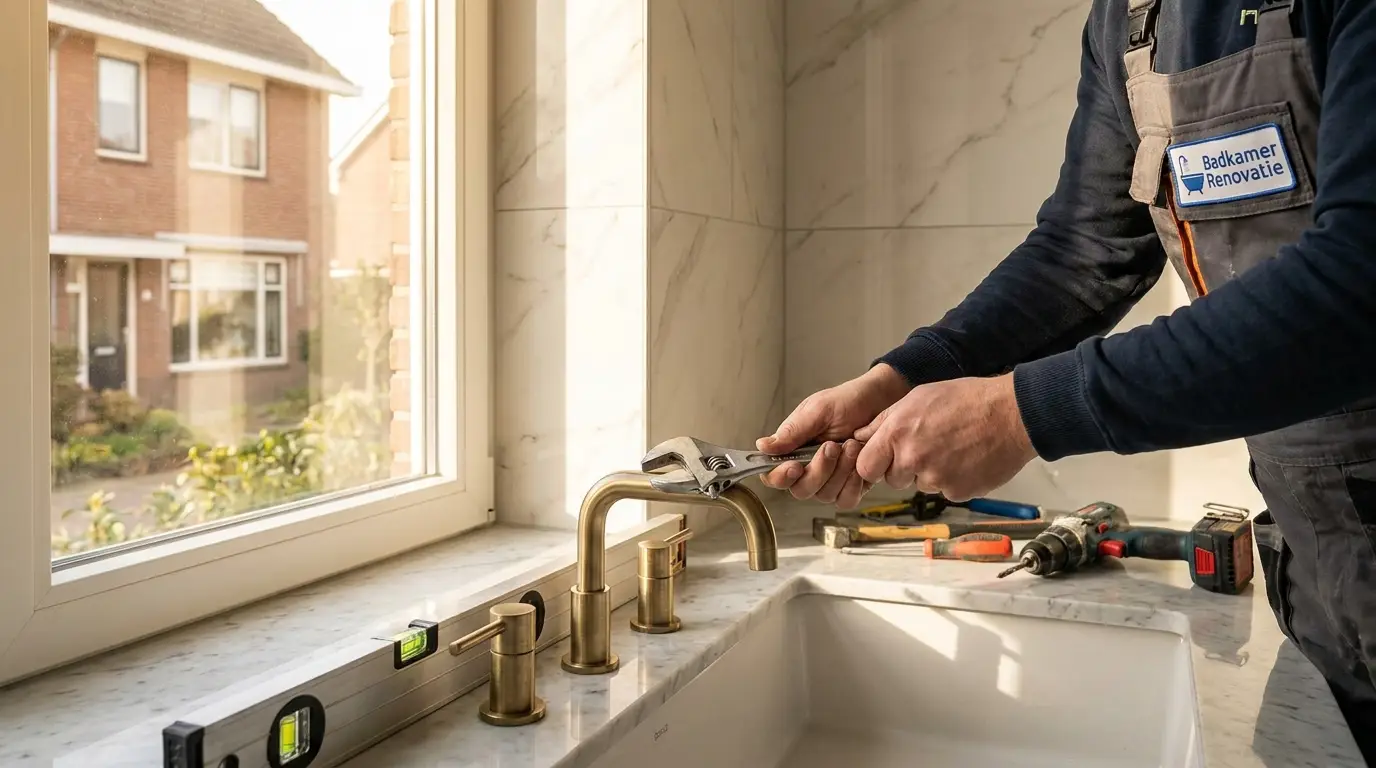
Cost of a complete bathroom renovation: everything you need to know
A complete bathroom renovation is one of the most popular remodels in Dutch homes. The total cost depends on the size of the bathroom, your choice of fixtures and tile, and the amount of plumbing and electrical work. On average, you'll pay between €7,500 and €17,000 for a renovated bathroom of about 9 m².
In this article
- ›What does a complete bathroom renovation cost?
- ›Prices by type of renovation
- ›Material and labor costs
- ›Hiring a contractor vs. doing it yourself
- ›How does a bathroom renovation work?
- ›Money-saving tips
- ›Frequently asked questions
Need a contractor for this?
Describe your job and get quotes from contractors near you.
average price
€11,500
complete: demolition, tile, fixtures, installation
average hourly rate
€55
contractor hourly rate (€45–65/hour)
turnaround time
5–10 days
depending on scope and materials
€ Average price by type
| Bathroom renovation type | Range | Average price |
|---|---|---|
| Basic renovationnew tile, replaced fixtures, same pipe layout | €3,500 – €6,000 | €4,750avg.incl. installation |
| Comfort renovation (most popular)fully renewed: tile, fixtures, lighting, and minor pipe changes | €7,000 – €13,000 | €10,000avg.incl. installation |
| Extensive renovationpipe relocation, walk-in shower, alcove shower, or bathtub included | €13,000 – €18,000 | €15,500avg.incl. installation |
| Luxury renovationfull gut and rebuild, premium fixtures and tile, radiant floor heating | €18,000 – €25,000 | €21,500avg.incl. installation |
Prices are estimates for a bathroom of about 9 m²; different dimensions, pipe relocation, or premium materials can significantly affect the cost. Based on Google price research.
Material and labor costs
Plumber hourly rate on average €50–65/hour. Tile setter hourly rate on average €45–60/hour. Labor makes up 40–60% of the total renovation cost.
Hiring a contractor vs. doing it yourself
| Job | Do it yourself | Via a contractor | Savings doing it yourself |
|---|---|---|---|
| Demolition of existing fixtures and tileremoving toilet, shower or bathtub, sink, and wall and floor tile, including debris removal | Doableheavy but technically simple; check for asbestos beforehand in homes built before 1994 | €500–€1,200 | up to €700 |
| Floor and wall tile workinstalling wall and floor tile, grouting, and applying a waterproofing layer | With experiencerequires working level, cutting tools, and knowledge of hydrofix; mistakes cause long-term moisture problems | €1,200–€2,500 | up to €1,300 |
| Plumbing and pipesconnecting and possibly relocating supply and drain lines for shower, bathtub, toilet, and sink | Not recommendedmistakes cause leaks behind tile; damage only shows after months; insurance often doesn't cover DIY damage | €800–€2,000 | No recommended savings |
| Electrical and mechanical ventilationbathroom lighting, outlets, and ventilation system per wet-room standards | Not recommendedwet rooms fall under NEN 1010 safety zone requirements; non-certified installations are uninsured and dangerous | €400–€1,200 | No legal savings possible |
| Silicone caulk and finishingsilicone caulk around shower, bathtub, and sink, checking grout, and installing baseboards | Doablewith a good caulking gun, masking tape, and patience, this gives a professional result | €150–€350 | up to €200 |
In a complete bathroom renovation, plumbing and electrical work are the parts where a licensed contractor is essential. Plumbing and installation mistakes behind finished tile only show up months later as moisture damage or mold: repair costs far exceed the 'savings.' Electrical work in bathrooms falls under the NEN 1010 (the Dutch electrical installation standard) safety zone requirements: installations in zones 1 and 2 (within 60 cm of the shower edge or bathtub) may only be done by a licensed electrician. Non-certified work voids your homeowners insurance. What you can do yourself to save costs: demolishing old fixtures and tile is technically simple and only takes time and muscle (savings up to €700). Applying silicone caulk around the shower and sink is also easy to do yourself. Tile work is doable if you have experience working level and own cutting tools; never skip the waterproofing layer (hydrofix or similar) in wet zones.
The full process step by step
Site visit and detailed quote
The contractor or plumber comes to measure the bathroom and discusses the desired layout, fixture choices, type of tile, and whether any pipes need to be relocated. You receive an itemized quote with separate line items for demolition, plumbing, tile work, and installation, so you can compare items with other quotes.
1–3 days
Demolition and subfloor inspection
Existing fixtures and wall and floor tile are demolished and hauled away. The exposed walls and floor are immediately inspected for moisture damage, mold, or (in older homes) asbestos. Any repairs, such as drying out moisture damage or replacing rotten floor joists, are handled in consultation with you before further work begins.
day 1–2
Rough-in: plumbing and electrical
The plumber installs new supply and drain lines or adapts the existing pipes to the new layout. At the same time, the electrician installs bathroom lighting, outlets, and mechanical ventilation in line with the NEN 1010 safety zones for wet rooms. Pipes are measured and photographed before the tile goes over them.
day 2–4
Waterproofing layer and tile work
In wet zones (the shower wall, the bathtub, and the floor), the tile setter first applies a waterproofing layer (hydrofix or similar). Then the floor and wall tile are laid and grouted. The tile work dries for at least 24–48 hours before the next phase begins.
day 3–6
Installing and connecting fixtures
The toilet, shower pan or walk-in shower, bathtub, sink, and mixing faucets are mounted in their final position and connected by the plumber. Silicone caulk is applied in all corners and around the fixtures. All connections are checked for leaks right away.
day 6–8
Ventilation, lighting, and finishing
The electrician makes the final connections for the lighting, ventilation unit, and any radiant floor heating. Baseboards, a mirror cabinet, or accessories are mounted. Small touch-ups (a missing grout line, a crooked mirror) are finished in this phase.
day 7–9
Handover and inspection
The contractor walks through the bathroom with you: all water connections are pressurized and checked for leaks, ventilation and lighting are tested, and the tile and grout work are inspected. You receive a warranty document for the work performed.
day 9–10
6 smart money-saving tips
Frequently asked questions
What does a complete bathroom renovation cost on average?
On average €11,500 for a bathroom of about 9 m². The range is €3,500 (basic renovation) to €25,000 (luxury finish). The main price factors are the size of the bathroom, your choice of fixtures and tile, and the amount of plumbing and tile work.
How long does a complete bathroom renovation take?
On average 5 to 10 workdays. A simple renovation where only the fixtures and tile are replaced takes 3–5 days. If pipes are rerouted or the room is fully gutted, plan on 8–14 days.
Do I need a permit for a bathroom renovation?
In most cases, no. A standard renovation within the existing walls doesn't require a permit. Want to tear down a wall or enlarge the bathroom? Then you may need a building permit. For a historic building, always check with the municipality first.
Can I renovate a bathroom (partly) myself?
Painting, replacing silicone caulk, and installing accessories are things you can easily do yourself. Tile work, plumbing, and electrical work are better left to a contractor: mistakes are costly and can lead to leaks or moisture damage. Save on materials, not on the workmanship.
What are the biggest cost items in a bathroom renovation?
Plumbing and tile work together make up 40–60% of the total cost. Fixtures (shower set, toilet, sink) are the largest material item. Premium tile or a freestanding bathtub can quickly raise the cost by €2,000–€5,000.
How much extra budget should I set aside for unexpected costs?
Keep 10–15% of the total budget in reserve. Common extra costs: hidden moisture damage behind tile, outdated plumbing that needs replacing, or asbestos in the floors of homes built before 1994.
Related jobs
Ready to have your bathroom completely renovated?
Describe your job and receive quotes from verified plumbers and contractors near you.
Within 24 hours
response from a contractor
Verified
all contractors checked
Competitive price
compare quotes