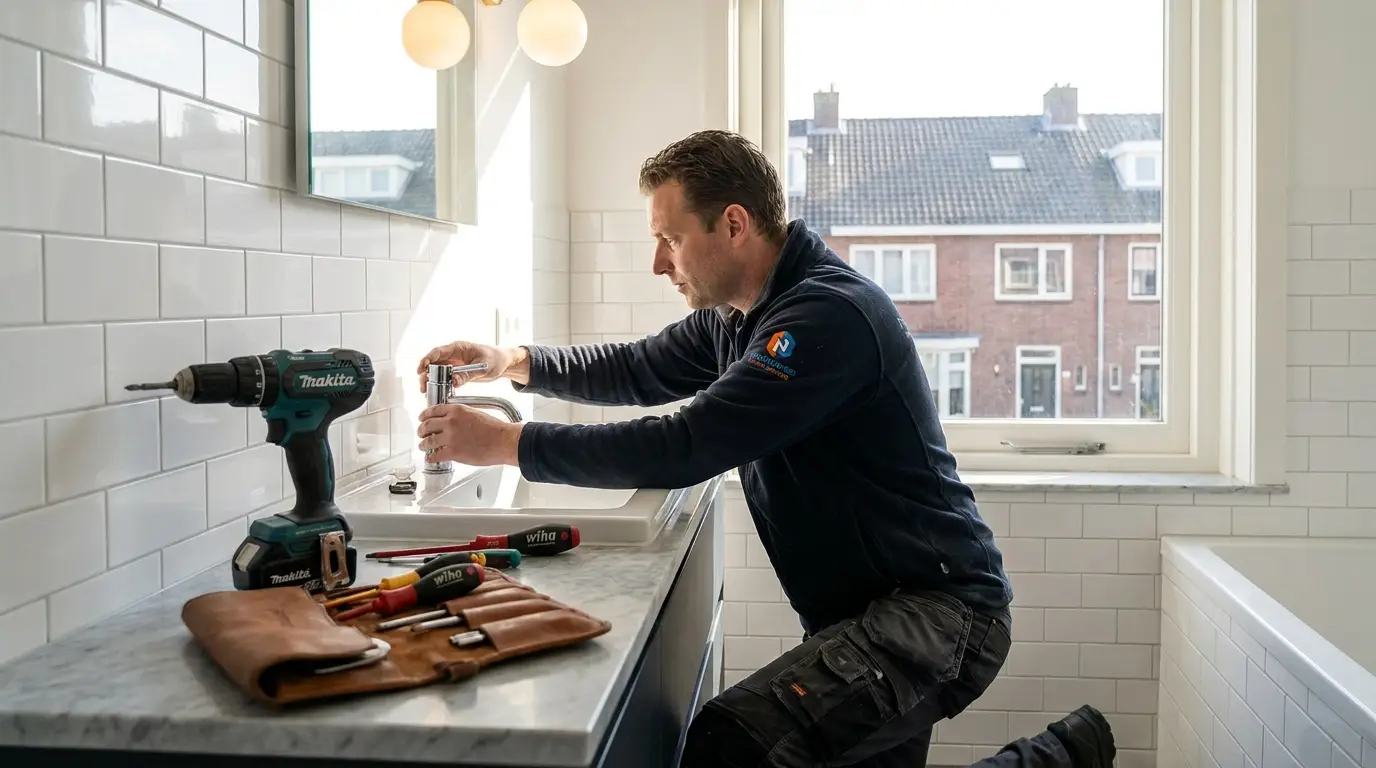
Cost of remodeling or renovating a bathroom: everything you need to know
Remodeling or renovating a bathroom is one of the most popular renovations in the Netherlands. The price depends heavily on the size of the room, the materials you choose, and whether plumbing needs to be rerouted. On average, people who own a home in the Netherlands pay between €5,000 and €25,000 for a complete bathroom renovation.
In this article
- ›What does a bathroom remodel cost?
- ›Price by type of renovation
- ›Material and labor costs
- ›Hiring a contractor vs. doing it yourself
- ›How does a bathroom renovation work?
- ›Money-saving tips
- ›Frequently asked questions
Need a contractor for this?
Describe your job and get quotes from contractors near you.
average price
€9,500
completely new bathroom including tiles and fixtures
average hourly rate
€55
contractor hourly rate (€45–70/hour)
turnaround time
5–10 days
depending on scope and plumbing
€ Average price by type
| Bathroom renovation type | Range | Average price |
|---|---|---|
| Bathroom faceliftReplace fixtures, painting, small updates (no tiling) | €1,500 – €4,000 | €2,500avg.incl. installation |
| Small bathroom renovationBathroom up to 5 m², new tiles, shower or bathtub, toilet | €4,000 – €8,000 | €6,000avg.incl. installation |
| Mid-size bathroom remodel (most popular)Bathroom of 5–8 m², completely new incl. tiles, fixtures, and installation | €7,500 – €13,000 | €9,500avg.incl. installation |
| Large bathroom remodelBathroom larger than 8 m², rerouting plumbing, radiant floor heating | €12,000 – €20,000 | €15,000avg.incl. installation |
| Complete luxury bathroomWalk-in shower, freestanding tub, custom furniture, home automation | €18,000 – €35,000 | €24,000avg.incl. installation |
Prices include VAT (9% on labor for homes older than 2 years) and apply to an average Dutch home; rerouting plumbing or structural changes increase the price. Based on Google price research.
Material and labor costs
Contractor/tile setter hourly rate averages €50–70/hour. Plumber averages €60–80/hour; electrician averages €55–75/hour.
Hiring a contractor vs. doing it yourself
| Job | Do it yourself | Via a contractor | Savings doing it yourself |
|---|---|---|---|
| DemolitionChisel off old tiles, remove and dispose of fixtures | DoablePerfectly doable with a dust mask, safety glasses, and hearing protection; no special certification required | €200–€600 | up to €600 |
| TilingSet wall and floor tiles, grout, and caulk watertight | With experienceCrooked or hollow tiles are visible and expensive to fix; properly leveling the subfloor is crucial | €1,800–€3,600 | up to €3,600 |
| PlumbingReroute water connections, connect shower, toilet, and sink | Not recommendedHidden leaks lead to water damage and mold; insurers won't cover damage without a certified plumber | - | No recommended savings |
| Electrical work in the bathroomConnect recessed lights, radiant floor heating, bathroom mirror, and breaker panel | Not recommendedDamp rooms fall under NEN 1010; electrical work must be done and tested by a certified electrician | - | No legal savings possible |
| Painting and finishingPaint the ceiling, apply caulk, hang accessories | DoableGood preparation (degreasing, sanding) and bathroom-grade paint are key to a durable result | €150–€400 | up to €400 |
In a bathroom renovation, plumbing and electrical work are the two parts you almost always leave to certified contractors. Plumbing that isn't connected watertight causes hidden leaks in floors and walls: damage that only becomes visible weeks later and that insurers often won't cover if it turns out no licensed plumber was involved. Electrical work in wet rooms falls under the Dutch standard NEN 1010 (the Dutch electrical installation code) and may only be done and tested by a certified electrician. What you can do yourself to save 10–25% on the total price: the demolition (chiseling off old tiles and removing fixtures), hauling away demolition waste, and the finishing work such as painting and mounting accessories. If you have proven tiling experience, you can also partly replace the tile setter, but expect careful preparation of the subfloor and extra material for repairs.
The full process step by step
Design and quote request
Decide on the layout you want for your bathroom: where will the shower, toilet, and sink go? Make a mood board with the tiles and fixtures you want, and based on that, request at least three quotes from certified bathroom contractors. Note: a good quote breaks down labor costs (plumber, tile setter, electrician), materials, and additional costs such as demolition waste removal.
1–2 weeks
Order materials and set the schedule
Once the quote is signed, you order the tiles, fixtures, and bathroom vanity. Delivery times range from 1 to 4 weeks: keep this in mind when scheduling the contractor. Make sure everything is available on the start date so the contractor doesn't have to wait unnecessarily.
1–4 weeks
Demolition
All old tiles are removed, the fixtures are taken out, and the debris is cleared. Any damaged screed or mold spots in the walls are now exposed and repaired before new layers are applied. This is the dustiest phase: protect adjoining rooms with plastic sheeting and tape.
1–2 days
Plumber and electrician
Pipes are rerouted or replaced to the new connection points for the shower, toilet, and sink. The electrician installs the circuit for bathroom lighting, recessed lights, and any radiant floor heating. In this phase, the screed is also prepared for tiling.
1–3 days
Tiling
The tile setter starts with the floor tiles and then finishes the walls. Next, the grout is applied and all seams are caulked watertight: especially around the shower, bathtub, and sink, the caulk joints are crucial to prevent moisture from getting in.
2–4 days
Final fixture connection and testing
The plumber makes the final connections for the shower, toilet, and sink and tests all connections for leaks. The electrician commissions and tests the recessed lights and radiant floor heating. Only when everything is dry and leak-free does the finishing work begin.
1 day
Finishing and handover
The ceiling is painted, accessories such as towel racks and toilet paper holders are mounted, and the bathroom is cleaned thoroughly. Go through the handover point by point with the contractor and write down any repairs needed. Schedule a follow-up check after four to six weeks to catch early moisture problems in time.
1 day
6 smart money-saving tips
Frequently asked questions
What does a bathroom remodel cost on average?
On average €9,500 for a complete remodel of a mid-size bathroom of 5–8 m². The range runs from €1,500 for a facelift to €35,000 for a luxury finish with custom work.
How long does a bathroom remodel take?
The timeline is 5 to 10 workdays for a standard renovation. If plumbing is rerouted or structural changes are needed, it can take 2–3 weeks. Also plan for the delivery time of tiles and fixtures (1–4 weeks).
Do I need a permit to remodel my bathroom?
No, in almost all cases you don't need a building permit. Only if you're removing a load-bearing wall or installing a roof window should you check with your municipality.
Can I remodel a bathroom myself?
You can do the demolition and painting yourself. Tiling, plumbing, and electrical work are better left to contractors. Mistakes in plumbing or electrical work are costly and can cause water damage or dangerous situations.
What's cheaper: a new bathroom or a renovation?
Renovating is almost always cheaper than a completely new bathroom. By reusing existing plumbing, you save €2,000–€5,000. Only if the pipes are worn out or the layout changes substantially is a full remodel more cost-effective in the long run.
When do I get a VAT discount on a bathroom renovation?
For homes older than 2 years, 9% VAT applies to labor costs (instead of 21%). This applies to the contractor's work, not to materials. Always request an itemized quote so VAT is split correctly.
Related jobs
Ready to have your bathroom remodeled?
Describe your job and receive quotes from verified bathroom contractors near you.
Within 24 hours
response from a contractor
Verified
all contractors checked
Competitive price
compare quotes