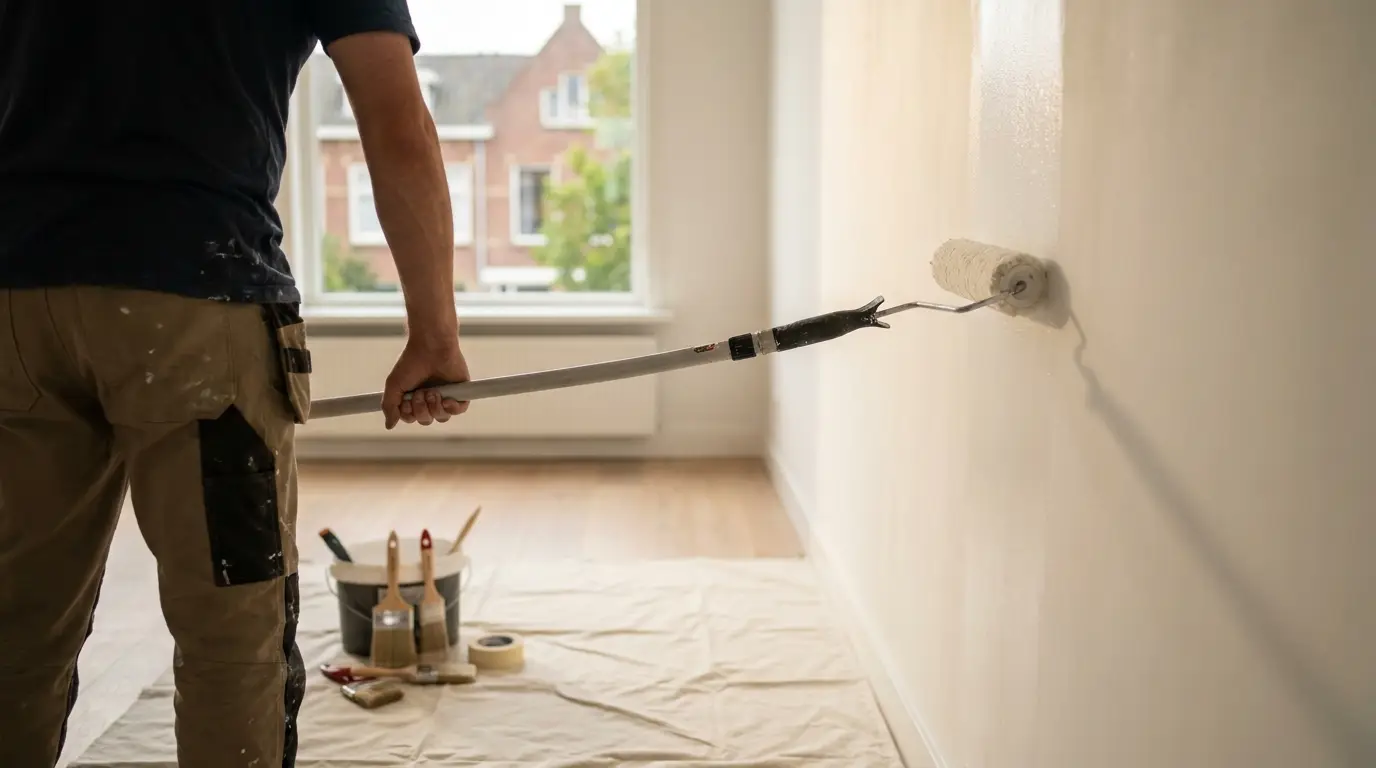
Cost of interior painting: everything you need to know
Interior painting instantly gives your home a fresh look. The cost depends on the number of m², the condition of the walls, the type of paint, and the number of coats. A skilled interior painter charges an average of €25 to €35 per m², including materials and labor.
In this article
- ›What does interior painting cost per m²?
- ›Prices per room
- ›Material and labor costs
- ›Hire a contractor or do it yourself?
- ›How does interior painting work step by step?
- ›Smart money-saving tips
- ›Frequently asked questions
Need a contractor for this?
Describe your job and get quotes from contractors near you.
average price
€1,200
average price living room (walls + ceiling)
average hourly rate
€38
contractor hourly rate (€35–45/hour)
turnaround time
1–4 days
depending on scope and preparation
€ Average price by type
| Type of room or job | Range | Average price |
|---|---|---|
| Painting a bedroomwalls + ceiling, about 12–16 m2 | €300 – €650 | €475avg.incl. labor |
| Painting a living room (most popular)walls + ceiling, about 25–35 m2 | €700 – €1,500 | €1,100avg.incl. labor |
| Whole-house interior paintingall rooms, including hallways and entry | €2,000 – €5,000 | €3,200avg.incl. labor |
| Painting frames and doorsinterior doors + frames, per piece | €60 – €150 | €100avg.incl. labor |
| Painting a ceiling (separately)ceiling only, per room | €150 – €450 | €280avg.incl. labor |
Prices include VAT and standard paint materials; extra coats, primer, or a poor surface increase the cost. Based on Google price research.
Material and labor costs
Painter's hourly rate averages €35–45/hour including VAT. Self-employed painters are often at the lower end; specialized companies at the higher end.
Hiring a contractor vs. doing it yourself
| Job | Do it yourself | Via a contractor | Savings doing it yourself |
|---|---|---|---|
| Touching up a wallone wall, same color as the existing wall | DoableFlat surface, no tricky corners or frames; good masking tape is enough | €30–80 | up to €150 |
| Painting a bedroomwalls + ceiling, 12–16 m², light color | With experienceA crisp ceiling-wall line and corners take practice; you'll need a rolling scaffold for the ceiling | €80–150 materials | up to €400 |
| Color change in the living roomdark or bright color over an existing light wall | With experienceDark colors require primer and at least three coats for even coverage; don't underestimate the time involved | €150–300 materials | up to €800 |
| Enameling frames and doorssmooth enamel on wood, crisp finish | Not recommendedBrush and roller marks stay visible when you do it yourself; sanding, degreasing, and the right type of enamel require expertise | €20–50 materials per piece | Quality gap too large |
| Painting a whole house interiorall rooms including entry, landing, and hallways | Not recommendedWeeks of work for a do-it-yourselfer; uneven quality from room to room and no warranty on the end result | €400–800 materials | Contractor delivers consistent quality |
For simply touching up a wall or painting a bedroom in a light color, a do-it-yourselfer can certainly get an acceptable result, as long as you prepare the surface well, mask carefully, and apply a second coat. But if you're dealing with dark colors over light, porous drywall, existing paint damage, or wooden frames that need enameling, a skilled painter is essential. An interior painter works two to three times faster, has the right ladders and scaffolding, knows the correct sanding methods, and knows which type of paint adheres to which surface. Certifications aren't legally required for interior painting, but always ask for references or previous work: the quality of the enamel on frames and doors is the mark of a real contractor.
The full process step by step
Assessment and quote
The painter visits your home, measures the surfaces to be painted, and assesses the condition of the surface. They note any cracks, moisture stains, or old paint layers that need extra preparation and draw up an itemized quote with labor, materials, and the number of coats.
30–60 min
Preparation: protecting and masking
Furniture is moved to the center or out of the room, floors are covered with protective sheeting and drop cloths, and all edges (baseboards, frames, outlets) are carefully masked with painter's tape. Careful masking largely determines how crisp the end result is.
1–2 hours
Repairing the surface
Cracks are opened up, filled with filler, and sanded smooth. Loose paint layers are removed. On new drywall or poor surfaces, a primer or sealer is applied so the top coats adhere well and absorb evenly.
1–3 hours + drying time
Applying the first coat
The painter always starts with the ceiling, then the walls, and finally the frames and doors. The first coat is applied with a roller and brush, cutting in the corners and edges with a brush for a crisp line. Once dry, the coat is lightly sanded.
2–5 hours
Second (and possibly third) coat
The final coat provides the definitive color, sheen, and coverage. With white wall paint, two coats are usually enough; with dark colors or new drywall, a third coat is needed for an even, fully covered result. Between each coat, the drying time specified by the paint manufacturer applies.
2–4 hours
Handover and final inspection
All painter's tape and protective sheeting are removed, and the paintwork is checked for unevenness, drips, or edges that aren't crisp. Small touch-ups are fixed right away. The room is swept clean and handed over, ready for use once the paint has fully cured.
30–60 min
6 smart money-saving tips
Frequently asked questions
What does interior painting cost on average?
On average €25 to €35 per m2, including materials and labor. A living room costs about €1,100 on average, a bedroom about €475. Having a whole house painted can easily cost €2,000 to €5,000.
How long does interior painting take?
A bedroom is usually done in 1 day. A living room takes 1 to 2 days. For a whole house, expect 3 to 5 workdays, depending on the drying time between coats and the condition of the surface.
Do I need a permit for interior painting?
No, interior painting doesn't require a permit. It's entirely interior work that involves no structural changes to the home.
Can I do interior painting myself?
Yes, for small jobs like touching up a wall, painting it yourself is doable. For larger surfaces, a clean, crisp finish around frames and ceilings, or a poor surface, a contractor is recommended. A painter works considerably faster and delivers better final quality.
What determines the price of interior painting?
The main factors are the number of m2, the condition of the surface (cracks, moisture, old paint layers), the type of paint (budget or premium), the number of coats, and whether frames and doors are included. Poor preparation increases labor hours and therefore the price.
What is an interior painter's hourly rate?
A skilled interior painter charges an average of €35 to €45 per hour including VAT. Self-employed painters are often at the lower end, specialized companies at the higher end.
Related jobs
Ready to have your interior painting done professionally?
Describe your job and receive quotes from verified painters near you.
Within 24 hours
response from a contractor
Verified
all contractors checked
Competitive price
compare quotes