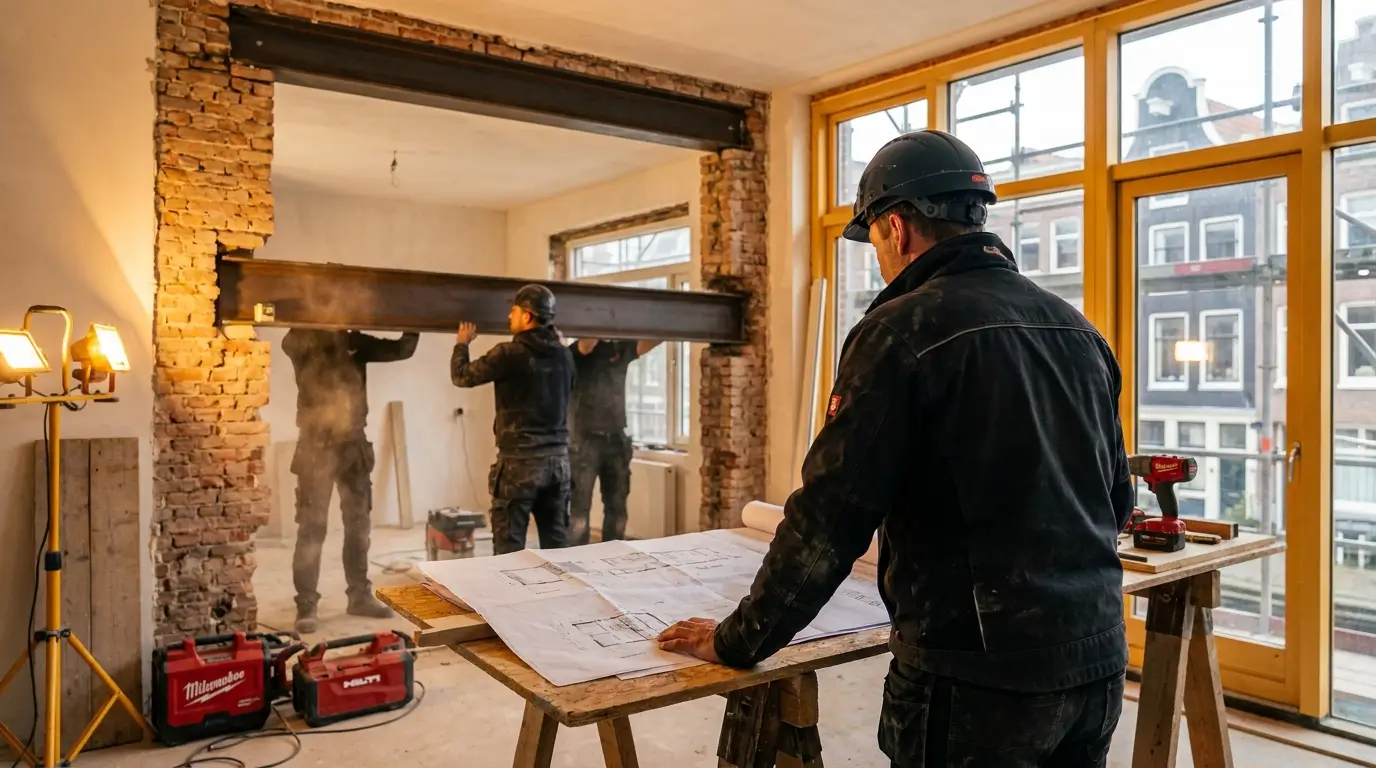
Cost of installing or replacing a floor joist: everything you need to know
Installing or replacing a floor joist is common work when renovating older homes. The cost depends on the material (wood or steel), the span, and the number of joists that need replacing. A contractor assesses on site which type of joist is needed and how the structure should be supported.
In this article
- ›What does installing or replacing a joist cost?
- ›Prices by type of joist
- ›Material and labor costs
- ›Hire a contractor or do it yourself?
- ›How does the work go, step by step?
- ›Money-saving tips for installing or replacing a joist
- ›Frequently asked questions
Need a contractor for this?
Describe your job and get quotes from contractors near you.
average price
€450
per joist, including material and labor
average hourly rate
€55
contractor hourly rate (€45–65/hour)
turnaround time
1–3 days
depending on number of joists and situation
€ Average price by type
| Type of joist or work | Range | Average price |
|---|---|---|
| Replacing a wood joistPressure-treated pine, 175×75 mm, short span | €200 – €400 | €300avg.incl. installation |
| Installing a wood joist (most popular)New lumber including installation, shoring, and floor repair | €350 – €700 | €500avg.incl. installation |
| Installing a steel joistHEA/IPE steel beam, longer span or load-bearing wall | €600 – €1,200 | €850avg.incl. installation |
| Replacing multiple joists at onceSavings on larger quantities, price per joist drops | €150 – €350 | €250avg.incl. installation |
| Joist replacement including floor repairComplete package: joist, floorboards, and finish repair | €800 – €2,000 | €1,300avg.incl. installation |
Prices include VAT and apply to an average home in the Netherlands; with complex load-bearing structures or shoring, costs may be higher. Based on Google price research.
Material and labor costs
General contractor/carpenter hourly rate averages €50–70/hour. Steel joists sometimes also require a structural engineer (€75–150/hour) for calculations and permit documentation.
Hiring a contractor vs. doing it yourself
| Job | Do it yourself | Via a contractor | Savings doing it yourself |
|---|---|---|---|
| Removing and disposing of a wood joistDismantling a damaged wood floor joist, cutting it loose from the wall plate, and hauling it away | With experienceOnly doable if you first install solid shoring; without proper support, the floor or the ceiling below will sag | €80–150 | up to €120 |
| Installing a wood joist in a non-load-bearing floorCutting a new wood joist to size, notching it, and fastening it to wall plates | With experienceRequires precise custom work and knowledge of proper connections; a crooked or poorly anchored joist causes problems later | €150–300 | up to €180 |
| Replacing a wood joist in a load-bearing floorStructural work including shoring, removal, and reinstallation | Not recommendedLoad-bearing structure; improper work leads to cracking, settling, or risk of collapse. A building permit and structural calculation are also almost always required | €250–600 | No recommended savings |
| Installing a steel joist (HEA/IPE)Installing a heavy steel beam for a long span or after removing a load-bearing wall | Not recommendedRequires lifting equipment for beams of 200–500 kg, a certified structural calculation, and in most cases a building permit | €600–1,200 | No legal savings possible |
| Floor repair after joist replacementRelaying and finishing floorboards or plywood sheets after the joist work is done | DoableRelaying and sanding floorboards is manageable for a DIYer with basic tools; saves substantially on labor costs | €80–300 | up to €200 |
A joist is a load-bearing element in your home's floor structure. With any change to load-bearing beams: faulty shoring, an undersized beam, or a missing permit can lead to structural damage or risk of collapse. For replacing load-bearing joists, and certainly for installing steel beams, a certified general contractor is essential. They have shoring equipment, jacking or lifting tools, knowledge of connection techniques, and contacts with a structural engineer for the required calculations. What can you do yourself? Removing a non-load-bearing wood joist is doable with enough hands-on experience and good shoring. The repair work afterward (relaying, sanding, and finishing floorboards) is also fine to do yourself. That saves €100–300 on the total bill. Not sure whether a joist is load-bearing? Always have a general contractor or structural engineer assess it first: determining a joist's structural role requires knowledge of home construction and the floor structure as a whole.
The full process step by step
On-site inspection and structural assessment
The general contractor inspects the floor structure on site: which joists are affected by wood rot, woodworm, or mold, what the exact span is, and whether the joist is load-bearing. They determine whether a structural engineer and/or building permit are needed before work can start.
1–3 hours
Structural calculation and permit application
For load-bearing joists, a structural engineer makes the necessary calculations and prepares the structural drawing. Based on this, you (or the general contractor on your behalf) submit a building permit application to the municipality. Expect the permit to take 4–8 weeks.
4–8 weeks (external)
Installing shoring
Before the old joist is removed, the general contractor installs shoring to temporarily support the floor and the story above. This is a critical safety step: removing the shores too soon after installing the new joist is a common mistake.
2–4 hours
Removing the old joist
The damaged joist is detached from the wall plates, nails, or joist hanger and removed. With wood rot or woodworm, the adjacent wood is also assessed and treated or replaced if needed. The old material is hauled away.
2–4 hours per joist
Installing and anchoring the new joist
The new wood or steel joist is cut to size and set on the wall plates or in the joist hangers. A steel joist requires lifting equipment. The joist is set precisely level and firmly anchored according to the structural engineer's specifications.
3–6 hours per joist
Removing shores and repairing the floor
Once the new joist is installed and approved, the shoring is removed. The floorboards or ceiling are repaired and finished. You can do this part yourself if you want to save costs.
2–6 hours
Completion and municipal inspection
The general contractor checks the final result for dimensions, anchoring, and finish. For a job that requires a permit, the municipality also inspects before the permit is formally closed. You receive the final documentation.
1–2 hours
6 smart money-saving tips
Frequently asked questions
What does installing or replacing a floor joist cost on average?
On average you pay €300 to €500 per joist, including material and labor. For a simple replacement of a wood joist, prices start around €200. For a steel joist or several joists at once, the price rises to €800 or more each.
How long does replacing a joist take?
Replacing one joist takes half a workday to a full workday on average. With multiple joists or a complex situation involving shoring and floor repair, plan on 2 to 3 days.
Do I need a permit to replace a joist?
Changes to your home's load-bearing structure often require a building permit. Check with your municipality. A structural engineer can also make the calculation needed for the permit application. Permit costs are typically between €200 and €600.
Can I install or replace a joist myself?
This is strongly discouraged. Joists are part of your home's load-bearing structure. Without the right knowledge and tools (such as shoring), it's dangerous. Always hire a licensed general contractor, and have a structural engineer assess the situation.
When does a joist need to be replaced?
Joists need replacing when they're affected by wood rot, mold, or woodworm, when they've sagged, or when the floor deflects badly. In older homes (built before 1960), replacing floor joists is a common renovation job.
What does a structural engineer charge for advice on replacing a joist?
A structural engineer charges €75 to €150 per hour on average for an on-site assessment and structural calculation. For a simple situation, you'll typically pay €200 to €500 in total.
Related jobs
Ready to have your joist installed or replaced?
Describe your job and get quotes from verified general contractors near you.
Within 24 hours
response from a contractor
Verified
all contractors checked
Competitive price
compare quotes