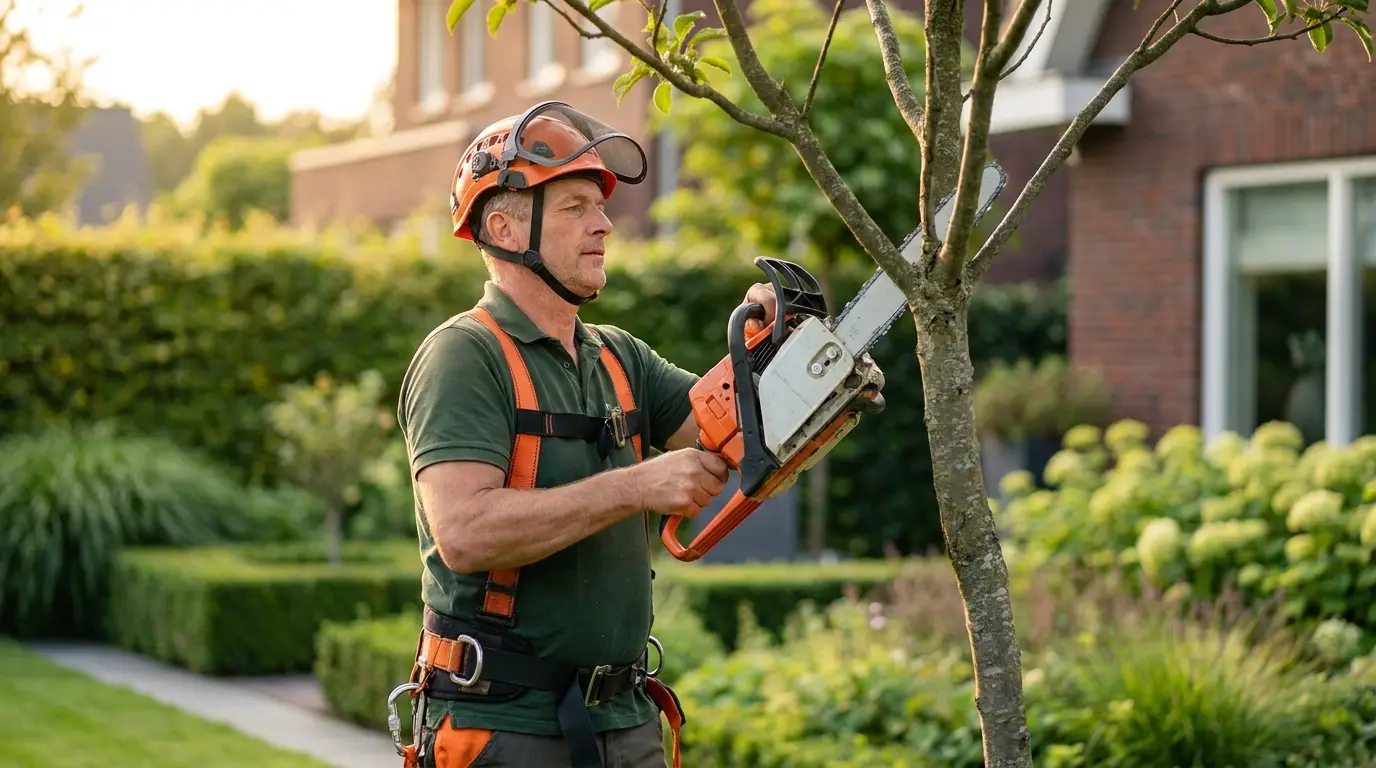
Cost of pruning or removing trees: everything you need to know
Pruning or removing trees takes expertise: the height of the tree, the location, and hauling away the yard waste largely determine the price. For a small tree, you'll easily pay €150–€300 for pruning, while removing a large tree including stump grinding can run to €1,500 or more. A certified arborist works safely and keeps your tree healthy and attractive.
In this article
- ›What does pruning or removing trees cost?
- ›Prices by tree type and height
- ›Labor and additional costs
- ›Hire a contractor or do it yourself?
- ›How does the process work, step by step?
- ›Money-saving tips for pruning or removing trees
- ›Frequently asked questions
Need a contractor for this?
Describe your job and get quotes from contractors near you.
average price
€550
for pruning or removing a medium-sized tree
average hourly rate
€55
arborist (€35–75/hour)
turnaround time
1–2 days
depending on scope and location
€ Average price by type
| Type of pruning or felling work | Range | Average price |
|---|---|---|
| Pruning a small treeup to 4 meters tall, easy to reach | €100 – €250 | €175avg.incl. labor |
| Pruning a medium-sized tree (most popular)4–8 meters tall, standard yard | €250 – €500 | €375avg.incl. labor |
| Pruning a large tree8–15 meters tall, climbing or aerial lift needed | €450 – €1,000 | €700avg.incl. labor |
| Removing a small treefelling and hauling away up to 6 meters tall | €250 – €450 | €350avg.incl. labor |
| Removing a large treefelling 6–14 meters tall, including hauling away | €600 – €1,500 | €1,050avg.incl. labor |
| Stump removal (grinding)stump grinding after felling, hole is filled in | €70 – €200 | €130avg.incl. labor |
Prices include labor but exclude hauling away yard waste and stump removal, unless stated otherwise. Based on Google price research.
Material and labor costs
Arborist hourly rate averages €35–€75/hour. Aerial lift and hauling costs are usually charged separately.
Hiring a contractor vs. doing it yourself
| Job | Do it yourself | Via a contractor | Savings doing it yourself |
|---|---|---|---|
| Trimming a small shrub or low hedgeup to 2 meters tall, easy to reach from the ground | DoablePruning shears or a cordless hedge trimmer will do; no climbing needed | €0–€40 (your own tools) | up to €175 saved |
| Pruning a small tree (up to 4 m)removing dead branches, thinning the crown | With experiencePruning saw and safety gloves required; a sturdy platform, not a wobbly ladder | €20–€60 (tool rental) | up to €200 saved |
| Pruning a medium-sized tree (4–8 m)climbing or aerial lift needed, heavy branches | Not recommendedWorking at height with cutting tools requires expertise and personal protective equipment | €250–€500 with a contractor | No recommended savings |
| Felling and hauling away a treechainsaw, safety zone, and hauling away wood | Not recommendedThe wrong felling direction leads to injury, damage to buildings, or damage to underground cables | €300–€1,500 with a contractor | No legal savings possible |
| Grinding the stump after fellingstump grinder removes roots to below ground level | Not recommendedA stump grinder is expensive to rent and requires experience; damage to cables or sewer lines is possible | €70–€200 with a contractor | No recommended savings |
A certified arborist, recognizable by certification through, among others, the Nederlandse Boom Stichting (NBS, a Dutch tree care foundation) or the European ETW diploma, is essential as soon as a tree is taller than 4 meters or when you want to remove a tree completely. Working at height with a chainsaw involves serious safety risks that can't be managed without professional training and the right personal protective equipment (helmet with visor, cut-resistant pants, and safety shoes). In addition, incorrect pruning technique (pruning too heavily, pruning while the sap is flowing, or leaving stubs) determines how the tree survives the work: a mistake can damage the tree beyond repair or make it vulnerable to fungi and insects. If you're doing it yourself, you can safely get started on low shrubs and trees up to about 3 meters that are easy to reach from the ground or a stable platform. Always use sharp tools: a dull saw takes more force, causes bigger wounds, and increases the risk of slipping. Also always check whether the tree is on the municipal tree list before you start: felling without a permit can lead to heavy fines.
The full process step by step
Inspection and no-obligation quote
The arborist visits the location and assesses the tree's height, condition, accessibility, and the space around it for a safe work zone. They also check whether an aerial lift is needed and whether the tree is on the municipal tree list. You receive an itemized quote with labor and any aerial lift and hauling costs.
30–60 minutes (inspection)
Applying for a tree removal permit (if applicable)
Is the tree covered by the municipal tree ordinance, or is the trunk circumference larger than the local standard? Then a tree removal permit is required before felling can begin. The application can be submitted through the municipality's online portal. Processing time varies by municipality.
1–4 weeks (depending on municipality)
Preparing the work site and safety zone
A safety zone is set up around the tree. Patio furniture, play equipment, and vehicles are moved. Neighbors and passersby are warned. When an aerial lift is used, the arborist checks the clearance height, the load-bearing capacity of the ground, and accessibility.
30–60 minutes
Pruning or felling the tree
The arborist works systematically from top to bottom. When pruning, dead, diseased, or crossing branches are removed and the crown is thinned evenly. When felling, large branches are brought down section by section or lowered in a controlled way using rigging techniques, so the surroundings stay undamaged.
2–6 hours (depending on tree and method)
Hauling away yard waste and wood
The branches and trunk wood are hauled away or chipped on site. Ask in advance whether hauling is included in the quote. Want to keep the trunk wood for your fireplace or wood stove? Let them know: well-dried wood can have useful residual value.
1–2 hours
Stump removal with a grinder (optional)
After felling, the stump can be ground down to 20–30 cm below ground level. The arborist fills the hole with soil or wood chips. The spot is then suitable for new plantings or paving. Stump removal is usually quoted separately.
30–90 minutes
Final inspection and handover
The work site is cleaned up: loose twigs, sawdust, and any displaced soil around the stump are neatly cleared away. The arborist walks through the job with you and may give advice on caring for the remaining trees or restoring the soil.
15–30 minutes
6 smart money-saving tips
Frequently asked questions
What does pruning a tree cost on average?
On average €150–€450, depending on the height of the tree. A small tree (up to 4 m) costs about €150, a medium-sized tree €250–€450, and a large tree €450 or more. Hauling away yard waste is usually not included.
What does it cost to have a tree removed?
Felling and hauling away costs €400–€1,000 on average. Small trees up to 6 meters cost about €300, trees of 6–14 meters about €700. Stump removal with a grinder costs an extra €70–€200.
Do I need a permit to cut down a tree?
That varies by municipality. Many municipalities use a tree list: certain trees are protected and may only be cut down with a tree removal permit. Check this with your municipality beforehand to avoid a fine.
Can I prune or remove a tree myself?
You can prune low shrubs and trees up to about 3 meters yourself. For taller trees and felling, a certified arborist is strongly recommended. Working at height with a chainsaw is dangerous without the right training and equipment.
When is the best time to prune a tree?
Most deciduous trees are best pruned in winter (November–February) or early spring, before the leaves come out. Pruning outside the nesting season (March 15–July 15) is mandatory. Conifers are best pruned in August–September.
What does hauling away yard waste cost?
Hauling away yard waste costs €75–€200 on average, depending on the amount. Some arborists chip the wood on site into wood chips, which you can use as mulch.
Related jobs
Ready to have your tree pruned or removed?
Describe your job and receive quotes from verified arborists near you.
Within 24 hours
response from a contractor
Verified
all contractors checked
Competitive price
compare quotes