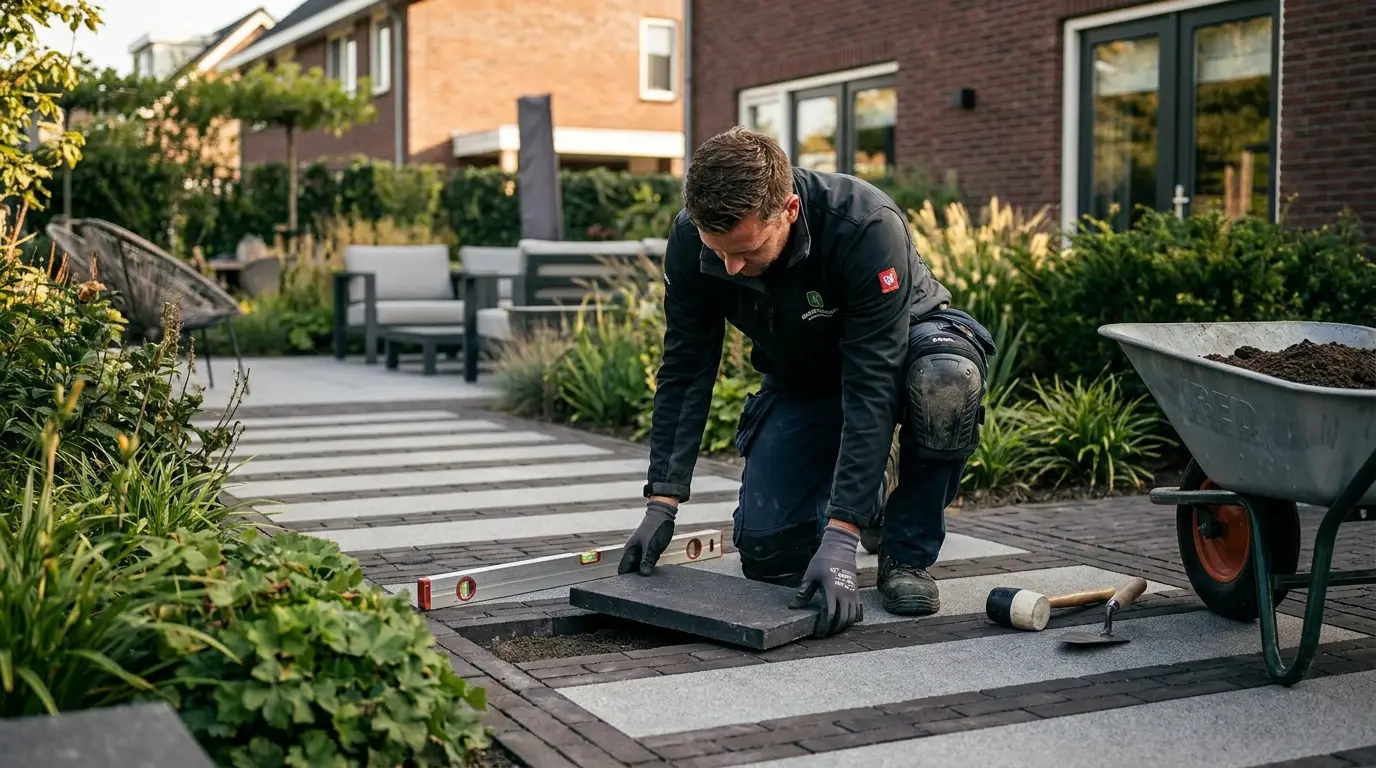
Cost of building outdoor steps or a front walkway: everything you need to know
Outdoor steps or a walkway safely connect your home to the street or yard and largely shape the first impression of your house. The cost depends heavily on the material, the number of steps, the width, and whether you choose a standard kit or custom work. With the right contractor, you pay a fair price and avoid costly mistakes later.
In this article
- ›Average cost of building outdoor steps or a walkway
- ›Prices by type of steps or walkway
- ›Material and labor costs
- ›Hire a contractor or do it yourself?
- ›How does installation work, step by step?
- ›Smart money-saving tips
- ›Frequently asked questions
Need a contractor for this?
Describe your job and get quotes from contractors near you.
average price
€2,800
standard outdoor steps including material and labor
average hourly rate
€45
paver / general contractor hourly rate (€35–60/hour)
turnaround time
1–3 days
depending on scope and material
€ Average price by type
| Type of outdoor steps or walkway | Range | Average price |
|---|---|---|
| Concrete outdoor stepsprecast or poured concrete, 3–5 steps, including foundation | €1,250 – €2,500 | €1,750avg.incl. installation |
| Bluestone steps (most popular)Belgian bluestone or bluestone, 3–5 steps, neat finish | €2,000 – €4,000 | €2,800avg.incl. installation |
| Clay brick walkwaypaving with clay bricks or tiles, front yard to street | €800 – €2,500 | €1,500avg.incl. installation |
| Wood or composite outdoor stepshardwood or low-maintenance composite treads, including frame | €1,500 – €3,500 | €2,200avg.incl. installation |
| Custom natural stonecustom granite, slate, or Belgian bluestone, including railing | €3,500 – €6,500 | €5,000avg.incl. installation |
Prices include material, foundation, and labor for standard outdoor steps with 3–5 steps at a Dutch home. Based on Google price research.
Material and labor costs
Paver/general contractor hourly rate averages €40–€60/hour. The hourly rate varies by region and the complexity of the foundation.
Hiring a contractor vs. doing it yourself
| Job | Do it yourself | Via a contractor | Savings doing it yourself |
|---|---|---|---|
| Laying loose stepping stones or patio tilesA few flat steps or tiles as a path to the front door or yard | DoableCan be laid on a well-compacted sand bed without specialized tools | €80–€250 material costs | up to €300 |
| Relaying existing sidewalk tilesRelaying loose or sunken tiles flat and level | DoableA handy DIYer can do this with a hammer, mortar sand, and a level | €50–€150 material costs | up to €250 |
| Building outdoor steps with a foundation slabConcrete or bluestone steps with 3–5 steps on a stable foundation | With experienceCompacting, pouring level, and mortar work require a contractor's experience to prevent settling | €800–€2,000 material costs | up to €600 |
| Lowering a curb or modifying a driveway entranceModifying the public curb for a driveway or access path | Not recommendedRequires a municipal permit and work on public property: only by a licensed company | €1,000–€4,000 including fees | No recommended savings |
| Custom natural stone steps (granite or slate)Heavy custom treads of granite, Belgian bluestone, or slate including railing | Not recommendedTreads of 150–300 kg require lifting equipment, precise measuring, and professional mortar anchoring | €3,500–€6,500 | No recommended savings |
Outdoor steps stand or fall on two things: the foundation and the right slope. A foundation slab that's too thin or rests on poorly compacted soil will tilt within a few winters, resulting in loose mortar and a fall hazard. A paver or general contractor has the right plate compactor, the material knowledge for the correct mortar mix, and the experience to lay the steps at the required 1–2% slope for drainage. For small jobs like loose stepping stones or relaying a few tiles, a handy DIYer doesn't need a contractor: a well-compacted sand bed, a level, and some mortar sand are enough. As soon as it involves structural steps with a foundation slab, edge restraints, or work on the public sidewalk, a licensed contractor isn't just wise but, in the last case, legally required.
The full process step by step
Measuring, design, and material advice
The paver measures the available space: the height difference and the width and depth of the desired steps. Based on NEN standards (Dutch building standards: riser 14–21 cm, tread at least 22 cm), the number of steps is determined. Material and color are matched to the facade and the existing paving.
30–60 min
Excavation and digging
The existing ground is dug out down to stable, load-bearing soil, usually 20–40 cm deep depending on the soil type. Loose soil, roots, and debris are removed and hauled away. With clay soil, extra soil is dug out and replaced with gravel or crushed stone.
1–3 hours
Compacting the sand bed and pouring the foundation
A layer of crushed aggregate or foundation sand (15–20 cm) is spread and compacted with a plate compactor. For concrete or heavy bluestone treads, a poured or precast foundation slab follows. Rebar is placed in larger structures to prevent cracking.
1–3 hours (+ 24 hours for the concrete slab to cure)
Installing edge restraints and side finishing
Edge restraints are set on a mortar bed along the sides of the steps to prevent settling and spreading of the paving. The corners are carefully kept square and the restraints are set at the right height.
1–2 hours
Laying the stair treads level
The treads are laid on a mortar bed with a precise 1–2% forward slope for drainage. Each tread is checked individually for flatness and the correct riser height. With brick paving, the bricks are set and then vibrated in with the plate compactor.
2–5 hours
Joints, anti-slip, and finishing
Joints are filled with mortar or flexible pourable joint filler. On smooth bluestone treads, an anti-slip coating or grooving is applied to prevent slipping in rain or frost. Any stainless steel railing is installed and anchored in the side walls or foundation slab.
1–2 hours
Inspection, curing, and handover
The steps are checked for stability, drainage, and flatness. Mortar must cure for at least 24–48 hours before the steps can bear full weight. Debris and leftover material are hauled away. The contractor gives maintenance instructions for the chosen material.
30 min + 24–48 hours curing
6 smart money-saving tips
Frequently asked questions
What do outdoor steps cost on average?
On average €2,800 for bluestone outdoor steps with 3–5 steps, including material and labor. The range runs from €1,250 for simple concrete steps to €6,500 for custom natural stone.
How long does installation take?
Most outdoor steps are done in 1 to 3 days. Allow extra time for the mortar to cure (24–48 hours) before you put full weight on the steps.
Do I need a permit?
Usually not for outdoor steps on your own property. If you want to change the public sidewalk or curb, you need permission from the municipality, and a lowered curb costs €1,000–€4,000.
Can I do it myself?
You can lay simple tiles or stepping stones yourself. For safe, durable outdoor steps with a proper foundation, we recommend a contractor: settling or loose mortar creates dangerous situations.
Which material is the lowest maintenance?
Bluestone and composite need the least maintenance. Wood has to be treated regularly. Concrete is cheap but can discolor or crumble from frost damage if it isn't finished properly.
What does a walkway cost per m²?
A paved walkway or path costs €40–€80 per m² including labor for concrete pavers and €60–€110 per m² for clay bricks or tiles. Additional costs for the sand bed and edge restraints are included.
Related jobs
Ready to have your outdoor steps or walkway built by a skilled contractor?
Describe your job and receive quotes from verified pavers near you.
Within 24 hours
response from a contractor
Verified
all contractors checked
Competitive price
compare quotes