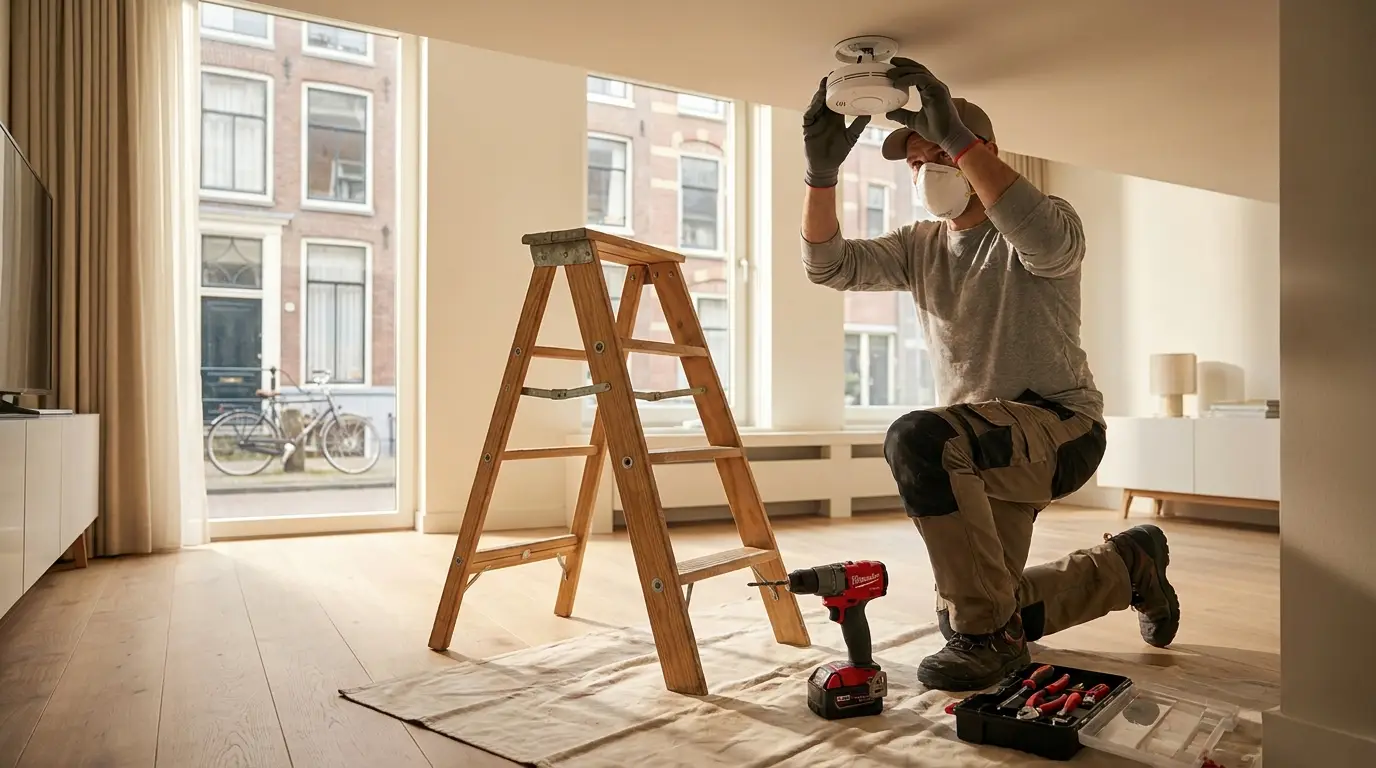
Cost of installing a CO detector or smoke detector: everything you need to know
A CO detector or smoke detector saves lives: it sounds the alarm in time in case of fire or carbon monoxide poisoning. The cost depends on the type of detector, the number of detectors to install, and whether wiring is needed. A licensed electrician makes sure installation and connection are done correctly in line with the NEN standards (Dutch technical standards).
In this article
- ›What does it cost to install a CO detector or smoke detector?
- ›Prices by type of detector
- ›Material and labor costs
- ›Hire an electrician or install it yourself?
- ›How does the installation work, step by step?
- ›Money-saving tips for smoke detectors and CO detectors
- ›Frequently asked questions
Need a contractor for this?
Describe your job and get quotes from contractors near you.
average price
€95
per detector including installation
average hourly rate
€55
contractor hourly rate (€45–65/hour)
turnaround time
1–2 hours
depending on number of detectors
€ Average price by type
| Detector type / situation | Range | Average price |
|---|---|---|
| Battery-powered smoke detector (1 unit)photoelectric smoke detector with 9V or lithium battery, adhesive or screw-mounted | €30 – €70 | €50avg.incl. installation |
| Smoke detectors for the whole home (most popular)3–5 battery-powered detectors including installation by an electrician, one detector per floor | €150 – €350 | €230avg.incl. installation |
| Installing a CO detector (1 unit)carbon monoxide detector near a boiler or gas water heater, battery or hardwired | €50 – €120 | €80avg.incl. installation |
| Combination smoke + CO detector (1 unit)all-in-one detector with dual detection, handy with a fireplace or gas water heater | €60 – €130 | €95avg.incl. installation |
| Hardwired detectors (230V)permanently connected to the electrical system with battery backup, interconnected (mesh), each including wiring | €100 – €200 | €150avg.incl. installation |
| Fully hardwired system for the home5–8 interconnected 230V detectors including wiring, installation, and commissioning | €600 – €1,400 | €950avg.incl. installation |
Prices include installation but exclude the trip charge (€20–€50); for hardwired 230V detectors, wiring work can increase the total price. Based on Google price research.
Material and labor costs
Electrician hourly rate averages €45–€65/hour. By law, hardwired detectors may only be connected by a licensed electrician.
Hiring a contractor vs. doing it yourself
| Job | Do it yourself | Via a contractor | Savings doing it yourself |
|---|---|---|---|
| Installing a battery-powered smoke detectorScrew the detector in the right ceiling position, insert the battery, and press the test button | DoableOnly a drill and screwdriver needed; no electrical knowledge required | €10–€40 materials | up to €60 |
| Installing a CO detector near a boiler or gas water heaterMount a battery-powered carbon monoxide detector at the right height and location | DoableFollow placement guidelines: CO detectors go higher than 1.5 m, not directly above a fuel-burning appliance | €25–€60 materials | up to €50 |
| Interconnecting wireless mesh detectorsLink three or more RF detectors via a protocol so one alarm triggers all detectors | With experienceLinking requires technical insight; brands and protocols can't be mixed | €80–€200 materials | up to €100 |
| Connecting a hardwired smoke detector (230V)Permanently connect the detector to the electrical system with battery backup and ground wire | Not recommendedRequired by law to be done by a licensed electrician; improper connection isn't covered by your fire insurance | €100–€200 each | No legal savings possible |
| Fully hardwired system in new construction or renovationMultiple 230V detectors including wiring concealed in walls and ceilings (NEN 2555) | Not recommendedRequires NEN 1010 knowledge, wiring diagrams, and an inspection report; required for new construction and major renovations | €600–€1,400 total | No recommended savings |
You can install battery-powered smoke and CO detectors entirely yourself: the only tools you need are a drill, a screwdriver, and a ladder. Make sure you follow the manufacturer's placement guidelines: smoke detectors belong on the ceiling or high on the wall, not above a cooktop or in the bathroom, where steam causes false alarms. Place CO detectors at least 1.5 meters high, in every room with a fuel-burning appliance such as a boiler, gas water heater, or fireplace. As soon as a detector is permanently connected to the electrical system (230V), a licensed electrician is required by law under NEN 1010 (the Dutch standard for electrical installations). The same applies to interconnected hardwired systems that must be installed in new construction or after a major renovation in accordance with NEN 2555. Improper connection can result in uninsured fire damage: most fire insurers require demonstrably certified installation for hardwired detectors.
The full process step by step
Assessment: how many detectors and where?
The electrician maps out how many floors the home has, where fuel-burning appliances are located (boiler, gas water heater, fireplace), and whether existing wiring is available for hardwired detectors. Based on this, they draw up a placement plan: smoke detectors on every floor, a CO detector in each room with a fuel-burning appliance.
15–30 min
Checking materials for certification
All detectors are checked for CE marking and, for hardwired models, NEN 2555 certification. The electrician checks whether the battery voltage is sufficient and whether wireless models are compatible with each other when a mesh system is desired.
10–15 min
Marking mounting spots and drilling
The exact ceiling or wall position is marked: at least 50 cm from corners, at least 30 cm from vents, and never directly above a cooktop or in a damp bathroom. Holes are drilled and anchors inserted for a secure mount.
20–40 min
Mounting and connecting detectors
Battery detectors are screwed in place and fitted with a battery. For hardwired detectors, the electrician makes the 230V connection and installs the ground wire in accordance with NEN 1010. The wiring is neatly concealed or covered with a cable raceway.
15–45 min
Setting up linking for mesh systems
For interconnected (mesh) detectors, all devices are linked via the manufacturer's RF protocol. The electrician tests the link: manually triggering one detector must set off all other detectors in the home. Linked systems meet the NEN 2555 requirement for new construction.
15–30 min
Full testing procedure
Each detector is tested individually with the test button. The electrician checks the alarm volume (at least 85 dB at 3 meters) and records the installation date for each detector to keep track of its lifespan.
10–20 min
Instructions and handover
The owner gets an explanation of monthly testing with the test button, the battery replacement interval for 9V models, the maximum lifespan of the device (10 years for a smoke detector, 5–10 years for a CO detector), and what to do when the alarm goes off.
10 min
6 smart money-saving tips
Frequently asked questions
What does it cost to have a smoke detector or CO detector installed?
On average €50 to €100 per detector including installation. For a complete home with 3 to 5 detectors, you'll pay €150 to €400, plus a trip charge of €20–€50.
Are smoke detectors required in the Netherlands?
Yes. At least one smoke detector per floor is required in all Dutch homes. New construction must comply with NEN 2555 (the Dutch standard for smoke detectors in homes) with interconnected hardwired detectors.
How long does it take to install smoke detectors?
An electrician can install battery-powered detectors for a whole home in 30–60 minutes. Hardwired 230V detectors take more time: expect 2 to 4 hours, depending on the number of connections.
Can I install a smoke detector or CO detector myself?
You're allowed to install battery-powered detectors yourself: drill two holes in the ceiling and insert the battery. By law, hardwired (230V) detectors must be connected by a licensed electrician.
How long does a smoke detector last?
Smoke detectors have a maximum lifespan of 10 years, after which they should be replaced. CO detectors last 5 to 10 years. Test the detector monthly with the test button.
How many detectors do I need in my home?
At least one smoke detector per floor, plus a CO detector in every room with a fuel-burning appliance (boiler, gas water heater, fireplace). An average row house needs 2 smoke detectors and 1 CO detector.
Related jobs
Ready to have your CO detector or smoke detector professionally installed?
Describe your job for free. Checked electricians near you respond, and you choose who to continue with.
Within 24 hours
response from a contractor
Verified
all contractors checked
Competitive price
compare quotes