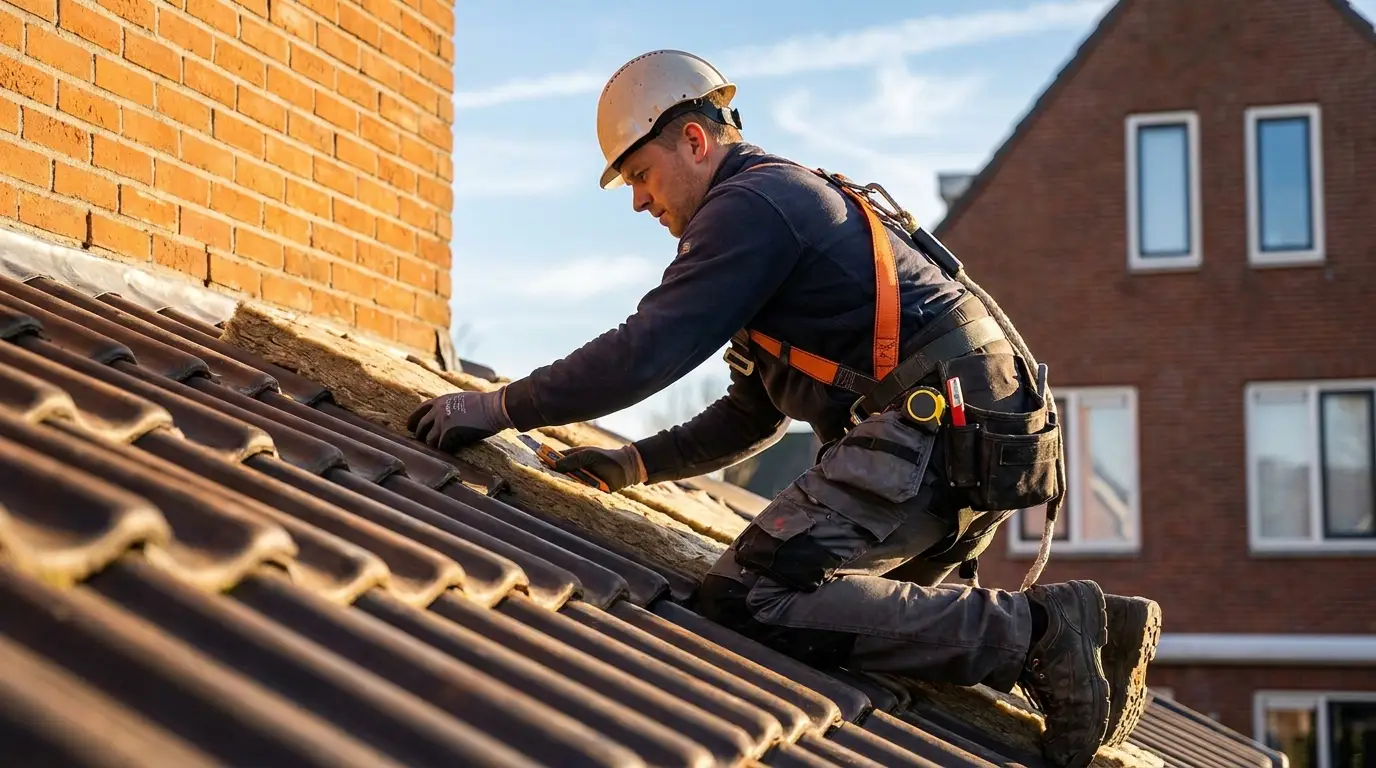
Cost of roof insulation (flat or pitched roof): everything you need to know
Roof insulation is one of the most effective ways to save energy and make your home more comfortable. Whether you have a flat roof, a pitched roof, or a flat-roofed home, the cost depends on the insulation material, the method (interior or exterior insulation), and the roof area. In this overview, you'll find current prices by type, material costs, and answers to the most frequently asked questions.
In this article
- ›Average cost of roof insulation
- ›Prices by roof type and method
- ›Material and labor costs
- ›Hire a contractor or do it yourself?
- ›Step-by-step approach
- ›Subsidy and payback period
- ›Money-saving tips for roof insulation
Need a contractor for this?
Describe your job and get quotes from contractors near you.
average price
€4,800
complete, including materials and labor (approx. 60 m²)
average hourly rate
€52
contractor hourly rate (€40–65/hour)
turnaround time
1–3 days
depending on roof area and method
€ Average price by type
| Type of roof insulation | Range | Average price |
|---|---|---|
| Pitched roof: interior insulationRock wool or fiberglass between the rafters, cheapest option | €1,800 – €4,200 | €2,800avg.incl. installation |
| Pitched roof: exterior insulation (most popular)PIR or PUR boards on the roof structure, new roofing included | €4,800 – €9,000 | €6,500avg.incl. installation |
| Flat roof: warm roof systemPIR insulation boards above the roof structure, with new roofing | €2,500 – €6,500 | €4,200avg.incl. installation |
| Flat roof: inverted roofXPS insulation above the waterproofing, suitable for roof terraces | €3,000 – €7,500 | €5,000avg.incl. installation |
| Blown-in insulation for a pitched roofCellulose or beads blown in from the ridge, minimal disruption | €1,500 – €3,500 | €2,400avg.incl. installation |
Prices include labor and standard roofing; extra costs for scaffolding or removal of old material are not included. Based on Google price research.
Material and labor costs
Roofer hourly rate on average €40–€65/hour. Exterior insulation almost always also requires replacing the roofing, which significantly increases the material budget.
Hiring a contractor vs. doing it yourself
| Job | Do it yourself | Via a contractor | Savings doing it yourself |
|---|---|---|---|
| Interior insulation of a pitched roof with insulation rollsLaying rock wool or fiberglass between the rafters, including vapor barrier and air sealing | With experienceTechnically feasible for a handy DIYer, but mistakes in installing the vapor barrier cause condensation and wood rot in the roof structure | €600–€1,400 materials | up to €2,500 savings |
| Vapor barrier and interior finishFastening the barrier tightly with overlaps, taping the seams, and then installing a drywall or wood finish | FeasibleAfter professional insulation, you can do the interior finish yourself; it requires precision but no special tools or permit | €200–€600 materials | up to €800 savings |
| Blown-in insulation for a pitched roofBlowing cellulose or insulation beads through holes in the ridge or roof decking with a blowing machine | Not recommendedRequires specialized blowing equipment and knowledge of the required density; blowing it in too loose or too dense creates thermal bridges or condensation problems | €1,500–€3,500 complete | No recommended savings |
| Exterior insulation of a pitched roof with new roofingLaying PIR or PUR boards on the roof structure and then installing new roof tiles or slates | Not recommendedWorking at height with heavy insulation boards and waterproofing around ridges, valleys, and chimneys requires professional roofing knowledge and equipment | €4,800–€9,000 complete | No recommended savings |
| Insulating a flat roof (warm roof or inverted roof)Laying PIR boards or XPS above the existing roof structure and finishing with EPDM, bitumen, or TPO roofing | Not recommendedThe watertightness of a flat roof is critical; a leak from imperfect seam welding or flashing causes hidden damage to the roof structure and roof decking | €2,500–€7,500 complete | No recommended savings |
With roof insulation, whether you can do it yourself depends heavily on the chosen method. Interior insulation of a pitched roof with insulation rolls or boards is doable for a handy owner, provided you install the vapor barrier precisely with overlapping seams and special seam tape. A flaw in the barrier lets humid indoor air into the structure, resulting in condensation and wood rot: costs that far exceed the savings on labor. Always leave exterior insulation and all forms of flat roof insulation to a certified roofer. For exterior insulation with new roofing, a roofer works at height with heavy materials, and the watertight flashing around chimneys, ridges, and valleys is skilled work. On a flat roof, perfect seam welding of the roofing (EPDM, bitumen, or TPO) determines its lifespan; a roofing company with an IKOB-BKB or SKG-IKOB quality mark (Dutch certifications for roofing companies) offers the required warranty on both materials and workmanship.
The full process step by step
Roof survey and problem analysis
The roof insulation contractor inspects the roof from the inside (attic, cavity) and from the outside. They check the current insulation value, the condition of the roof structure, any damp spots or wood rot in the rafters, and the location of roof penetrations such as chimneys and skylights. Based on this, they determine which method (interior insulation, exterior insulation, or blown-in) best suits the roof type and situation.
1–2 hours
Quote, Rc calculation, and permit check
The roofer prepares an itemized quote with the insulation material, the Rc value to be achieved, and the total price including materials, labor, and roofing. At the same time, they check whether a building permit is required. This is especially the case for exterior insulation that changes the ridge height or roof appearance, or for buildings in a protected historic district.
1–3 business days
Setting up scaffolding and removing the roofing
For exterior or flat roof insulation, roof scaffolding or roof walkways are installed first. The existing roof tiles, slates, or roofing are removed, and the roof decking is checked for rotten boards or damage that must be repaired before the insulation can be installed.
Half a day
Installing insulation material at the calculated thickness
The insulation boards (PIR, PUR, or rock wool) are installed at the calculated thickness to achieve the desired Rc value. With interior insulation, the vapor barrier is then fastened tightly with overlaps and all seams and connections are taped. With blown-in insulation, holes are drilled in the roof decking and the insulation is blown in at the correct density, after which the holes are sealed.
1–2 days
Installing new watertight roofing
With exterior insulation, new roof tiles, slates, or a complete EPDM, bitumen, or TPO roofing system are installed. The roofer carefully finishes the connections with the gutter, ridge cap, chimneys, and skylights using lead flashing or boots. This is the most critical phase: an imperfect connection leads to leaks that only show up later.
1–2 days
Inspection, handover, and subsidy documentation
After completion, the roofer inspects the entire roof for watertightness and finish. At handover, you receive an invoice listing the insulation material, the layer thickness, and the Rc value achieved: this is the information you need for the ISDE subsidy application with RVO.nl, which you submit yourself online after completion.
1–2 hours + application
6 smart money-saving tips
Frequently asked questions
What does roof insulation cost on average in total?
For an average row house with approx. 60 m² of roof area, you'll pay €2,800 to €9,000 depending on the type of roof and the chosen method. Interior insulation of a pitched roof is the most affordable (€1,800–€4,200); exterior insulation is more expensive but more effective (€4,800–€9,000).
How much will I save on my energy bill after roof insulation?
On average, you'll save €300–€700 per year on heating costs after insulating a poorly insulated roof. The payback period is usually 5 to 10 years, depending on the insulation method and your current gas consumption.
How long does it take to insulate a roof?
Interior insulation of a pitched roof takes 1 to 2 days. Exterior insulation with new roof tiles or roofing takes 2 to 4 days. Insulating a flat roof usually takes 1 to 2 workdays depending on the area.
Do I need a permit for roof insulation?
For interior insulation of a pitched roof, no permit is needed in most cases. For exterior insulation that changes the roof structure or appearance, a building permit may be required, especially in a protected historic district. Always check with your municipality or through the Omgevingsloket (the Dutch online portal for permits).
Can I install roof insulation myself?
Interior insulation with insulation rolls is technically possible to do yourself, but it requires careful attention to air sealing and the vapor barrier to prevent moisture problems. Exterior insulation and insulating a flat roof require specialized knowledge and roofing experience; always have this done by a certified company.
What insulation value (Rc) should roof insulation have?
Current building regulations require a minimum Rc value of 3.5 m²K/W for new roof insulation. For maximum energy savings and to qualify for the ISDE (a Dutch government subsidy for sustainable energy) subsidy, an Rc of at least 4.5 m²K/W is recommended.
Related jobs
Ready to have your roof professionally insulated?
Describe your job and receive quotes from verified insulation contractors near you.
Within 24 hours
response from a contractor
Verified
all contractors checked
Competitive price
compare quotes