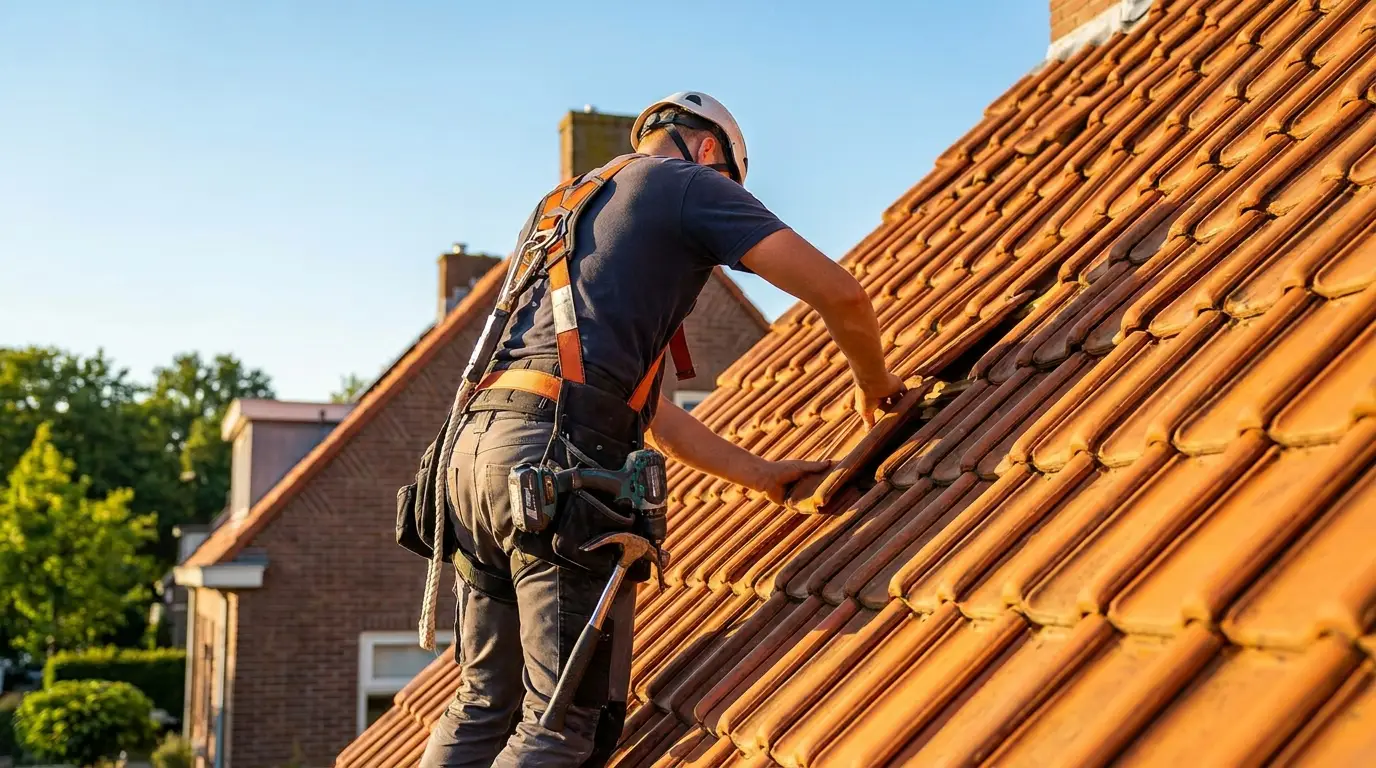
Cost of roof renovation or replacement: everything you need to know
A roof renovation or roof replacement is one of the bigger maintenance projects on a home. The cost depends on the type of roof (flat or pitched), the chosen material, the roof area, and whether insulation is included. With the right contractor, you prevent leaks and improve your home's energy performance.
In this article
- ›What does a roof renovation cost?
- ›Prices by roof type
- ›Material and labor costs
- ›Hire a contractor or do it yourself?
- ›How does a roof renovation work?
- ›Money-saving tips for roofing work
- ›Frequently asked questions
Need a contractor for this?
Describe your job and get quotes from contractors near you.
average price
€7,500
renovation of flat or pitched roof (approx. 60 m²)
average hourly rate
€55
contractor hourly rate (€45–65/hour)
turnaround time
1–5 days
depending on roof area and type
€ Average price by type
| Type of roof renovation | Range | Average price |
|---|---|---|
| Flat roof, bitumen repairedrepair or new layer of bitumen, existing structure intact | €3,000 – €5,500 | €4,200avg.incl. installation |
| Flat roof, complete EPDM (most popular)full replacement with EPDM membrane, including insulation and edge finishing | €3,500 – €6,500 | €5,000avg.incl. installation |
| Pitched roof, concrete roof tilesreplacement of the entire tiled roof, concrete version | €4,500 – €8,000 | €6,200avg.incl. installation |
| Pitched roof, ceramic roof tilesreplacement with ceramic tiles, longer lifespan | €6,000 – €11,000 | €8,000avg.incl. installation |
| Full roof replacement incl. insulationnew roof with roof insulation (Rc ≥ 6), most energy-efficient option | €8,000 – €18,000 | €12,000avg.incl. installation |
Prices include VAT and are based on a roof area of approx. 60 m²; for larger roofs, the price per m² goes down. Based on Google price research.
Material and labor costs
Roofer hourly rate averages €45–65/hour. Scaffolding costs are not included and are quoted separately.
Hiring a contractor vs. doing it yourself
| Job | Do it yourself | Via a contractor | Savings doing it yourself |
|---|---|---|---|
| Replacing loose or broken roof tiles1–5 shifted or broken tiles on a pitched roof | DoableSafe to do if you have a stable ladder and roof edge protection; never work alone at height | €30–120 (material) | up to €350 |
| Removing moss from and cleaning guttersremoving moss, leaves, and buildup from gutters | DoableYou can do this yourself with a good ladder and gloves; an anti-moss treatment afterward extends the effect | €15–50 (material) | up to €200 |
| Fully replacing a flat roof (EPDM or bitumen)complete removal and replacement of the roofing on a flat roof | Not recommendedMistakes in the seamless connection at roof edges and penetrations lead directly to leaks and structural damage; requires professional tools and a warranty on watertightness | €3,500–6,500 | No recommended savings |
| Renewing a complete pitched tiled roofremoving all roof tiles and laying new concrete or ceramic tiles including the underlayment | Not recommendedRequires a certified roofer for the underlayment, roof trim, and ridge tiles; a faulty underlayment isn't visible but causes years of moisture damage | €4,500–11,000 | No recommended savings |
| Installing roof insulation during renovationlaying PIR or PUR boards while the roof is open | With experiencePlacing the material yourself is doable for a DIYer, but always combine it with a roofer for finishing and waterproofing; that keeps the extra labor costs minimal | €800–2,200 (material) | up to €900 |
A full roof renovation or roof replacement, whether it's a flat roof with EPDM membrane or a pitched tiled roof with underlayment, requires specialized expertise far beyond doing it yourself. Roofers are responsible for watertight connections at roof edges, dormers, chimneys, and pipe penetrations. A single millimeter of deviation in a seam or a missing bonding strip is enough for a leak that only becomes visible months later: by then, the damage has already spread to the roof structure, the insulation, and sometimes the interior. Always hire a roofer who is a member of Dakvak or NBDAK (Dutch roofing trade associations); they are required to be insured and work with a written warranty on watertightness. There are, however, two situations where a skilled DIYer can do something themselves: replacing a single loose or broken roof tile on a pitched roof, and cleaning and removing moss from gutters. In both cases, working safely at height comes first: always use roof edge protection or a safety harness and never work alone. For anything that touches the roofing itself, a certified roofer is the only sensible choice.
The full process step by step
Roof inspection and quote visit
The roofer inspects the roof thoroughly: they check for signs of leaks, cracking in the roofing, wood rot in rafters and purlins, and the condition of ridge tiles, fascia boards, and gutters. You then receive an itemized quote distinguishing between repair and full replacement, including a choice of roofing material.
1–2 hours
Setting up scaffolding or roof edge protection
Before the roofing work starts, scaffolding or temporary roof edge protection is set up. This is legally required for work at height. The adjacent patio or yard is covered with plastic sheeting to prevent damage from falling debris and old roofing material. Materials are delivered and laid out.
Half a day
Removing and disposing of old roofing material
The existing roofing is removed layer by layer: bitumen layers, roofing membrane, or all roof tiles including the underlayment. Any damaged woodwork (rafters, purlins, or roof decking) is replaced. All demolition material is sorted and hauled away.
0.5–1 day
Installing roof insulation (if chosen)
If insulation is included in the job, PIR or PUR boards are now laid. This is the ideal moment: the roof is open, the extra labor is minimal, and the insulation boards are anchored directly under the new roofing. This is the step that qualifies you for the ISDE subsidy.
0.5–1 day
Installing the new roofing
The new roofing is installed professionally. On a flat roof, EPDM membrane is glued seamlessly or bitumen is torch-applied. On a pitched roof, the underlayment is stretched first, then the roof tiles are laid from the bottom up, including ridge tiles, hip tiles, and connections to dormers and chimneys.
1–3 days
Finishing roof edges, gutters, and penetrations
After the main roofing, all connections are finished: fascia boards, lead flashing at chimneys and dormers, downspouts, and any roof penetrations for ventilation or solar panel cables. These are the critical points where most leaks start: skilled work makes all the difference here.
2–4 hours
Inspection, cleanup, and handover
The roof is checked for watertightness, all connections are inspected, and the surrounding area is cleaned up. The scaffolding is removed. You receive a completion certificate with the warranty period on materials and labor, plus instructions for future maintenance.
1–2 hours
6 smart money-saving tips
Frequently asked questions
What does a roof renovation cost on average?
On average €7,500 for a home with a roof of approx. 60 m². The range is between €3,000 (small flat roof repair) and €18,000 (completely new roof with insulation). The price per m² varies from €60 to €200 depending on type and material.
How long does a roof renovation take?
A flat roof renovation usually takes 1–2 days. A completely new tiled roof takes 3–5 workdays depending on the roof size and weather conditions.
Do I need a permit for a roof replacement?
You don't need a permit to replace the same roofing without changing the structure. If the roof shape, height, or roof plane layout changes, a building permit is required. For historic buildings, always check with the municipality beforehand.
Can I do a roof renovation myself?
Replacing loose roof tiles is something you can do yourself. A full roof replacement requires expertise, safety at height, and the right materials. Improper work leads to leaks and is more expensive to fix: a certified roofer is strongly recommended.
What is the lifespan of a new roof?
Bitumen lasts 20–30 years, EPDM 40+ years, concrete tiles 30–50 years, and ceramic tiles 50–100 years. Good roof insulation and ventilation extend the lifespan further.
Is there a subsidy for roof renovation with insulation?
Yes. Loans for roof insulation are available through the Nationaal Warmtefonds (a Dutch national fund for energy-saving loans). An ISDE subsidy (a Dutch government subsidy for sustainable energy) is available for roof insulation of at least Rc 3.5. Check the current amounts at rvo.nl or mijnwarmtefonds.nl.
Related jobs
Ready to have your roof renovated or replaced?
Describe your job and get quotes from verified roofers near you.
Within 24 hours
response from a contractor
Verified
all contractors checked
Competitive price
compare quotes