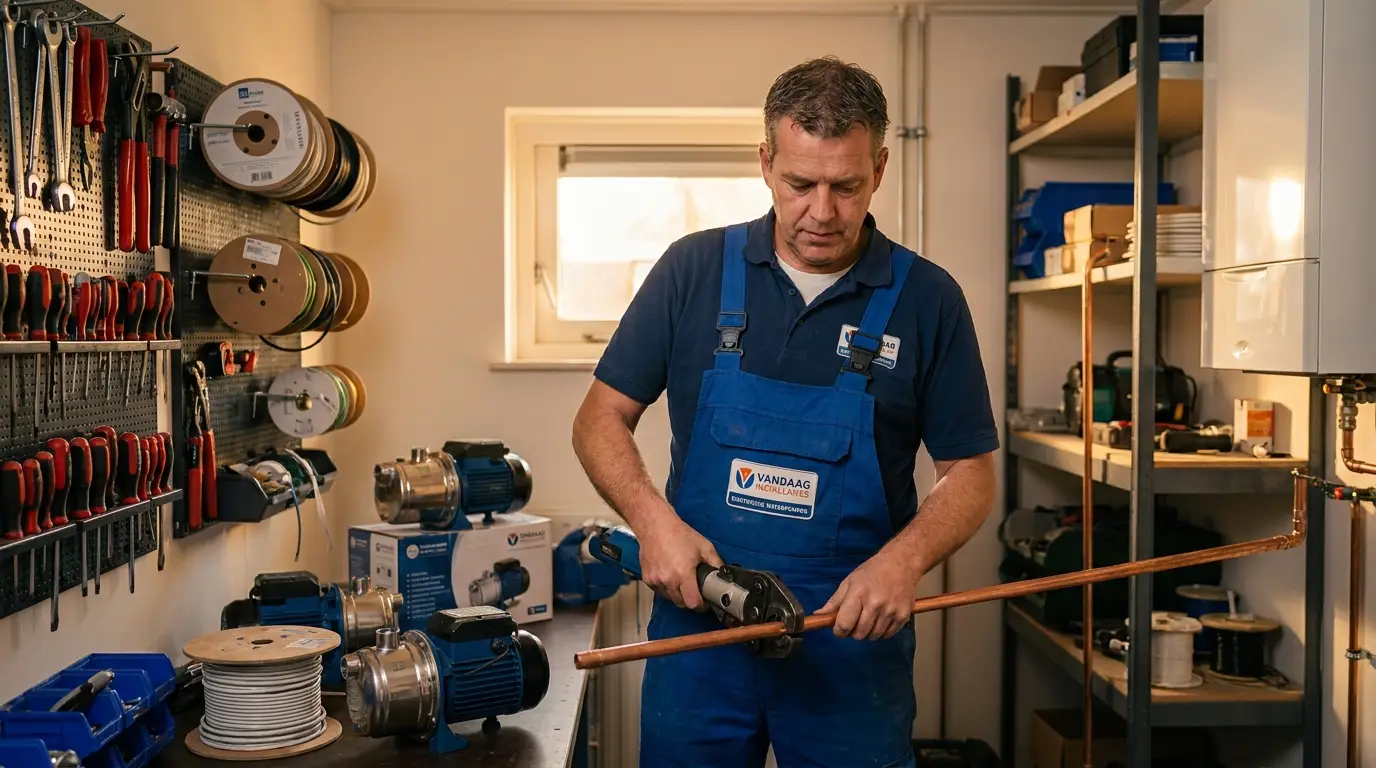
Cost of an electric water pump: everything you need to know
An electric water pump draws water from a well, rain barrel, basement, or pond for use in your yard or home. The total cost depends on the pump type, the capacity, the plumbing work needed, and the installation location. For a complete installation by a contractor, you'll pay between €300 and €1,800 on average.
In this article
- ›What does an electric water pump cost?
- ›Prices by type of water pump
- ›Material and labor costs
- ›Hiring a contractor vs. doing it yourself
- ›Installation steps
- ›Money-saving tips
- ›Frequently asked questions
Need a contractor for this?
Describe your job and get quotes from contractors near you.
average price
€750
pump + installation included
average hourly rate
€55
contractor hourly rate (€45–75/hour)
turnaround time
1–2 days
depending on type and location
€ Average price by type
| Water pump type | Range | Average price |
|---|---|---|
| Surface pump / garden pumpsimple irrigation pump from a rain barrel or pond | €200 – €500 | €350avg.incl. installation |
| Submersible pumpfor pumping out a basement, pond, or water tank | €150 – €600 | €375avg.incl. installation |
| Booster pump (most popular)constant water pressure in your home or yard, including pressure tank | €500 – €1,200 | €800avg.incl. installation |
| Well pumpdrawing water from your own well or a shallow well | €600 – €1,800 | €1,100avg.incl. installation |
| Rainwater pump systemcomplete rainwater system with pump, filter, and plumbing | €900 – €2,500 | €1,600avg.incl. installation |
Prices include standard installation by a licensed plumber; well pumps and rainwater systems usually require extra plumbing. Based on Google price research.
Material and labor costs
Plumber hourly rate averages €45–€75/hour. Well pumps and booster pumps often require a dedicated electrical circuit, which increases labor costs.
Hiring a contractor vs. doing it yourself
| Job | Do it yourself | Via a contractor | Savings doing it yourself |
|---|---|---|---|
| Connecting a garden pump to an existing outletPlug-and-play surface or irrigation pump via a regular wall outlet | DoableNo special knowledge needed; just plug in the pump and attach the hose | €100–€200 | up to €200 |
| Placing a submersible pump in a basement or pondLower the pump into the water, connect the hose, and plug it into the outlet | DoableWorks as long as there's already an outdoor or basement outlet | €100–€180 | up to €180 |
| Installing a booster pump with pressure tankConnect the pump to the plumbing, mount the pressure tank, and set the pressure switch | With experienceRequires knowledge of plumbing, pressure settings, and safe electrical connections | €200–€400 | up to €400 |
| Installing a well pumpLower the pump into a well, run the discharge line, and connect a fixed electrical circuit | Not recommendedRisk of leaks, the pump running dry, and electrical hazards without grounding | €400–€700 | No recommended savings |
| Installing a complete rainwater systemInstall pump, buffer tank, filter, overflow drain, and indoor plumbing as one system | Not recommendedComplex installation; mistakes lead to backflow into the drinking water supply and loss of warranty | €600–€1,200 | No legal savings possible |
As a DIYer, you can connect a standalone garden or submersible pump to an existing outlet yourself: no permits or certifications are needed and the risk is low. As soon as you need a fixed electrical connection (a dedicated circuit in the breaker panel, an outdoor circuit, or grounding), a licensed electrician is required: the NEN 1010 standard (the Dutch standard for electrical installations) sets requirements for all fixed wiring, and the owner of the meter cabinet (where the electricity meter and the breaker panel are) is liable in case of fire or damage. For booster pumps, an incorrectly set pressure switch can also lead to water hammer and leaks in the pipes. A complete rainwater system connected to the household plumbing requires backflow prevention (type BA or CA) under the Drinkwaterbesluit (the Dutch Drinking Water Decree): its absence is a serious health violation, and liability lies with the owner of the home.
The full process step by step
Assess the site and choose the pump type
The plumber inspects the location: water depth (well or rain barrel), required head, needed flow rates, and the distance to the outlet or the meter cabinet. Based on this, they determine the right pump type and required power. For a well, they also assess the water quality to prevent filters from clogging.
30–60 min
Put together and order materials
The pump, pipes, fittings, check valve, and possibly a pressure tank or filter are ordered or brought along. For a booster pump, the pressure switch and expansion tank are also preset to the right pressure.
1–2 days (delivery time)
Install the plumbing and mount the pump
The suction line (from the water source to the pump) and the discharge line (from the pump to the point of use) are installed and connected watertight. For a submersible pump, the pump is placed in the water using a guide hose or cable. All fittings are tested for leaks before the electrical connection is made.
1–3 hours
Connect and protect the electrical supply
The pump is connected to the power supply. With an existing outlet, this is a simple step. For fixed installations, a separate protected circuit is added to the breaker panel in line with NEN 1010, including a residual current device (RCD), the European counterpart of a GFCI. Outdoor installations get an IP44 water-resistant connection.
30–90 min
Run a test and adjust the pressure
The pump is started and tested for flow rate, pressure, and leaks. For a booster pump, the plumber sets the pressure switch to the correct cut-in and cut-out pressure (usually 1.5–3.5 bar). Any air in the lines is bled out and leaks are fixed right away.
30–60 min
Frost protection and maintenance instructions
The plumber points out frost-sensitive parts and shows you how to disconnect and drain the pump for winter. You receive the user manual, warranty documents, and possibly maintenance advice for the coming seasons.
15–30 min
6 smart money-saving tips
Frequently asked questions
What does an electric water pump cost on average?
On average, you'll pay €750 including installation. The range runs from €200 for a simple garden pump to €2,500 for a complete rainwater system with a booster pump.
How long does it take to install a water pump?
A contractor can install a simple pump in 1–3 hours. A well pump or booster pump with plumbing takes 1 to 2 workdays.
Do I need a permit?
Most private installations don't require a permit. If you're drilling a deep well or extracting groundwater on a large scale, you may need a water permit from the waterschap (the regional Dutch water authority).
Can I install a water pump myself?
A garden pump that plugs into an outlet is easy to connect yourself. For fixed installations with a dedicated electrical circuit or well pumps, a licensed plumber is recommended for safety and warranty reasons.
What are the electricity costs of an electric water pump?
A typical 600–1,200 watt garden pump used for one hour a day costs about €25–€60 per year in electricity (at a rate of €0.35/kWh). A booster pump usually uses less because it only kicks in when the pressure drops.
Related jobs
Ready to have your electric water pump installed?
Describe your job and receive quotes from verified plumbers near you.
Within 24 hours
response from a contractor
Verified
all contractors checked
Competitive price
compare quotes