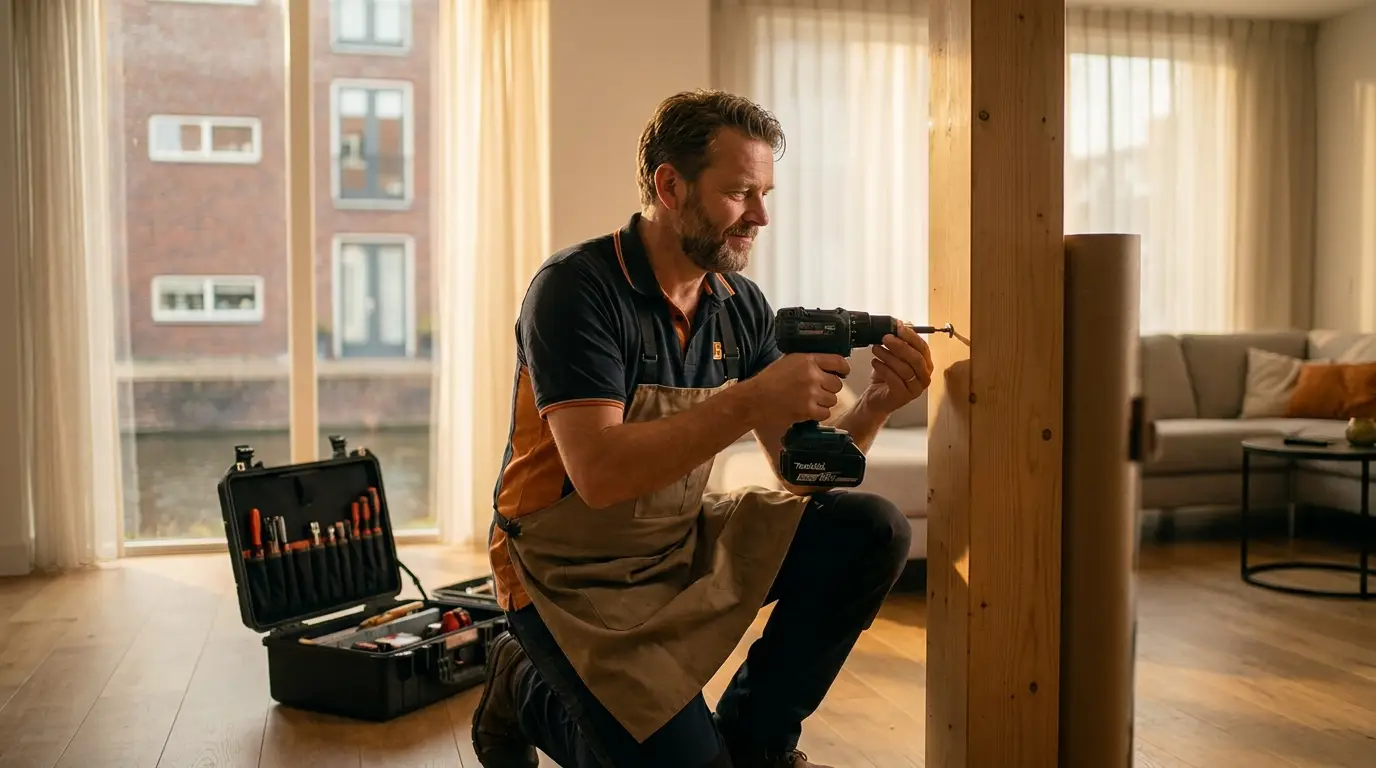
Cost of drilling holes: everything you need to know
Drilling holes is a common job when you're hanging things, installing ventilation, or running pipes through a wall. The cost depends heavily on the material (masonry, concrete, or wood), the diameter of the hole, and the number of holes being drilled. A contractor works quickly and prevents damage to pipes or the structure.
In this article
- ›What does drilling holes cost?
- ›Prices by type of hole
- ›Cost overview
- ›Hire a contractor or do it yourself?
- ›How does the job work?
- ›Money-saving tips
- ›Frequently asked questions
Need a contractor for this?
Describe your job and get quotes from contractors near you.
average price
€175
average job (multiple holes)
average hourly rate
€50
contractor hourly rate (€40–60/hour)
turnaround time
1–2 hours
depending on number of holes
€ Average price by type
| Hole type | Range | Average price |
|---|---|---|
| Small holes in masonry or drywallUp to 20 mm, e.g., installing anchors or a pipe penetration | €35 – €75 | €50avg.incl. labor |
| Medium holes in concrete (most popular)20–80 mm, e.g., pipes, wiring, or wall mounting | €75 – €175 | €125avg.incl. labor |
| Drilling a ventilation hole100–150 mm diameter, penetration from outside to inside | €125 – €200 | €160avg.incl. labor |
| Large hole in reinforced concrete150–300 mm, e.g., for a sewer drain or structural penetration | €175 – €400 | €275avg.incl. labor |
| Bulk job (10+ holes)Multiple holes at once, possible discount per hole | €200 – €500 | €325avg.incl. labor |
Prices are estimates and include the trip charge; diamond drilling in reinforced concrete is at the top of the range. Based on Google price research.
Material and labor costs
Home repair contractor hourly rate averages €40–€60/hour. A diamond drilling contractor charges €55–€80/hour including equipment costs.
Hiring a contractor vs. doing it yourself
| Job | Do it yourself | Via a contractor | Savings doing it yourself |
|---|---|---|---|
| Small holes in drywall or woodHanging paintings, shelves, or small wall items | DoableA regular cordless drill or hammer drill is enough; no risk of pipes in drywall | €5–20 (drill bit and anchors) | up to €60 |
| Holes in brick or sand-lime brickInstalling anchors for wall mounting or a small pipe penetration | With experienceHammer drill required; risk of cracks with inexperienced use or hard masonry | €20–50 (tools + materials) | up to €50 |
| Drilling a ventilation hole (100–150 mm)Exterior wall penetration for a range hood, HRV, or mechanical ventilation | With experienceRenting a core drill is expensive; without a wall scanner there's a real risk of damaging pipes in the wall | €60–110 (core drill rental + materials) | up to €90 |
| Holes in reinforced concreteDiamond drilling for a penetration, sewer drain, or heavy-duty mounting | Not recommendedRequires a professional diamond core drill; hitting rebar damages the structure and the bit | €200–500+ (rental + risk of damage) | No recommended savings |
| Core drilling in a load-bearing wallLarge penetration (150–300 mm) through a load-bearing or structural wall | Not recommendedStructural damage possible; structural engineer and certified drilling company required | €300–600+ (incl. structural engineer advice) | No recommended savings |
For simple mounting holes in drywall or soft masonry, you'll do fine yourself with a cordless drill and the right wall anchor. As soon as you're dealing with concrete walls, reinforced concrete, or large diameters from 50 mm, a home repair contractor or diamond drilling company is the safest choice. A contractor has a cable scanner (pipe and wire detector) to locate hidden electrical wiring, water pipes, and gas lines before they put the drill to the wall. It's not just a matter of precision: a damaged water pipe or gas line leads to significant follow-up damage that costs far more than you save on drilling. For core drilling in load-bearing walls, a structural engineer must also assess whether and how drilling is allowed: this isn't for DIYers.
The full process step by step
On-site inspection and measuring
The contractor checks which material needs to be drilled (masonry, concrete, drywall, or wood), measures the required diameters, and determines the exact drilling positions. They ask what each hole is for so they can choose the right machine and bit size.
10–20 min
Scanning the wall for pipes and cables
Using a wall scanner or pipe detector, the wall around each drilling position is scanned for hidden electrical wiring, water pipes, and gas lines. Only once the way is clear is the drilling position marked for good.
5–15 min
Setting up dust protection
Before drilling, especially in concrete and masonry, dust protection is set up: masking tape around the drilling position, a dust catcher bag, or a vacuum right at the drill. This limits the mess and protects your interior.
5–10 min
Drilling with the right machine
The contractor uses the machine that suits the material: a hammer drill for brick and sand-lime brick, a rotary hammer for harder masonry, and a diamond core drill for reinforced concrete and large diameters. Drilling speed and pressure are adjusted for each hole to prevent cracking or chipping.
15–90 min (depending on number and material)
Finishing and cleanup
Drill dust is removed, holes are blown or cleaned out, any anchors are installed, and the immediate area is cleaned. For ventilation holes, the trim ring, sleeve, or grommet is fitted and sealed.
10–20 min
Inspection and handover
The contractor checks that all holes are the right size and in the right place, and that nothing on the wall or surrounding finish is damaged. You go over the holes together, sign off, and receive an invoice.
5–10 min
6 smart money-saving tips
Frequently asked questions
How much does drilling holes cost on average?
On average, you pay €35–€50 per hole. For a small job, expect a total of €145–€175 including the trip charge. Larger holes (ventilation, concrete core drilling) cost €125–€400 depending on diameter and material.
How long does drilling holes take?
A handful of small holes in masonry is done within an hour. Drilling a ventilation hole through an exterior wall takes 1–2 hours. Large concrete core drilling or multiple penetrations can take half a day.
Do I need a permit to drill holes?
For standard hole drilling (anchors, ventilation, small penetrations), you don't need a permit. If you want to drill through structural walls or load-bearing beams, it's wise to consult a structural engineer. In some new construction projects or VvE buildings (VvE, the homeowners association of an apartment building), additional rules apply.
Can I drill holes myself?
You can drill small holes in drywall, wood, or soft masonry yourself with a hammer drill. For concrete walls, reinforced concrete, or large diameters, you need a professional diamond core drill. A contractor has detectors to locate pipes and wiring before they drill.
What's the difference between hammer drilling and diamond drilling?
Hammer drilling is suitable for masonry and brick and is done with a hammer drill. Diamond drilling is needed for reinforced concrete and produces clean, round holes without vibration. Diamond drilling is professional work and costs more, but gives a more precise result.
Are hidden pipes and cables protected?
A good contractor always scans the wall first with a wall scanner (pipe and cable detector) before they drill. This prevents damage to electrical wiring, gas lines, or water pipes. Always ask about this when booking the job.
Related jobs
Ready to have holes drilled professionally?
Describe your job for free. Checked contracting businesses near you respond, and you choose who to continue with.
Within 24 hours
response from a contractor
Verified
all contractors checked
Competitive price
compare quotes