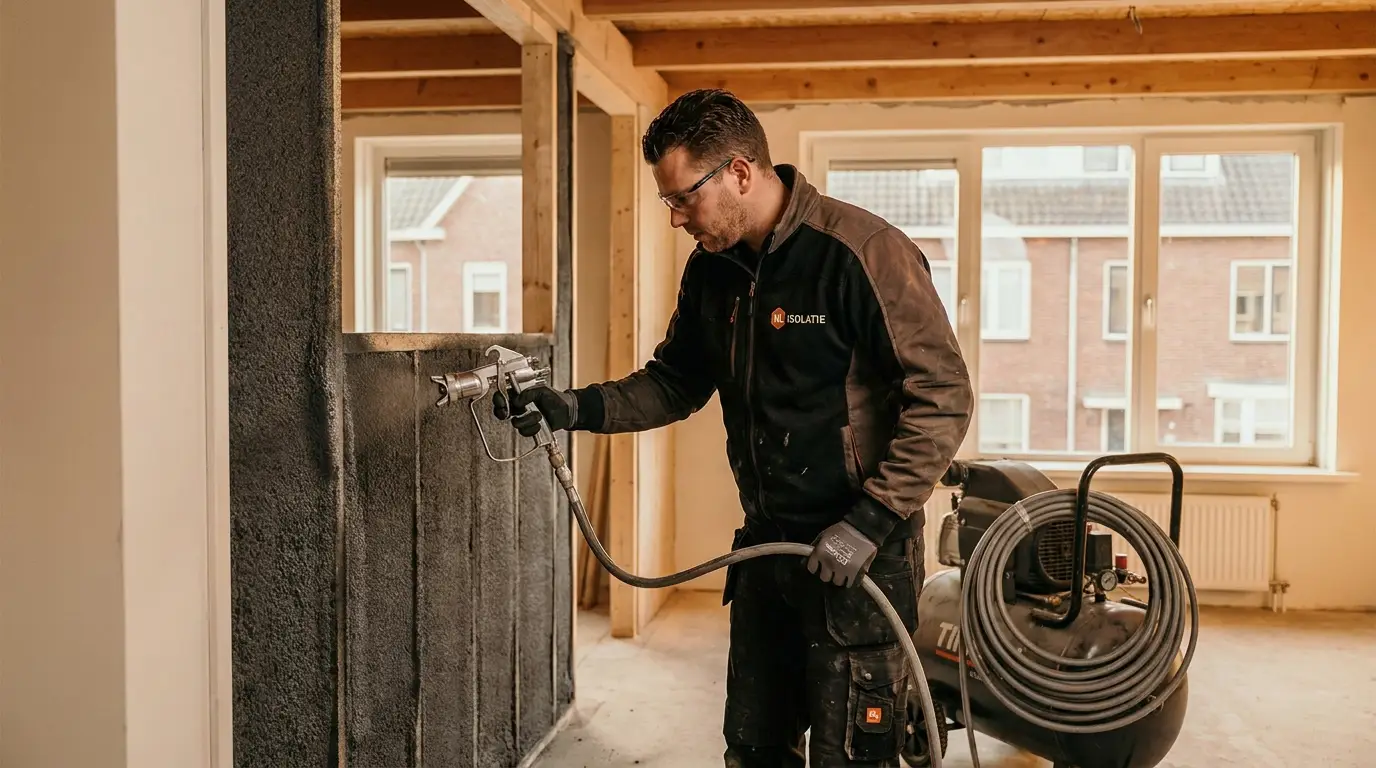
Cost of soundproofing: everything you need to know
Soundproofing reduces noise from neighbors, traffic, or other rooms in your home. The cost depends heavily on the surface area, the type (wall, floor, or ceiling), and the materials you choose. On average, you pay €65 to €140 per square meter including installation.
In this article
- ›What does soundproofing cost?
- ›Cost by type of soundproofing
- ›Material and labor costs
- ›Hiring a contractor vs. doing it yourself
- ›Work process step by step
- ›Money-saving tips
- ›Frequently asked questions
Need a contractor for this?
Describe your job and get quotes from contractors near you.
average price
€2,800
average project (approx. 30 m²)
average hourly rate
€55
contractor hourly rate (€45–65/hour)
turnaround time
1–4 days
depending on scope
€ Average price by type
| Type of soundproofing | Range | Average price |
|---|---|---|
| Acoustic wall panelssimple panels mounted on an existing wall | €800 – €2,000 | €1,400avg.incl. installation |
| Stud wall with mineral wool (most popular)new wall in front of the existing wall with mineral wool | €1,500 – €3,500 | €2,500avg.incl. installation |
| Floating floorfloor insulation against footstep and impact noise | €2,000 – €4,500 | €3,200avg.incl. installation |
| Acoustic drop ceilingsuspended ceiling system with sound-absorbing infill | €1,800 – €4,000 | €2,900avg.incl. installation |
| Full room treatmentwalls, floor, and ceiling soundproofed together | €5,000 – €12,000 | €8,000avg.incl. installation |
Prices include materials and installation for a standard room of approx. 15–25 m²; different dimensions or complex constructions can significantly affect the price. Based on Google price research.
Material and labor costs
Contractor/insulation installer hourly rate averages €45–€65/hour. Stud walls and floating floors require skilled custom work; cheaper materials save money in the short term but perform significantly worse at blocking sound.
Hiring a contractor vs. doing it yourself
| Job | Do it yourself | Via a contractor | Savings doing it yourself |
|---|---|---|---|
| Gluing acoustic wall panelsgluing or screwing individual acoustic panels onto an existing wall | DoableNo specialist tools needed; careful alignment and tight joints along the edges are enough | €25–€65/m² | up to €500 |
| Laying acoustic underlaymentlaying a loose damping mat under laminate or hardwood flooring | DoableRolling it out and cutting it precisely to size is easy to do yourself; the floor must be level and dry | €10–€30/m² | up to €400 |
| Stud wall with rock woolinstalling metal or wood stud framing, filling with rock wool, and finishing with drywall | With experienceRequires knowledge of perimeter sealing; every seam or gap around outlets and baseboards must be caulked airtight | €50–€90/m² | up to €800 |
| Installing a floating floorplacing an acoustic mat and poured or dry screed without contact with the walls | Not recommendedAn incorrect perimeter strip or contact with the wall causes direct sound transmission through the structure and makes the insulation almost useless | €70–€130/m² | No recommended savings |
| Acoustic drop ceilinghanging a ceiling system with vibration-isolating hangers and adding sound-absorbing infill | Not recommendedHangers must be mounted floating (decoupled); screwing directly into the concrete floor above carries all the sound through the frame | €80–€140/m² | No recommended savings |
With soundproofing, the weakest link determines the result: one small opening in an otherwise perfectly built wall or floor can cut the noise reduction in half. Simple acoustic wall panels and loose damping mats are fine to install yourself: the materials are sold at home improvement stores and the work doesn't require specialist tools. For a stud wall with rock wool, you already need experience with drywall work and strict perimeter sealing; the slightest gap around an outlet box or baseboard undoes the effect. Floating floors and acoustic drop ceilings are work for experienced contractors: decoupling the structure (floating connections, vibration-isolating hangers) requires knowledge that's only built up over several projects. Mistakes here are expensive to undo. For structural measures, always hire a certified insulation contractor.
The full process step by step
Inspection and noise analysis
The insulation contractor visits to determine through which part of the structure the noise enters: wall, floor, ceiling, or a combination. They distinguish airborne noise (voices, music) from impact noise (footsteps, banging) because the approach differs fundamentally. Room dimensions and any obstacles (pipes, outlets) are noted.
1–2 hours
Custom advice and quote
Based on the analysis, you receive an itemized quote with a material description (brand, Rw value), labor hours, and schedule. The contractor explains what level of sound reduction (Rw in dB) is realistically achievable in your situation, so you have clear expectations.
1–3 days
Preparing the surface
Existing baseboards, outlets, wall lights, and other wall finishes are removed. The surface is checked for moisture, cracks, or loose parts that could affect the insulation result. Moisture must be resolved first before insulation is installed.
2–4 hours
Installing framing and insulation material
The metal or wood stud framing is attached to the floor and ceiling, deliberately without any direct connection to the wall being insulated. Rock wool or acoustic boards are fitted tightly into the cavities without gaps. This is the most critical phase: every gap drastically lowers the insulation value.
4–8 hours
Perimeter sealing and drywall
All seams, pipe penetrations, and joints with the floor and ceiling are sealed airtight with acoustic caulk. Then the drywall is screwed in place (sometimes double for extra damping), jointed, and taped. Outlets are acoustically sealed.
4–8 hours
Finishing and restoration work
Baseboards, outlets, and switches are put back. The new wall or ceiling is ready for painting or plastering. If the customer does this themselves, the contractor indicates which products are suitable without damaging the perimeter sealing.
2–4 hours
Final inspection and handover
The contractor checks the entire wall or floor for visible gaps, loose fasteners, and incomplete perimeter sealing. For larger projects or if there's doubt about the result, a simple knock test or an acoustic measurement can be done to confirm the noise reduction achieved.
30–60 min
6 smart money-saving tips
Frequently asked questions
What does soundproofing cost on average?
On average €2,800 for a project of approx. 30 m². The price per m² is between €65 and €140 including installation. A simple stud wall in one room can easily cost €1,500–€3,500.
How long does it take to install soundproofing?
A contractor typically needs 1 to 2 days to soundproof one wall or ceiling (approx. 15–25 m²). A full room treatment with walls, floor, and ceiling takes 3 to 4 days.
Do I need a permit for soundproofing?
Interior soundproofing usually doesn't require a permit. If structural walls are altered or work is done on the facade, a building permit may be required. If in doubt, check with your municipality.
Can I install soundproofing myself?
Simple acoustic wall panels are easy to install yourself (do-it-yourself price €25–€65/m²). A stud wall with rock wool or a floating floor requires a contractor's skills; mistakes lead to significantly less sound insulation. Hiring a contractor pays off for structural measures.
What's the difference between soundproofing and sound absorption?
Soundproofing keeps sound from outside a room from getting in (or the other way around). Sound absorption reduces echo within a room. For noise from neighbors, you need soundproofing; for better acoustics in a home studio, mainly absorption.
What materials are used for soundproofing?
The most common materials are rock wool and glass wool (high sound reduction), acoustic drywall, PUR/PIR foam boards, and special vibration dampers. For floors, acoustic underlayments or floating floors are used.
Related jobs
Ready to have your soundproofing installed?
Describe your job and receive quotes from verified insulation contractors near you.
Within 24 hours
response from a contractor
Verified
all contractors checked
Competitive price
compare quotes