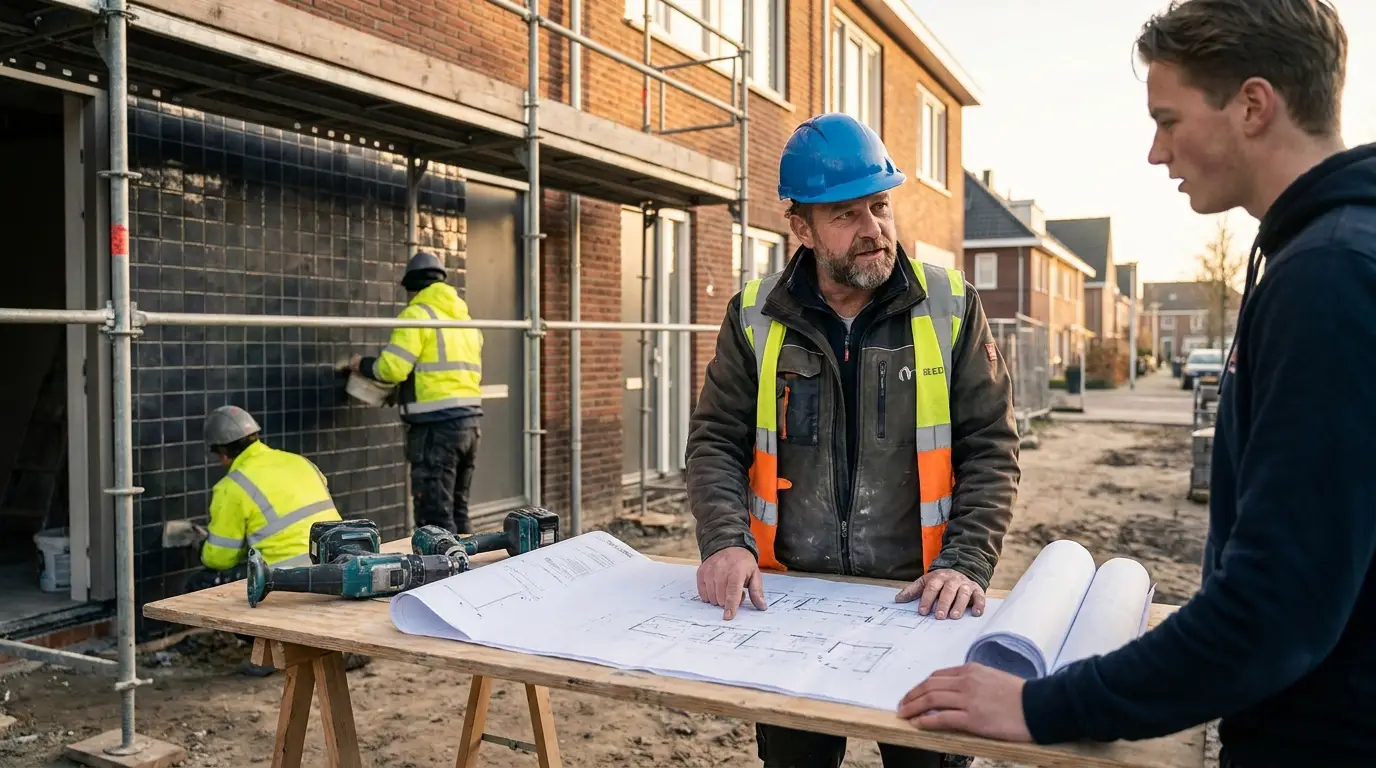
Cost of pointing a facade or grouting tiles: everything you need to know
Pointing and grouting give your facade or tiling a watertight, attractive finish. The cost of pointing a facade or grouting tiles depends on the surface area, the type of joint, and the condition of the existing joints. On average, you'll pay €30 to €60 per m², including labor and materials.
In this article
- ›Average cost of pointing a facade or grouting tiles
- ›Prices by type of pointing
- ›Material and labor costs
- ›Hire a contractor or do the pointing yourself?
- ›Step by step: how does the pointing work go?
- ›Money-saving tips for pointing
- ›Frequently asked questions
Need a contractor for this?
Describe your job and get quotes from contractors near you.
average price
€2,100
average home (50–60 m²)
average hourly rate
€45
contractor hourly rate (€40–55/hour)
turnaround time
1–3 days
depending on facade area
€ Average price by type
| Type of pointing | Range | Average price |
|---|---|---|
| New pointing (new construction or smooth brickwork)Flush or concave joint, no raking out needed | €20 – €35 | €27avg.incl. labor |
| Repointing (most popular)Raking out old joints + new pointing, average home | €30 – €60 | €45avg.incl. labor |
| Decorative facade jointRecessed or raised ribbon joint, more craftsmanship required | €50 – €90 | €70avg.incl. labor |
| Grouting tiles (bathroom or kitchen)Epoxy or cement grout, per m² of tiled area | €15 – €35 | €25avg.incl. labor |
| Full facade job, row houseRaking out + pointing entire facade, approx. 50–60 m² | €1,500 – €3,600 | €2,100avg.incl. labor |
Prices per m² including labor and materials; raking out old joints is charged separately (€8–€18/m²). Based on Google price research.
Material and labor costs
Pointing contractor hourly rate averages €40–€55/hour. Scaffolding costs (€150–€500) are not included in the price per m².
Hiring a contractor vs. doing it yourself
| Job | Do it yourself | Via a contractor | Savings doing it yourself |
|---|---|---|---|
| Grouting tiles in a bathroom or kitchen (small area)Up to approx. 5 m², flat surface, cement grout without raking out | DoableCement grout mix is easy to apply with a grout float and damp sponge; no special tools needed | €20–€50 materials | up to €150 |
| Facade repointing (limited area)Approx. 5–15 m², easy to reach without scaffolding (ground floor) | With experienceThe right mix ratio, a joint depth of 2 cm, and pre-treatment are crucial; mistakes lead to leak streaks on the wall | €50–€130 materials | up to €500 |
| Facade pointing at height or full repointingAbove 3 m, scaffolding required, raking out and repointing entire facade | Not recommendedScaffolding, pneumatic raking tools, and years of trade experience are required; faulty pointing lets in moisture that damages the bricks | €1,500–€3,600 total | No recommended savings |
| Applying decorative or recessed facade jointsDecorative ribbon or recessed joint in a face brick facade | Not recommendedRequires a clean joint cut, even depth, and exact joint profile choice; uneven work stays permanently visible and can't be corrected without full repointing | €50–€90 per m² | No recommended savings |
| Epoxy grouting in a bathroom (renovation)Removing old grout and applying epoxy grout, wet area | With experienceEpoxy grout is harder to work with than cement grout: short working time, strict temperature requirements, and thorough cleaning of the tile surface right after application are essential | €40–€90 materials | up to €200 |
For small tiled areas (a bathroom or kitchen alcove of a few square meters), grouting with cement grout yourself is very doable if you're handy. Buy the right grout width to match the tile gap, work in dry conditions, and clean the tile surface right after applying. Facade pointing follows different rules. As soon as work takes place above 3 meters, scaffolding or an aerial lift is mandatory: a safety requirement, not a choice. Raking out requires a pneumatic chisel or angle grinder that most DIYers don't own, and using it wrong damages the brick. For historic buildings or in a protected historic district, only approved mortar matching the original mortar composition may be used; the wrong material leads to an enforcement notice from the municipality. For all this work, hire a professional pointing company that can give a warranty on watertightness and durability.
The full process step by step
Inspection and custom quote
The pointing contractor inspects the facade or tiling on site: they assess the condition of the existing joints (loose, cracked, washed out), measure the area, and determine what percentage needs raking out. Based on this, you receive an itemized quote with separate items for raking out, pointing, scaffolding, and any sealing.
1–2 hours
Setting up scaffolding or an aerial lift
If the facade is higher than 3 meters, a rolling scaffold, fixed facade scaffold, or aerial lift is set up. The pointing contractor then works systematically from top to bottom, so dirt and mortar don't fall onto work that's already been cleaned. Scaffolding costs are itemized separately in the quote.
Half a day (setting up scaffolding)
Raking out damaged joints
Loose, cracked, or washed-out joints are raked out with a pneumatic chisel or angle grinder to a depth of at least 2 cm. Raking out too shallow is the most common cause of new joints coming loose. The pointing contractor then removes dust and loose particles with a brush or compressed air.
1–3 hours per 10 m²
Mixing and applying the mortar
The mortar is mixed in the color and composition that matches the existing brickwork (or the tile). For historic buildings, a lime mortar is used that breathes like the original joint. The mortar is pressed in with a pointing gun or jointing tool and then smoothed into the desired joint profile: flush, concave, or recessed.
2–5 hours per 10 m²
Cleaning the facade or tiling
After stiffening, but before fully curing, mortar stains and residue are removed from the brickwork or tile surfaces. For stubborn stains, a mild acid solution (for brick) or special tile cleaner (for tiles) is used. Cleaning the wrong way can affect the brick color.
1–2 hours
Optional: sealing the facade
Once the joints have fully cured (usually 7 to 28 days depending on the mortar), the facade can be sealed. Sealing reduces water absorption by 80–90% and significantly extends the life of the pointing. This is recommended for highly exposed west-facing facades or porous brick.
1–3 hours (scheduled separately)
Handover and final inspection
The contractor walks through the entire facade or tiling with you, checking for gaps, uneven joint depth, and color differences. You receive a handover report and maintenance instructions: when the mortar is fully cured, how to spot joint damage early, and when a next inspection makes sense.
30–45 minutes
6 smart money-saving tips
Frequently asked questions
What does facade pointing cost on average?
On average €2,100 for a standard row house (50–60 m²). The range is between €1,500 and €3,600. Per m², you can expect €30–€60, depending on the type of joint and whether raking out is needed.
How long does it take to point a facade?
For an average row house, it takes 1 to 3 days. With extensive raking out or larger facades, this can increase to a week.
Do I need a permit for facade pointing?
In most cases, no. If you live in a protected historic district or a historic building, always check with your municipality or the Omgevingsloket (the Dutch online permit portal) whether a permit is required.
Can I point a facade myself?
Small areas and tile grouting are doable for a handy DIYer. Facade pointing at height or large-scale repointing requires craftsmanship and equipment; a contractor who specializes in pointing delivers better quality and a warranty.
What's the difference between pointing and raking out?
Raking out means removing the old, damaged joints to a depth of approx. 2 cm. New joints are then applied. Raking out is extra labor-intensive and raises the price by €8–€18 per m².
How long does new pointing last?
Professionally applied pointing with quality mortar lasts 20 to 40 years, depending on weather exposure and the quality of the bricks.
Related jobs
Ready to have your facade or tiles professionally pointed or grouted?
Describe your job and get quotes from verified pointing companies near you.
Within 24 hours
response from a contractor
Verified
all contractors checked
Competitive price
compare quotes