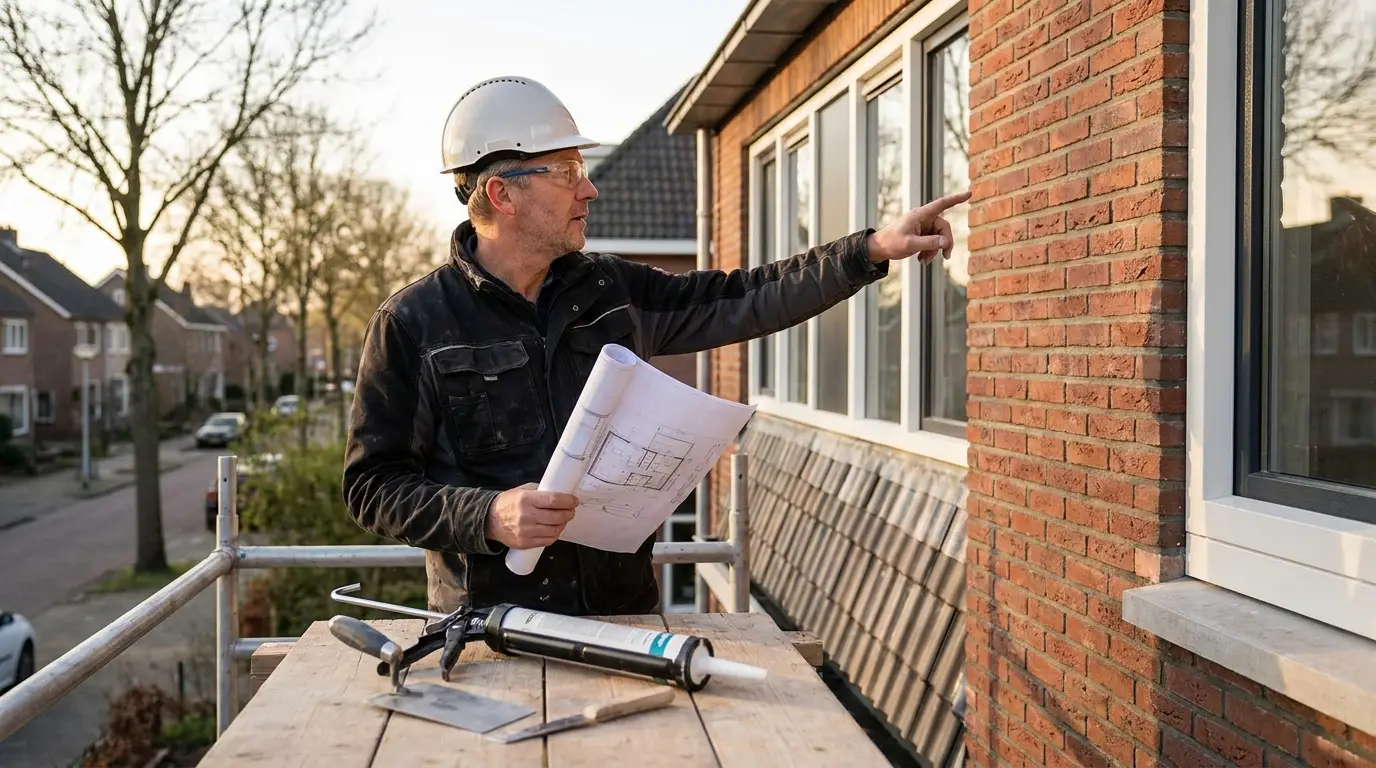
Cost of caulking facades or tiles: everything you need to know
Caulking creates a watertight seal along joints and connections at tiles, facades, window frames, and bathroom fixtures. The cost depends on the number of linear meters, accessibility, and whether old caulk has to be removed first. On average, you'll pay €150 to €450 for a standard job, at an hourly rate of €40 to €60 for a professional caulking contractor.
In this article
- ›What does caulking cost on average?
- ›Prices by type of caulking job
- ›Material and labor costs
- ›Hiring a contractor vs. doing it yourself
- ›How does a caulking job work?
- ›Money-saving tips
- ›Frequently asked questions
Need a contractor for this?
Describe your job and get quotes from contractors near you.
average price
€280
bathroom or facade joints (approx. 20–30 linear m)
average hourly rate
€50
contractor hourly rate (€40–60/hour)
turnaround time
1–2 days
depending on scope and drying time
€ Average price by type
| Type of caulking | Range | Average price |
|---|---|---|
| Small caulking job: shower or sinkSealing joints at shower, sink, or toilet, up to 10 linear meters | €100 – €200 | €150avg.incl. labor |
| Fully recaulking a bathroom (most popular)Removing old caulk + new caulking, approx. 20–30 linear meters | €180 – €420 | €280avg.incl. labor |
| Caulking window frames and facade jointsWatertight sealing of exterior windows, doors, and facade parts | €200 – €500 | €325avg.incl. labor |
| Caulking kitchen tile floor or tile wallSealing countertop joint, kitchen tiles, and backsplash | €120 – €300 | €200avg.incl. labor |
| Complete exterior caulking of a homeAll window frames, facade penetrations, and joints in one visit | €400 – €900 | €620avg.incl. labor |
Prices include removing old caulk and finishing; VAT included, excluding any scaffolding costs for high facades. Based on Google price research.
Material and labor costs
Caulking contractor/tile setter hourly rate averages €40–60/hour. Exterior work (facade, window frames) is usually priced higher due to accessibility.
Hiring a contractor vs. doing it yourself
| Job | Do it yourself | Via a contractor | Savings doing it yourself |
|---|---|---|---|
| Sealing a small shower or sink jointUp to 5 linear meters in a dry, easily accessible spot | DoableWith a ready-to-use silicone tube and masking tape, this is very doable; make sure the surface is clean and degreased | €10–25 materials | up to €150 |
| Fully recaulking a bathroomRemoving old caulk, cleaning, and reapplying everywhere (20–30 linear m) | With experienceSmoothing neatly takes practice; poorly finished joints quickly attract mold and adhere less well | €40–80 materials | up to €300 |
| Caulking window frames and facade jointsWatertight sealing of exterior windows and doors with UV-resistant caulk | With experienceThe wrong type of caulk or insufficient cleaning causes it to come loose within a year, leading to moisture damage after all | €30–70 materials | up to €400 |
| Caulking at height: taller facades or dormersJoints above the ground floor that can only be reached by scaffolding or aerial lift | Not recommendedThe risk of falling is real; renting scaffolding or an aerial lift costs more than hiring the contractor including materials | - | No recommended savings |
| Recaulking mold-prone shower jointsFully removing mold, treating the surface, and applying a new caulk joint | With experienceInsufficient mold removal before caulking means the mold returns under the new joint | €20–50 materials | up to €150 |
For simple caulking in easily accessible spots (a small joint along the sink or a single ground-floor window), a handy DIYer is perfectly capable of getting started. The key is preparation: the surface must be completely dry, clean, and degreased before the new caulk will adhere. Also choose the right type: silicone caulk for damp rooms and outdoor use, acrylic caulk for indoor joints that will be painted over. A contractor is essential when it comes to caulking at height, large facade surfaces, or situations where an imperfect seal risks moisture damage. Professional caulking contractors use a primer that ensures long-lasting adhesion on difficult surfaces such as aluminum, glass, and coated tiles, and they usually give a one-year workmanship warranty on the result. With stubborn mold problems, a contractor also knows which pretreatment is needed to keep mold from returning under the new caulk.
The full process step by step
Inspection and quote
The caulking contractor inspects all joints to be treated on site (bathroom, kitchen, window frames, or facade) and measures the total number of linear meters. Based on this, you'll receive a fixed price or a price per meter.
30–60 min
Fully removing old caulk
Existing layers of caulk are removed mechanically with a caulk knife, oscillating saw, or special caulk remover. For stubborn silicone, a solvent is used. This is usually the most time-consuming step of the job.
1–3 hours (depending on quantity)
Cleaning and preparing the surface
The joint is thoroughly cleaned with a cleaning agent and fully degreased. On smooth or porous surfaces, such as coated aluminum or old ceramic tiles, the caulking contractor applies a primer for optimal adhesion.
30–60 min including primer drying time
Masking and applying caulk
Masking tape is applied along both sides of the joint for clean lines. Then the caulk is applied evenly into the joint with a professional caulk gun. The caulking contractor immediately smooths the joint wet with a smoothing tool or a wet finger for an even finish.
1–2 hours
Removing tape and checking the joint
Once the joint is finished, the masking tape is carefully removed while the caulk is still wet. The caulking contractor inspects the entire joint for holes, uneven spots, or missing sealant and fixes these right away.
15–30 min
Drying time and completion
Silicone caulk needs 12–24 hours to fully cure at room temperature. Acrylic caulk dries faster. The caulking contractor explains when the room can be used again and goes over the warranty terms.
12–24 hours drying time
6 smart money-saving tips
Frequently asked questions
What does caulking on a facade or tiles cost on average?
On average €280 for a standard bathroom or facade joints (20–30 linear meters). The range is between €100 and €500. A professional caulking contractor charges €6 to €11 per linear meter to remove old caulk and recaulk (new caulk only: €4 to €7), excluding minimum rates.
How long does caulking tiles or a facade take?
A standard bathroom is caulked in half a day to a full day. When old caulk has to be removed first and the primer needs drying time, the job can take up to two days.
Do I need a permit for caulking?
No, caulking tiles, a facade, or window frames is maintenance and doesn't require a permit. You can hire a contractor right away.
Can I caulk a facade or tiles myself?
Sealing small joints is very doable for a handy DIYer with ready-to-use silicone caulk. For a neat and durable result, especially outdoors or in damp rooms, a professional caulking contractor is recommended. A poor caulk joint can lead to moisture damage.
How long does caulking last?
Professionally applied caulk lasts 5 to 10 years on average in a bathroom. Outdoors, at window frames and facade joints, 8 to 15 years is achievable depending on the quality of the caulk and the weather conditions.
What's the difference between caulk and grout?
Grout (cement- or epoxy-based) fills the joints between tiles and is hard once cured. Caulk (silicone or acrylic) is flexible and is used for connection joints, expansion joints, and seals along window frames, bathroom fixtures, and facades. Caulk is elastic and absorbs settling.
Related jobs
Ready to have your caulking done professionally?
Describe your job and receive quotes from verified tile setters near you.
Within 24 hours
response from a contractor
Verified
all contractors checked
Competitive price
compare quotes