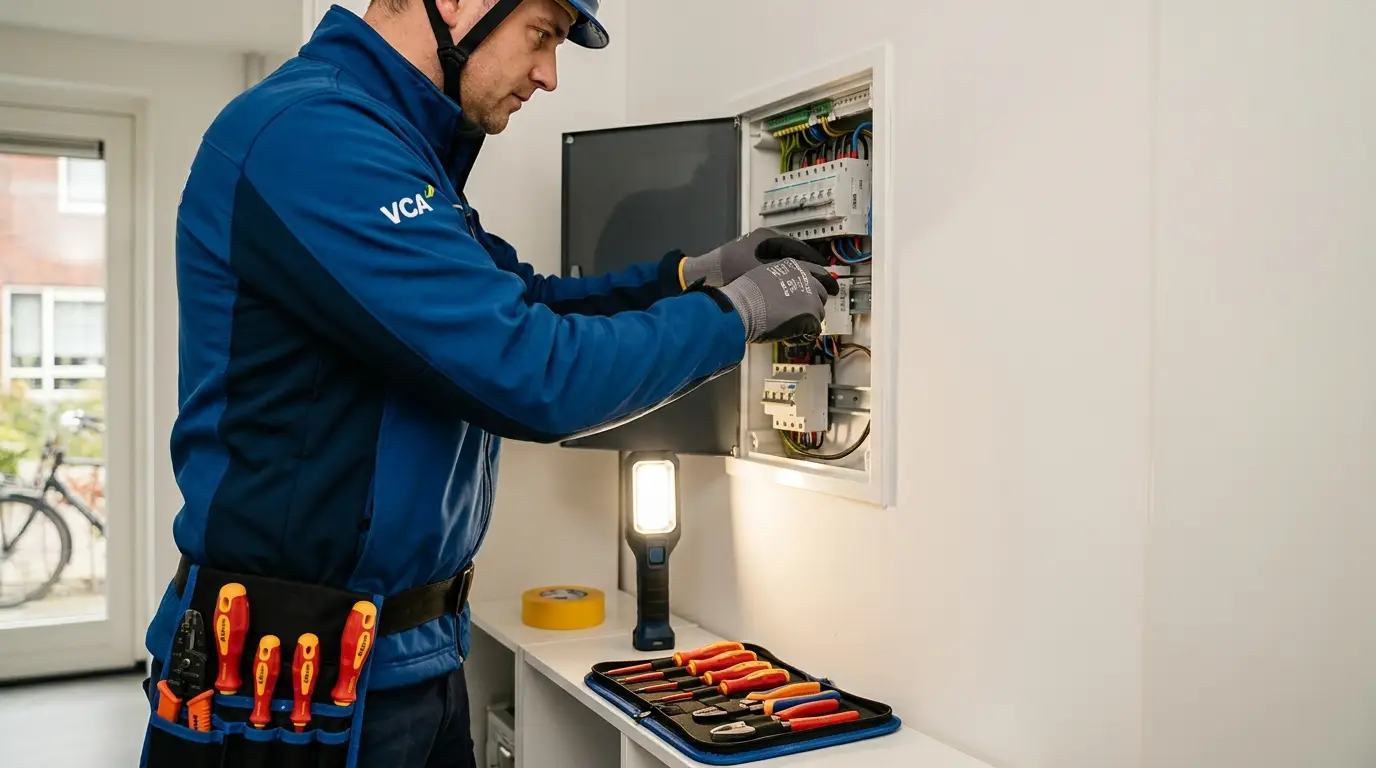
Cost of installing or upgrading a breaker panel: everything you need to know
A breaker panel is the electrical heart of your home. Whether you want to replace an outdated meter cabinet (where the electricity meter and the breaker panel are) or add extra circuits for a renovation, the cost depends on the number of circuits, the type of installation, and whether grounding or an extra phase is also needed. By law, this work requires a licensed electrician.
In this article
- ›Average cost of a breaker panel
- ›Prices by type of installation
- ›Material and labor cost breakdown
- ›Hiring a contractor vs. doing it yourself
- ›Step-by-step process
- ›Smart money-saving tips
- ›Frequently asked questions
Need a contractor for this?
Describe your job and get quotes from contractors near you.
average price
€900
installation including materials
average hourly rate
€60
electrician hourly rate (€55–75/hour)
turnaround time
1–2 days
depending on scope
€ Average price by type
| Installation type | Range | Average price |
|---|---|---|
| Add an extra circuitconnecting an additional circuit in the existing panel | €150 – €300 | €220avg.incl. installation |
| Replace breaker panel: 6 circuitsnew panel with RCD, suitable for a small home | €600 – €900 | €720avg.incl. installation |
| Replace breaker panel: 8–10 circuits (most popular)new panel for an average row house or duplex | €750 – €1,200 | €950avg.incl. installation |
| Replace breaker panel: 12+ circuitslarger panel for a big home or extensive electrical system | €1,000 – €1,600 | €1,300avg.incl. installation |
| Install a 3-phase connectionneeded for an EV charger, heat pump, or heavy equipment | €900 – €1,750 | €1,300avg.incl. installation |
| Drive a ground rod and connect groundingrequired in older homes without grounding | €200 – €350 | €255avg.incl. installation |
Prices include VAT and apply to a standard home; extra wiring, 3-phase connections, or historic buildings can increase the cost. Based on Google price research.
Material and labor costs
Electrician hourly rate averages €55–75/hour. Larger electrical companies sometimes charge a trip charge of €30–€60.
Hiring a contractor vs. doing it yourself
| Job | Do it yourself | Via a contractor | Savings doing it yourself |
|---|---|---|---|
| Fully replace the breaker panelinstall a new distribution board, reconnect all circuits, and install RCDs | Not recommendedLegally reserved for a licensed electrical company per NEN 1010; doing it yourself voids your homeowners insurance | €750–€1,200 | No legal savings possible |
| Add an extra circuitwire and connect a new circuit in the existing panel, install a circuit breaker | Not recommendedIncorrect wiring causes overheating and fire risk; a licensed electrician is legally required | €150–€300 | No legal savings possible |
| Install a 3-phase connectionrun three-phase power for an EV charger, heat pump, or heavy equipment | Not recommendedRequires coordination with the grid operator (Liander, Enexis, Stedin) and a certified electrician; 380V is lethal | €900–€1,750 | No legal savings possible |
| Clear the space and improve accessremove stored items, clear the cabinet, and arrange good lighting in the meter cabinet corner | DoableYou can prepare the workspace yourself: the electrician works more efficiently and you save on labor time | €0 yourself | up to €60 savings |
| Label circuits and keep installation recordsname existing circuits, draw or update a diagram after the job is done | DoableLabeling and keeping your own diagram isn't electrical work and is handy for future jobs or selling your home | €0 yourself | No recommended savings |
In the Netherlands, work on the breaker panel falls under the legal requirements for electrical installations (NEN 1010) and may only be done by a certified electrical company. This applies to any work beyond the main switch: installing a new panel, adding a circuit, installing an RCD, or running a 3-phase connection. If you do this yourself, you risk not only fire or electrocution, but also rejection when selling your home and losing your homeowners insurance. What you can contribute as a DIYer: make sure the meter cabinet is easy to reach, remove stored items, and give the electrician clear access. This saves labor time and keeps costs down. Afterward, you can label the circuits yourself and keep a diagram: handy for future renovations or when you sell your home.
The full process step by step
Assessment and quote
The electrician assesses the existing breaker panel, the condition of the wiring, and the connection capacity on site. They determine how many circuits are needed, whether grounding is missing, and whether a 3-phase connection is desired. Based on this, you'll receive an itemized quote: always ask whether it's a fixed price or time and materials.
30–60 minutes
Shut off the main power
The electrician shuts off the power supply at the main switch or, if the service connection box is also being replaced, through the regional grid operator. Work on the panel only starts once the power is completely off. This is a legally required safety step that must never be skipped.
15–30 minutes
Remove the old panel
The existing breaker panel is detached, and the wiring is carefully labeled and disconnected. Outdated aluminum wiring or loose wire connections are identified at this stage: this can lead to extra work that must be discussed beforehand.
30–60 minutes
Install the new panel and connect circuits
The new distribution board is mounted, and all existing and new circuits are connected in accordance with NEN 1010. RCDs (type A or B depending on the load) and circuit breakers are installed at the correct capacities. Each circuit is labeled separately.
1–3 hours
Check grounding and install it if needed
In homes without grounding, a ground rod is driven into the soil (at least 1 meter deep) and connected to the new panel with a grounding cable. This is required for an installation that passes inspection and for the RCDs to work correctly.
30–60 minutes
Testing, measuring, and handover
The electrician tests each circuit separately, measures insulation values, and checks that the RCDs work. If the results are correct, you'll receive an installation certificate or inspection report. The electrician explains how the panel works and what to do when a breaker trips.
30–45 minutes
6 smart money-saving tips
Frequently asked questions
What does it cost on average to install or upgrade a breaker panel?
On average, you'll pay €700 to €1,200 for a full replacement including materials and labor. Adding a single extra circuit costs €150 to €300. A 3-phase connection can run up to €900–€1,750.
How long does it take to replace or upgrade a breaker panel?
A replacement usually takes 2 to 4 hours. A larger upgrade or 3-phase installation can take 1 to 2 days, depending on the existing installation and the type of home.
Do I need a permit?
No, a permit isn't required. The work must, however, be done by a licensed electrical company (certified to NEN 1010, the Dutch standard for electrical installations). After completion, an inspection report is strongly recommended.
Can I replace a breaker panel myself?
No. In the Netherlands, work on the breaker panel is legally reserved for licensed electricians. Doing it yourself can be dangerous and may lead to rejection when you sell your home or to losing your homeowners insurance coverage.
When should I replace my breaker panel?
Replace your panel if it's older than 25–30 years, if you don't have a residual current device (RCD), the European counterpart of a GFCI, if breakers trip regularly, or if you're planning an EV charger, a heat pump, or a major renovation.
Does my insurance cover the cost of a new breaker panel?
Insurers normally don't cover replacement, since it counts as maintenance. If a faulty panel causes fire damage, your homeowners insurance may apply. Ask your insurer about the exact policy terms.
Related jobs
Ready to have your breaker panel installed or upgraded?
Describe your job and receive quotes from verified electricians near you.
Within 24 hours
response from a contractor
Verified
all contractors checked
Competitive price
compare quotes