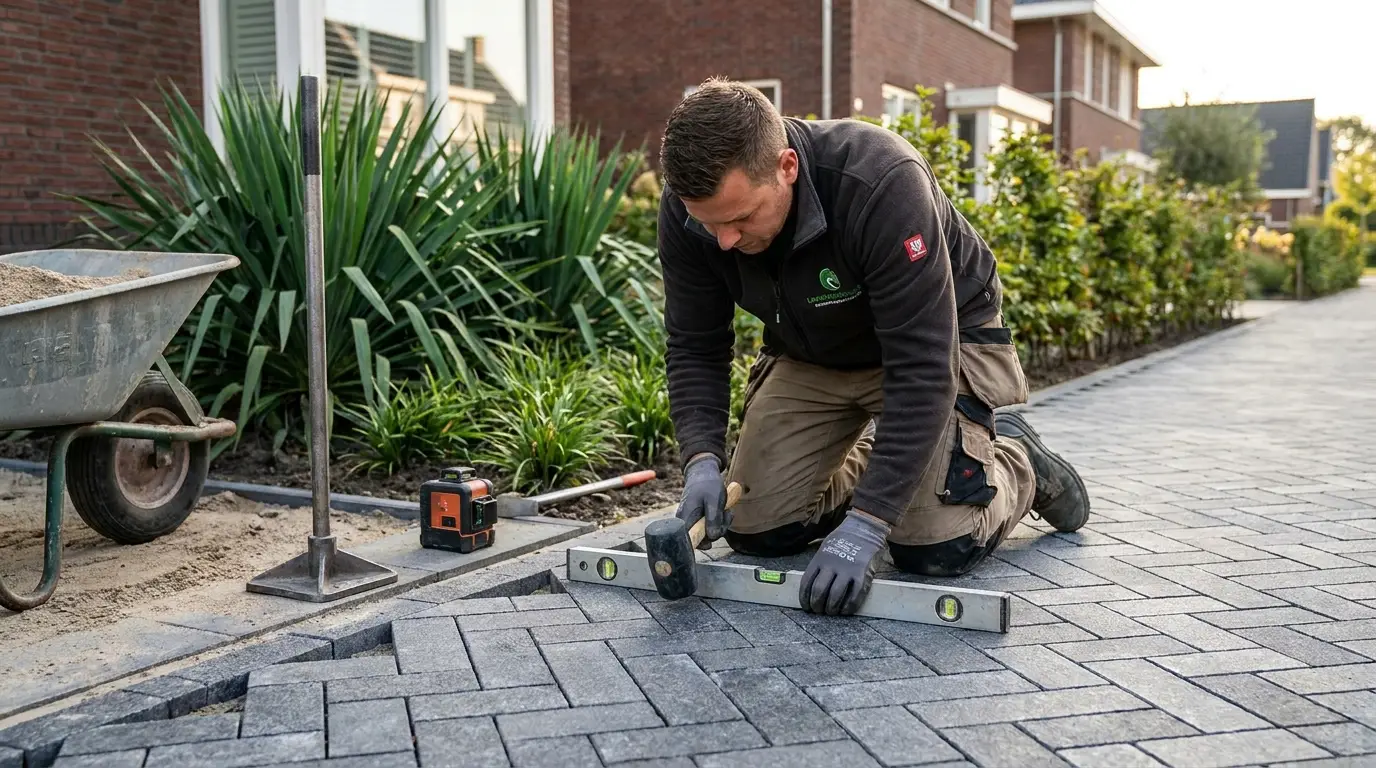
Cost of excavating or leveling ground: everything you need to know
Excavating or leveling ground is needed for a new patio, driveway, paving, or a flat lawn. The cost depends heavily on the area, the required excavation depth, the soil type, and whether the excavated soil has to be hauled away. A contractor usually charges per m² or per m³ of soil hauled away.
In this article
- ›What does excavating or leveling ground cost?
- ›Prices by type of work
- ›What determines the price?
- ›Hire a contractor or do it yourself?
- ›How does the groundwork process work?
- ›Money-saving tips
- ›Frequently asked questions
Need a contractor for this?
Describe your job and get quotes from contractors near you.
average price
€850
average price including soil removal
average hourly rate
€55
landscaper/excavation contractor hourly rate (€45–65/hour)
turnaround time
1–3 days
depending on area and depth
€ Average price by type
| Type of groundwork | Range | Average price |
|---|---|---|
| Leveling only (small yard)up to 50 m², by hand or with a small machine | €200 – €600 | €350avg.incl. labor |
| Excavating up to 20 cm (most popular)50–100 m², including soil removal | €600 – €1,200 | €850avg.incl. labor |
| Excavating up to 40 cm50–100 m², including soil removal | €1,000 – €2,000 | €1,500avg.incl. labor |
| Large-scale earthmoving (yard of 100–200 m²)excavating and hauling away, by machine | €1,800 – €4,000 | €2,800avg.incl. labor |
| Leveling and raising with sandexcavating 20 cm, filling with sand, and compacting | €1,200 – €2,500 | €1,800avg.incl. labor |
Prices include soil removal; for contaminated soil, extra costs for certification and processing may apply. Based on Google price research.
Material and labor costs
Landscaper/excavation contractor hourly rate averages €45–65/hour. Machine costs (mini excavator, bobcat) are often charged separately and run €150–400 per half day.
Hiring a contractor vs. doing it yourself
| Job | Do it yourself | Via a contractor | Savings doing it yourself |
|---|---|---|---|
| Leveling by hand (small yard)Height difference up to 10 cm, area up to 30 m² without soil removal | DoableVery doable for the average DIYer with a shovel, a rake, and a rented plate compactor | €60–150 materials + rental | up to €350 |
| Excavating up to 20 cm (medium-sized yard)50–100 m², soil has to be hauled away by dumpster | With experienceRequires machine rental (mini excavator or bobcat) and a dumpster: labor-intensive without experience | €350–700 rental + removal | up to €400 |
| Excavating deeper than 40 cmFoundation areas, basement starts, or large yards with heavy earthmoving | Not recommendedReal risk of trench walls collapsing and damage to cables and pipes without a KLIC notification | €700–1,400 rental + risk | No recommended savings |
| Raising and compacting with sandFilling with fill sand or stabilized soil to the desired level | With experienceRenting a plate compactor and compacting in layers is crucial: insufficient compaction leads to settling later | €150–400 materials + rental | up to €500 |
| Removal of contaminated soilSoil with asbestos, oil, heavy metals, or other contamination | Not recommendedLegally required through a certified, licensed earthmoving company: removing it yourself is a criminal offense | Fines + remediation costs | No legal savings possible |
Small leveling jobs, a height difference of less than 10 cm on an area up to 30 m², are easy to do yourself with a shovel, a rake, and a rented plate compactor. For anything bigger or deeper, the math changes quickly: renting a mini excavator or bobcat easily costs €250–400 per half day, and the savings are modest compared to the work an excavation contractor can get done in the same time. When excavating deeper than 20 cm, a KLIC notification (the mandatory Dutch dig notification through the Kadaster, the Dutch land registry) is required to locate cables and pipes: if you skip it, you risk high repair costs and liability. For contaminated soil (asbestos, oil, heavy metals), hiring a certified, licensed earthmoving company is legally required; removing it yourself results in fines and is a criminal offense under environmental law.
The full process step by step
Site assessment and measurement
The contractor inspects the site: they measure the area, determine the height difference with a level, and assess the soil type (sand, clay, peat). They also note machine access and the presence of trees or obstacles.
30–60 min
Requesting a KLIC notification
Before a single shovel goes into the ground, the contractor requests a KLIC notification through the Kadaster. This shows the exact location of underground gas, water, electrical, and data lines. Without this notification, digging deeper than 20 cm isn't allowed.
1–2 business days (notification wait time)
Clearing and fencing off the work area
Plants, shrubs, paving, or other obstacles in the work area are removed or protected. For work near a property line or public road, fences or barrier tape are put up. The contractor marks the cable routes from the KLIC map on the ground.
30–90 min
Excavating or leveling
Using a mini excavator, a bobcat, or by hand (depending on the area and access), the soil is excavated to the desired depth, or moved and filled to create a flat surface. The contractor works systematically in strips to ensure an even result.
3–8 hours (depending on area)
Raising and compacting (if applicable)
If a stable base is needed after excavating (for paving, a patio, or a lawn), fill sand or stabilized soil is brought in and compacted in layers of 10–15 cm with a plate compactor. Insufficient compaction is the main cause of settling later on.
2–4 hours
Soil removal
The excavated soil is loaded into a trailer or dumpster and hauled to a licensed soil processing site. For contaminated soil, the processor issues a certificate of processing. The amount and type of soil determine the removal costs.
1–3 hours
Final inspection and handover
The contractor checks the surface again with a level, cleans up the work area, and discusses the next step, for example laying paving, seeding grass, or building a patio. They also tell you how long the ground needs to settle before it can bear a load.
30 min
6 smart money-saving tips
Frequently asked questions
What does excavating or leveling ground cost on average?
€850 on average, including soil removal. Leveling only (by hand, small yard) starts at €200. Large jobs with deep excavation and a lot of earthmoving can run up to €4,000.
What does excavating ground cost per m²?
Excavating costs €10 to €18 per m² on average, including removal. Leveling only (no soil removal) costs €3 to €8 per m². For large areas, the price per m² drops thanks to economies of scale.
How long does excavating or leveling ground take?
Leveling or excavating a yard of 30–50 m² usually takes one day. Larger jobs or deep excavations can take 2 to 3 workdays.
Do I need a permit to excavate ground?
For normal yard work on your own property, you don't need a permit. For large-scale earthmoving, work near a structure, or contaminated soil, additional rules may apply. Check with your municipality.
Can I level ground myself?
You can do small leveling jobs (up to a 10 cm height difference, small yard) yourself with a rake, a shovel, and a plate compactor. For deeper excavation, large areas, or when the soil has to be hauled away, it's smart to hire a contractor with the right machines.
What does soil removal cost per m³?
Soil removal costs €30 to €50 per m³ on average. Contaminated soil is more expensive: expect €10 to €30 extra per m³ for certification and processing by a licensed processor.
Related jobs
Ready to have your ground excavated or leveled?
Describe your job and get quotes from verified landscapers and excavation contractors near you.
Within 24 hours
response from a contractor
Verified
all contractors checked
Competitive price
compare quotes