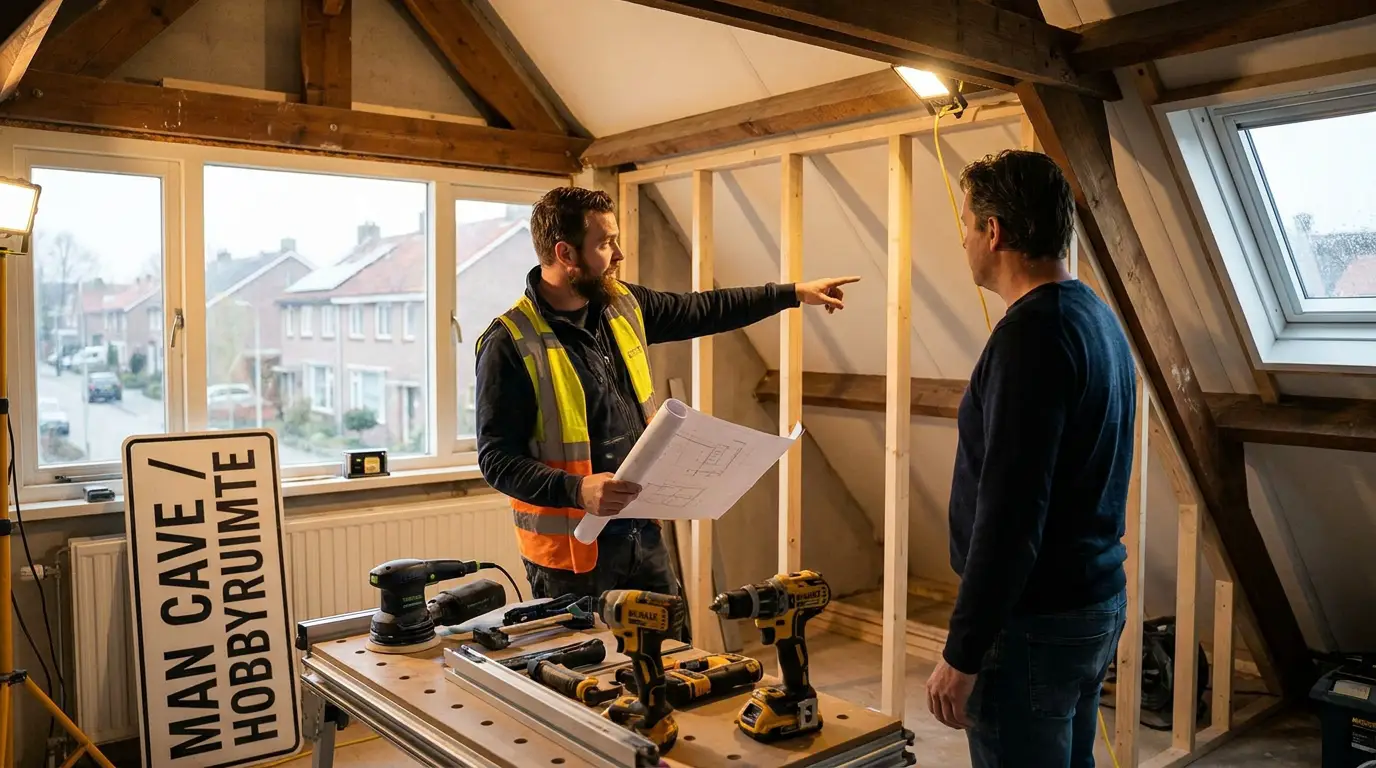
Cost of setting up a hobby room or man cave: everything you need to know
Setting up a hobby room or man cave gives you your own place to relax, do crafts, or game, entirely to your taste. The cost depends heavily on the condition of the space (basement, attic, or outbuilding), the finish you want, and the furnishings such as lighting, flooring, a bar, and furniture. With the right contractor, you get the most out of your budget.
In this article
- ›What does it cost to set up a hobby room or man cave?
- ›Price overview by type of setup
- ›Material and labor costs
- ›Hiring a contractor vs. doing it yourself
- ›How does the process work?
- ›Money-saving tips
- ›Frequently asked questions
Need a contractor for this?
Describe your job and get quotes from contractors near you.
average price
€4,500
finishing + furnishings included
average hourly rate
€45
contractor hourly rate (€40–55/hour)
turnaround time
2–7 days
depending on scope
€ Average price by type
| Type of hobby room / man cave | Range | Average price |
|---|---|---|
| Basic hobby roompainting, simple flooring, lighting | €800 – €2,000 | €1,400avg.incl. installation |
| Fully furnished room (most popular)flooring, walls, lighting, furniture, and decor | €2,500 – €6,000 | €4,000avg.incl. installation |
| Man cave with bar and entertainment cornercustom bar, wall panels, projector or TV setup | €5,000 – €10,000 | €7,000avg.incl. installation |
| Luxury man cave with insulation and full finishingmaking a basement or attic usable + premium furnishings | €8,000 – €18,000 | €12,000avg.incl. installation |
Prices are estimates for a space of 15–30 m² including labor and standard materials; custom work, insulation, and special connections are charged separately. Based on Google price research.
Material and labor costs
General contractor/carpenter hourly rate averages €45–55/hour. Electrical work (extra outlets, spotlights) is invoiced separately at €50–70/hour.
Hiring a contractor vs. doing it yourself
| Job | Do it yourself | Via a contractor | Savings doing it yourself |
|---|---|---|---|
| Installing a click floor (laminate or vinyl)about 15–25 m² hobby room, leveling and finishing | DoableClick laminate and vinyl planks are designed for DIYers; basic tools and a flat subfloor are enough | €350–850 | up to €850 |
| Painting or wallpapering wallswalls and ceiling of the hobby room | DoableEasy to do yourself with the right roller, painter's tape, and good preparation; spraying is a skill of its own | €300–700 | up to €700 |
| Installing wall panels or decorative wall finishesfurring strips, MDF panels, or brick slips for a man cave look | With experienceAn advanced DIYer can mount straight panels; plastering and corner finishing require real contractor skills | €400–1,000 | up to €1,000 |
| Expanding the electrical system (extra circuits, recessed spotlights)new outlets, dimmable lighting, separate circuit | Not recommendedLegally required to be done by a licensed electrician (NEN 1010); unprofessional work is a fire risk and voids your insurance | €50–70/hour electrician | No recommended savings |
| Building and installing a custom bar or hobby benchincluding countertop, shelves, and any water connection | With experienceA handy DIYer can build a sturdy workbench; a bar with a drain and faucet requires plumbing by a contractor | €600–1,800 | up to €1,800 |
For a hobby room or man cave, you can do a good part yourself: installing flooring, painting, placing furniture, and connecting LED lighting are very doable for the average DIYer. The line is drawn at electrical and plumbing work. Extra outlets, a separate circuit for gaming equipment, or recessed spotlights may only be installed by a licensed electrician in the Netherlands: unprofessional work isn't legally allowed, leads to inspection problems under NEN 1010 (the Dutch standard for electrical installations), and can void your fire insurance. The same goes for a bar with a water supply and drain: that work falls to a certified plumber. If you're also considering insulation (basement or attic) or installing a furring wall, you'll need a carpenter or general contractor for a clean, durable result.
The full process step by step
Define the concept and use
Decide what you'll use the space for: gaming, crafts, working out, a home theater, or a combination. Make a simple floor plan with the elements you want (bar, workbench, TV setup, seating area) so the contractor immediately knows what's needed.
30–60 min
Assess the space technically
Check the condition of the floor, walls, and ceiling. Determine whether moisture treatment, insulation, or changes to the electrical circuit are needed. In a basement or garage, this is a crucial step that determines which contractors you need.
30–90 min
Request quotes and choose contractors
Request at least three quotes from general contractors, carpenters, or finishing companies. Have a licensed electrician quote the electrical changes separately. Compare not just price but also lead time and references.
3–5 days
Carry out the structural preparation
Any moisture treatment, floor or wall insulation, furring walls, and electrical expansions are done now. This is the foundation for everything that follows: don't skip this phase to save money.
1–3 days
Finishing: flooring, walls, and lighting
Installing the floor, finishing or wallpapering the walls, installing recessed spotlights or LED strips, and finishing the ceiling. You can do DIY parts such as the click floor in parallel to shorten the total timeline.
2–5 days
Install custom work: bar, workbench, or cabinets
The carpenter installs the custom bar, workbench, or cabinets. Any water supply for a bar sink is installed by the plumber. Also check the connections for audio and video equipment.
1–2 days
Furnishing, tech, and handover
Place furniture and decor, install the gaming setup or home theater, and give the space its final finish. Walk through the handover points with the contractor and document any items that still need to be finished.
1 day
6 smart money-saving tips
Frequently asked questions
What does it cost on average to set up a hobby room or man cave?
On average, setting one up costs €2,500–€6,000. A simple setup starts at €800; a luxury man cave with a bar and entertainment can cost €10,000 or more. The biggest cost items are flooring, wall finishing, and furnishings.
How long does it take to set up a hobby room?
A basic setup (painting, flooring, lighting) takes 2 to 4 days. A complete man cave with custom work, wall panels, and electrical changes takes 5 to 10 workdays.
Do I need a permit for a man cave?
You don't need a permit to furnish an existing space. You do need one for structural work, roof windows, or an addition. Always check with your municipality.
Can I set up a hobby room myself?
Yes, painting, installing flooring, and placing furniture are doable. For electrical changes (extra circuits, recessed spotlights), you need a licensed electrician. Professional help with wall finishing or custom work saves you mistakes and time.
What are smart ways to save on costs?
Choose a floor you can install yourself (click laminate), use secondhand furniture, and limit custom work to key elements such as a bar or workbench. Always compare at least three quotes through a platform like VakmanBaas.
What does it cost to have a bar or workbench made for a man cave?
A custom bar or workbench costs an average of €800–€2,500, depending on the size, the material (wood, steel, concrete look), and the complexity. A simple home improvement store solution is available from €300–€500.
Related jobs
Ready to have your hobby room or man cave set up?
Describe your job and receive quotes from verified carpenters and general contractors near you.
Within 24 hours
response from a contractor
Verified
all contractors checked
Competitive price
compare quotes