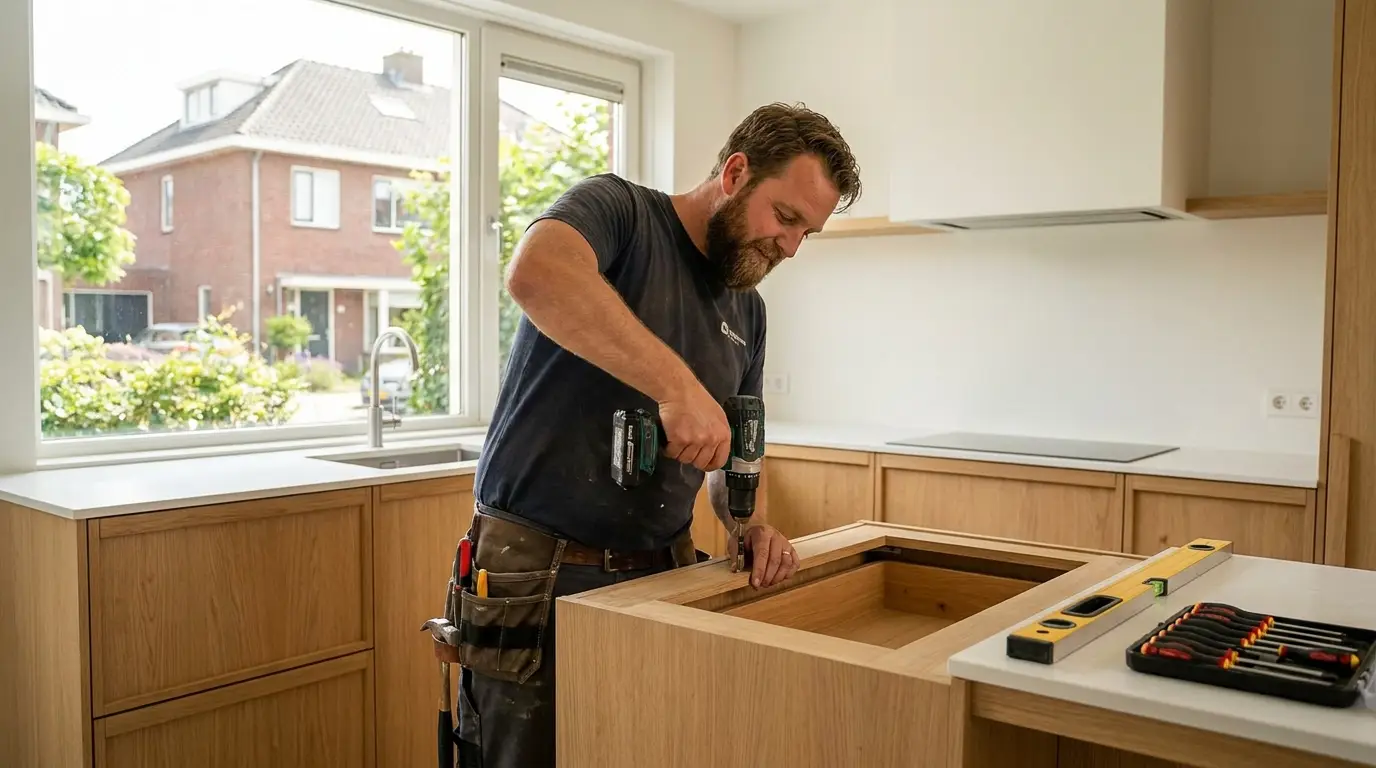
Cost of removing and installing a kitchen: everything you need to know
Removing and installing a kitchen covers taking out the old kitchen and expertly installing the new one. The cost depends on the size of the kitchen, the number of connections (water, gas, electrical), and whether extra work is needed, such as rerouting lines.
In this article
- ›What does kitchen removal and installation cost?
- ›Prices by type of job
- ›Labor costs and materials
- ›Hire a contractor or do it yourself?
- ›How does the kitchen installation process work?
- ›Money-saving tips for kitchen removal and installation
- ›Frequently asked questions
Need a contractor for this?
Describe your job and get quotes from contractors near you.
average price
€1,400
kitchen removal + installation (labor costs)
average hourly rate
€55
contractor hourly rate (€40–70/hour)
turnaround time
1–3 days
depending on scope and connections
€ Average price by type
| Type of kitchen work | Range | Average price |
|---|---|---|
| Removal onlyremove and haul away the old kitchen, without installing a new one | €200 – €650 | €450avg.incl. labor |
| Installing a small kitchenup to a 3-meter layout, simple connection | €450 – €1,000 | €700avg.incl. installation |
| Standard kitchen removal + installation (most popular)average kitchen of 3–5 meters, reusing existing connections | €1,050 – €1,800 | €1,400avg.incl. installation |
| Large or corner layoutL- or U-shaped kitchen, more cabinets and multiple connections | €1,500 – €2,700 | €2,100avg.incl. installation |
| Kitchen including rerouting linesmoving water, gas, or electrical lines to the new layout | €2,200 – €4,500 | €3,200avg.incl. installation |
Prices are labor costs including VAT; the kitchen itself and any tiling or plastering are not included. Based on Google price research.
Material and labor costs
Carpenter/kitchen installer hourly rate averages €40–70/hour. Rerouting lines requires a certified plumber or electrician and is quoted separately.
Hiring a contractor vs. doing it yourself
| Job | Do it yourself | Via a contractor | Savings doing it yourself |
|---|---|---|---|
| Removing the old kitchenunscrew and haul away cabinets, countertop, and built-in appliances | DoableA fine job to do yourself: shut off water, gas, and power first and work methodically | €200–€500 | up to €500 |
| Leveling and securing kitchen cabinetsalign upper and base cabinets, screw into wall and floor | With experienceRequires precision: one crooked cabinet throws off the whole row | €300–€800 | up to €800 |
| Cutting and installing the countertop to sizeshorten the countertop, cut openings for the sink and cooktop | With experienceA cutting mistake can't be undone; composite or stone is real skilled work | €150–€400 | up to €400 |
| Connecting water lines (supply and drain)connect sink, dishwasher, and refrigerator to the plumbing | With experienceA small leak behind a cabinet causes weeks of hidden damage | €80–€200 | up to €200 |
| Connecting or rerouting a gas lineconnect a gas range or combination oven, move the line to the new layout | Not recommendedLegally prohibited for private individuals: only a licensed gas plumber (GAS certificate) may do this | No legal savings possible | No legal savings possible |
For removing the old kitchen and hanging cabinets, a handy DIYer has room to get to work themselves. When it comes to connecting or rerouting a gas line, however, a licensed plumber with a GAS certificate (a Dutch certification for gas work) is legally required, and that's non-negotiable. Electrical work on a dedicated circuit for induction or a built-in oven requires an NEN 1010 (the Dutch standard for electrical installations) certified electrician. If you choose a composite or natural stone countertop, custom work by a contractor is strongly recommended: a cutting mistake in such material can wipe out the entire purchase price.
The full process step by step
Measuring and discussing preparation
The kitchen installer measures the space precisely: they check whether the floor is level, look at the existing water, gas, and electrical connections, and determine whether lines need to be rerouted. This meeting also settles who supplies the appliances and whether additional contractors (plumber, electrician) need to be scheduled.
30–60 min
Removing and hauling away the old kitchen
Water, gas, and power are shut off. Built-in appliances are disconnected and removed. Then the cabinets, countertop, and sink are unscrewed and carried outside. The wall and floor are inspected for damage that needs repair before the new kitchen is installed.
4–8 hours
Preparatory work (if needed)
If the layout changes, water, gas, or electrical lines are rerouted by the relevant certified contractor. If needed, the wall is filled or plastered so cabinets can be securely fastened everywhere. Installation only starts once the surface is ready.
Half a day to 2 days (when rerouting lines)
Leveling and securing base cabinets
The base cabinets are aligned one by one with a level and set to the right height using adjustable legs. They're then screwed to the wall and to each other. Correct alignment at this stage determines whether drawers, doors, and the countertop fit properly later.
2–5 hours
Hanging upper cabinets and installing the countertop
Upper cabinets are fastened with wall anchors at the agreed height. Then the countertop is cut to size and laid, including the openings for the sink and cooktop. Seams between the countertop and wall are sealed with clear or color-matched silicone caulk.
3–6 hours
Connections, appliances, and finishing
The sink, dishwasher, refrigerator, and cooktop are connected. The plumber checks the water connection, and the electrician tests the circuits. Traps, faucets, and drains are installed and tested with running water. Doors and drawers are adjusted so they line up and move smoothly.
2–4 hours
Final inspection and handover
The contractor goes over the entire kitchen with you: all appliances are tested, the drain is checked for leaks with running water, and all doors and drawers are checked for proper operation. Small issues are fixed right away before the contractor leaves.
30–60 min
6 smart money-saving tips
Frequently asked questions
What does it cost on average to remove and install a kitchen?
On average, you'll pay €1,400 to remove the old kitchen and install a new standard kitchen (labor costs). The range runs from €450 for removal only to €4,500 for a large kitchen with rerouted lines.
How long does it take to install a new kitchen?
A standard kitchen is installed in 1 to 2 days. With a larger layout (L- or U-shaped kitchen) or extra work such as tiling or rerouting lines, this goes up to 3 days or more.
What does a kitchen installer charge per hour?
A kitchen installer charges an average of €40 to €70 per hour including VAT. Self-employed contractors often charge around €55–€65 per hour, while larger installation companies sometimes have higher rates.
Do I need a permit to install a new kitchen?
In most cases, you don't need a permit to install a kitchen. Only major structural changes, such as moving walls or running new lines outside the home, may require a building permit.
Can I remove and install a kitchen myself?
Removing the old kitchen is very doable for a DIYer and saves €200–€500. Installing a new kitchen, however, requires knowledge of water lines, gas, and electrical work. Officially, work on gas and electrical lines in the Netherlands may only be done by certified contractors.
What extra costs should I take into account?
Think of rerouting water, gas, or electrical lines (€500–€1,500 extra), tiling behind the countertop (€30–€60/m²), a new countertop, a new range hood, and possibly plastering or painting after installation.
Related jobs
Ready to have your kitchen removed and installed?
Describe your job and receive quotes from verified kitchen installers near you.
Within 24 hours
response from a contractor
Verified
all contractors checked
Competitive price
compare quotes