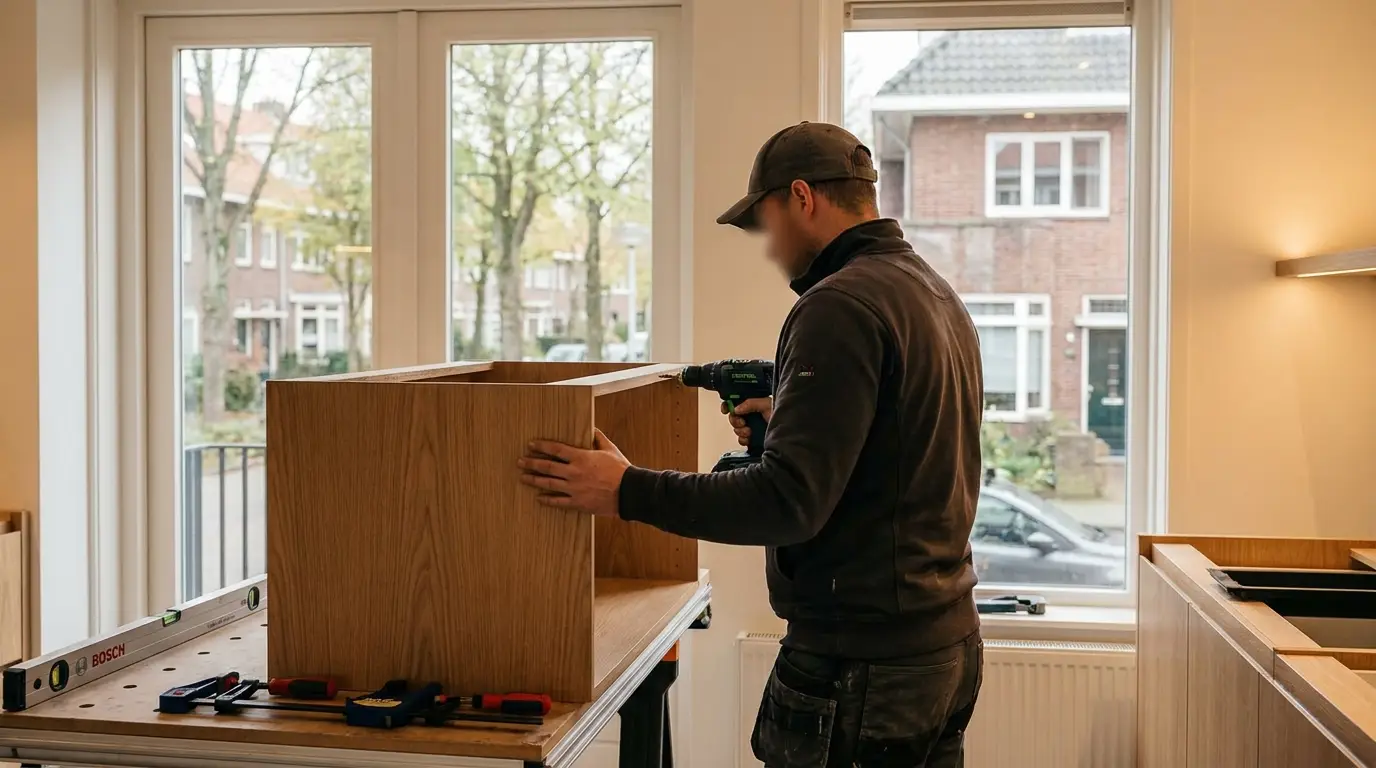
Cost of installing or renovating a kitchen: everything you need to know
Renovating a kitchen or installing a new one is one of the most popular remodeling jobs in the Netherlands. Costs vary widely: from a budget kitchen with simple installation to a fully custom kitchen with new plumbing and electrical work. In this overview, you'll find prices by type of renovation, a breakdown of material and labor costs, and practical tips to save money.
In this article
- ›What does it cost to install or renovate a kitchen?
- ›Prices by type of kitchen job
- ›Material and labor cost breakdown
- ›Hire a contractor or do it yourself?
- ›How does kitchen installation work?
- ›Money-saving tips for your kitchen renovation
- ›Frequently asked questions
Need a contractor for this?
Describe your job and get quotes from contractors near you.
average price
€10,000
complete, including materials and installation
average hourly rate
€55
contractor hourly rate (€45–75/hour)
turnaround time
3–7 days
depending on scope
€ Average price by type
| Kitchen job type | Range | Average price |
|---|---|---|
| Kitchen renovation (cabinet doors/countertop)keep the existing kitchen layout, new doors and countertop | €2,000 – €6,000 | €3,500avg.incl. installation |
| Budget kitchen including installationready-made kitchen from a home improvement store or chain, standard layout | €4,500 – €8,000 | €5,500avg.incl. installation |
| Mid-range kitchen (most popular)quality kitchen with appliances, professional installation included | €8,000 – €18,000 | €12,000avg.incl. installation |
| Luxury kitchenhigh-end materials, built-in appliances, custom elements | €15,000 – €30,000 | €20,000avg.incl. installation |
| Fully custom kitchenfully made to measure, premium finish, new plumbing and electrical | €20,000 – €50,000 | €30,000avg.incl. installation |
Prices include standard installation and VAT; plumbing, electrical work, and tiling usually come on top of this. Based on Google price research.
Material and labor costs
Kitchen installer hourly rate averages €45–75/hour. Plumbers and electricians usually charge €55–85/hour for connection work in the kitchen.
Hiring a contractor vs. doing it yourself
| Job | Do it yourself | Via a contractor | Savings doing it yourself |
|---|---|---|---|
| Demolition and removal of old kitchentake apart cabinets, remove countertop and appliances, haul away waste | DoableNo special permit or certification required: handiness and a hand truck are enough | €200–€500 | up to €500 |
| Installing and leveling kitchen cabinetshang base and wall cabinets, level and align them | With experienceRequires a level, cordless drill, and precision; mistakes are hard to fix later | €600–€1,400 | up to €1,400 |
| Measuring, cutting, and installing the countertopcut countertop to size, rout the sink cutout, caulk the seams | With experienceWith composite or natural stone, one wrong cut means a loss of €500–€1,500 | €250–€600 | up to €600 |
| Water and gas connections (faucet, sink, range)connect water supply, hook up drain, connect gas range or induction | Not recommendedGas work requires a licensed plumber (NL-BRL 6000); water damage is often not covered by home insurance when you do it yourself | €400–€1,200 | No recommended savings |
| Electrical work and connecting built-in appliancesconnect oven, range hood, and dishwasher to the right circuit | Not recommendedA licensed electrician is required for panel upgrades or new RCD protection; fire risk with incorrect wiring | €200–€700 | No recommended savings |
When installing or renovating a kitchen, there are clear lines between what you can do yourself and what needs a contractor. Demolition, cleaning the room, and rough assembly of cabinets are easy to do yourself with the right tools: think of a level, a cordless drill, and a tape measure. Cutting the countertop yourself is risky: one wrong measurement with composite or natural stone means an immediate loss of hundreds to thousands of euros. Gas, water, and electrical work are subject to legal requirements: in the Netherlands, gas connections may only be made by a licensed plumber with NL-BRL 6000 certification (a Dutch certification for gas installation work). Electrical work that requires a new circuit or new RCD protection (residual current device (RCD), the European counterpart of a GFCI) also belongs with a licensed electrician, not only for fire safety, but also because your home insurance may exclude damage caused by unauthorized electrical changes. So never cut the contractor's work from your plan, but save smartly on the prep work.
The full process step by step
Measuring and deciding on the layout
The kitchen installer or supplier measures the room precisely: width, depth, and height, but also the position of windows, doors, and existing connection points for gas, water, and electricity. Based on those measurements, the kitchen layout is finalized.
1–2 hours
Agreeing on the quote and delivery time
Once you approve the quote, the supplier schedules production and delivery. Standard kitchens in stock are sometimes available within a week; custom kitchens or kitchens with special finishes take 6 to 12 weeks. Have the installation appointment scheduled right away.
4–12 weeks wait
Demolition and clearing the room
The old kitchen is completely removed. Hidden defects such as mold behind the baseboards, old copper plumbing, or an outdated outlet now come to light. This is also the ideal moment to lay the floor or skim-coat the walls if that's planned.
half a day–1 day
Rough-in plumbing and electrical work
The plumber installs new water supply and drain lines in the desired positions. If needed, the electrician runs new circuits, installs outlets at the right height, and prepares the connections for the oven, dishwasher, and range hood. This work must be fully finished before the kitchen is installed.
half a day–2 days
Installing the kitchen
The installer starts with the base cabinets: leveling them, securing them, and setting the height with adjustable feet. Then the wall cabinets are hung. Next, the countertop is cut to size, the sink cutout is routed, and the countertop is glued and secured. Cabinet doors, drawers, and hinges are adjusted.
1–3 days
Finishing appliances and connections
The plumber connects the faucet, sink, and dishwasher to the water supply and drain. The electrician makes the final connections of the oven, range hood, and induction cooktop to the right circuits. Gas appliances are connected and tested for leaks.
2–4 hours
Finishing, testing, and handover
Baseboards are installed, gaps are sealed with clear or colored silicone caulk, and the backsplash or tile edge is applied. All appliances are tested for function and leaks. The installer walks you through the kitchen and discusses the warranty terms.
2–4 hours
6 smart money-saving tips
Frequently asked questions
How much does it cost to install or renovate a kitchen on average?
On average, you'll pay about €10,000 for a new mid-range kitchen including installation. A budget kitchen starts at €4,500, while a luxury custom kitchen can run up to €50,000. A simple kitchen renovation (new cabinet doors and countertop) costs €2,000 to €6,000.
How long does it take to install a kitchen?
Installing a standard kitchen takes 1 to 3 workdays. With extra work (new plumbing, electrical, or tiling), plan on 5 to 7 workdays. Ordering and delivery of the kitchen itself usually takes 4 to 12 weeks.
Do I need a permit for a new kitchen?
No, you don't need a building permit to install or renovate a kitchen in the same room. Gas connections and changes to plumbing must, however, be done by licensed contractors.
Can I install the kitchen (partly) myself?
If you're handy, you can assemble the kitchen cabinets yourself. Gas, water, and electrical connections must be done by a licensed contractor. By doing the demolition and prep work yourself, you'll save €300 to €700 on labor costs.
What does kitchen installation alone cost?
Installation costs alone for a kitchen range from €1,000 to €2,500, depending on the complexity, the number of cabinets, and whether appliances also need to be connected. Plumbing and electrical work often come on top of that.
When is a kitchen renovation cheaper than a new kitchen?
If the kitchen layout and the cabinet boxes are still in good condition, replacing the cabinet doors, adding a new countertop, and possibly a new faucet can make a big difference for €2,000 to €4,000. That's considerably cheaper than a full replacement.
Related jobs
Ready to have your kitchen installed or renovated?
Describe your job and receive quotes from verified kitchen installers near you.
Within 24 hours
response from a contractor
Verified
all contractors checked
Competitive price
compare quotes