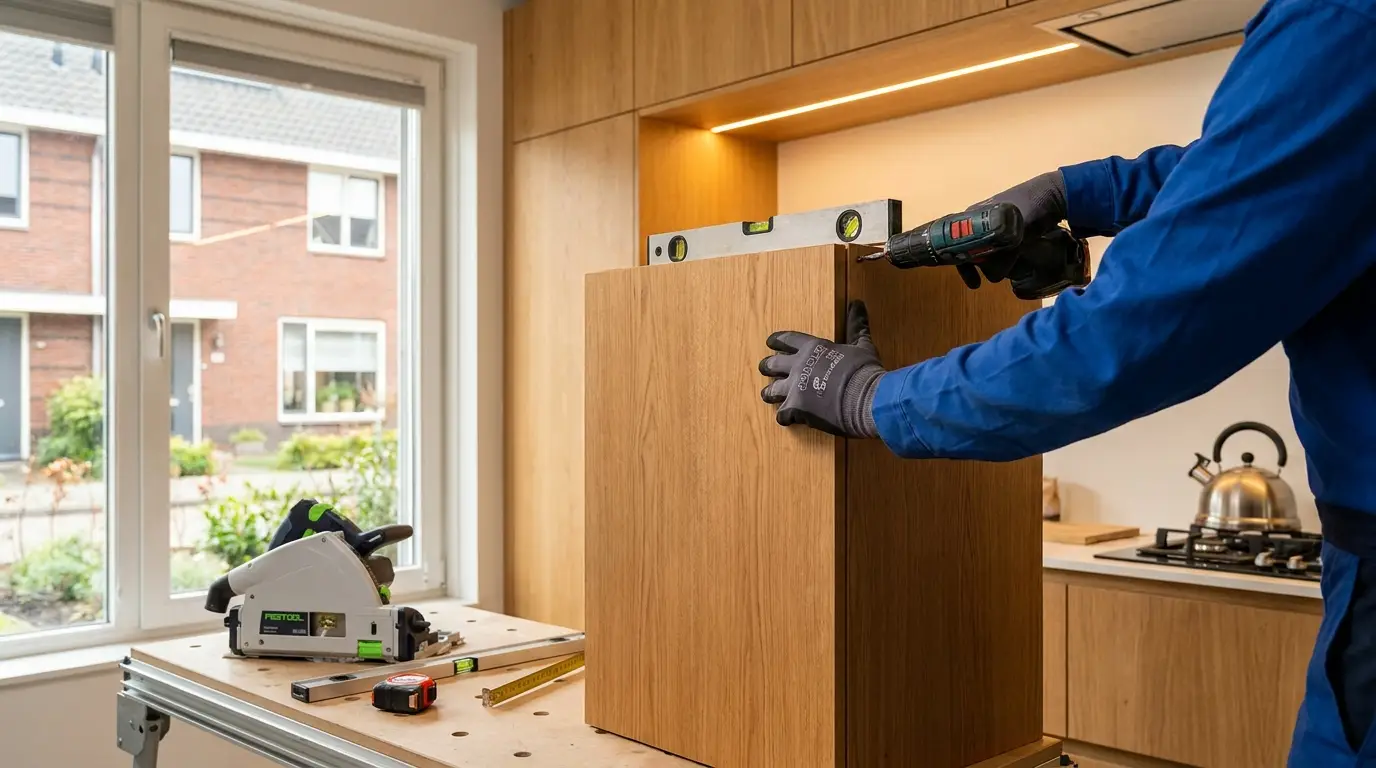
Cost of installing or replacing kitchen appliances: everything you need to know
Installing or replacing kitchen appliances (such as a built-in oven, dishwasher, cooktop, or refrigerator) is a common job during a kitchen renovation or update. The cost depends heavily on the type of appliance, whether new connections are needed, and how complex the built-in installation is. On average, you pay between €200 and €1,200 per appliance in labor costs, excluding the appliance itself.
In this article
- ›What does installing or replacing kitchen appliances cost?
- ›Price overview by appliance type
- ›Material and labor costs
- ›Hire a contractor or do it yourself?
- ›How does installation work step by step?
- ›Money-saving tips for kitchen appliances
- ›Frequently asked questions
Need a contractor for this?
Describe your job and get quotes from contractors near you.
average price
€650
average per appliance (labor)
average hourly rate
€55
contractor hourly rate (€45–65/hour)
turnaround time
1–2 days
depending on scope and type
€ Average price by type
| Appliance or job type | Range | Average price |
|---|---|---|
| Single replacement (1 appliance)same connection, same dimensions | €150 – €450 | €300avg.incl. installation |
| Built-in appliance installation (most popular)oven, dishwasher, or refrigerator including built-in fitting | €350 – €900 | €625avg.incl. installation |
| Cooktop replacement (induction/gas)including connection by a certified contractor | €250 – €700 | €475avg.incl. installation |
| Complete appliance set installation5 appliances: oven, cooktop, dishwasher, refrigerator, range hood | €1,200 – €3,000 | €2,000avg.incl. installation |
| Replacement with new connectionsnew electrical circuit or gas piping included | €600 – €1,800 | €1,200avg.incl. installation |
Prices are labor costs excluding the appliance itself; current appliance prices vary widely by brand and model. Based on Google price research.
Material and labor costs
Carpenter/plumber hourly rate averages €45–65/hour. Gas connections require a licensed plumber (Dutch certification).
Hiring a contractor vs. doing it yourself
| Job | Do it yourself | Via a contractor | Savings doing it yourself |
|---|---|---|---|
| Connecting a freestanding refrigerator or dishwasherregular outlet, existing water connection in place | DoablePlugging in the power cord and attaching the water hose is enough; no special tools required | €100–€200 | up to €200 |
| Replacing a built-in oven (same dimensions)existing hardwired connection unchanged, no new circuit | With experienceRequires proper mounting with the supplied brackets; incorrect mounting voids the warranty | €150–€350 | up to €300 |
| Connecting an induction cooktophardwired 3-phase or heavy-duty 1-phase connection required | Not recommendedLegally required to be done by a licensed electrician (NEN 1010); incorrect connection = fire hazard | €200–€500 | No legal savings possible |
| Installing or replacing a gas cooktop or ovenincluding connection to the gas supply | Not recommendedIn the Netherlands, gas connections are legally reserved for certified plumbers (KIWA/VEG) | €250–€600 | No legal savings possible |
| Replacing a built-in dishwasher (same spot)water, drain, and electrical connections already in place | With experienceTighten fittings firmly and secure the drain hose correctly to prevent leaks | €250–€500 | up to €350 |
A contractor is essential as soon as gas or hardwired electrical connections are involved. In the Netherlands, gas connections may only be made by a plumber with a valid KIWA or VEG certification (Dutch certifications for gas installation work): if you do it yourself, your home insurance coverage lapses in case of damage. For an induction cooktop or built-in oven on a dedicated circuit, a licensed electrician is required (NEN 1010, the Dutch standard for electrical installations). A contractor is also recommended for built-in appliances where kitchen cabinets need to be trimmed or modified: precision work calls for the right tools and experience to keep cabinets and fronts undamaged. What you can do yourself: connecting a freestanding refrigerator, freezer, or dishwasher to a regular outlet is doable for most people. The same goes for swapping a built-in oven or dishwasher if the dimensions are identical and the existing connections stay the same, provided you follow the installation instructions carefully and anchor the appliance properly.
The full process step by step
Inspection and measurement check
The contractor carefully measures the built-in opening (width, height, depth) and compares it with the specifications of the new appliance. At the same time, they check which connections are already in place: electrical (circuit capacity, plug type), water supply, drain, and gas if applicable.
30–60 min
Removing the old appliance and clearing the space
The existing appliance is disconnected from all connections, carefully lifted out of the cabinet or opening, and placed outside the work area. Brackets, rails, or sealing strips are removed. The opening is cleaned and checked for damage.
15–45 min
Checking or modifying connections
The contractor assesses whether the existing connections are suitable for the new appliance. If needed, a new electrical circuit is installed, a gas line is extended or modified, or a water connection is relocated. This step largely determines the total labor time.
30–120 min (depending on required modifications)
Placing and securing the new appliance
The new appliance is slid into the opening and aligned to the millimeter. It's then secured with the supplied brackets, rails, or screws. Trim strips or fronts are fitted so the appliance sits flush in the cabinet.
30–90 min
Connecting to electrical, gas, or water
The contractor connects the appliance to the right connection: plugging it into the outlet or connecting hardwired cabling, attaching water hoses and the drain, or properly connecting the gas hose and checking it for leaks with leak detection spray.
20–60 min
Testing and handover
All functions are tested: the oven is heated, the cooktop is operated, the dishwasher is run to check for leaks, and the refrigerator is started and its temperature checked. The customer gets an explanation of operation, maintenance, and warranty terms.
15–30 min
6 smart money-saving tips
Frequently asked questions
What does installing kitchen appliances cost on average?
On average, you pay €400–€900 per appliance in labor costs. Range: €150 for a simple replacement up to €3,000 for a complete set of five built-in appliances.
How long does installing kitchen appliances take?
Replacing one appliance takes 1–3 hours. A full set of kitchen appliances (five appliances) takes 1 to 2 workdays, depending on the connection work.
Do I need a permit?
No, standard installation work doesn't require a permit. Gas connections must be done by a licensed plumber; heavy-duty electrical connections by a certified electrician.
Can I install kitchen appliances myself?
You can connect freestanding appliances that plug into a regular outlet yourself. For built-in appliances, gas and induction cooktops, and hardwired connections, a contractor is required to protect the warranty and ensure safety.
What determines the cost?
The main factors are: the type of appliance (freestanding vs. built-in), whether new connections (gas, electrical, water supply) are needed, the dimensions, and whether the cabinet needs to be modified.
What does replacing a dishwasher cost?
Replacing a built-in dishwasher costs €250–€600 in labor on average, depending on whether the water supply and drain are already in place. The dishwasher itself costs €400–€1,500.
Related jobs
Ready to have your kitchen appliances professionally installed or replaced?
Describe your job for free. Checked installers near you respond, and you choose who to continue with.
Within 24 hours
response from a contractor
Verified
all contractors checked
Competitive price
compare quotes