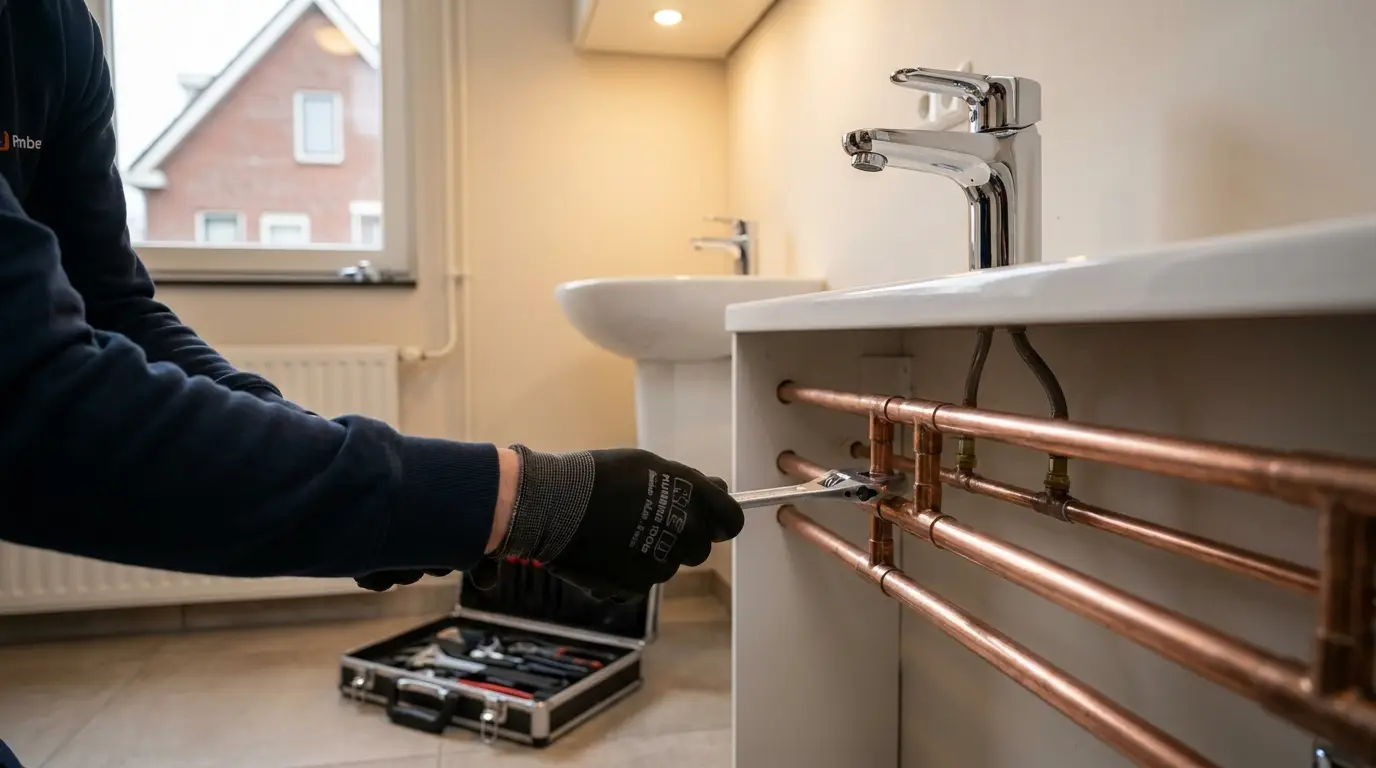
Cost of installing, replacing, or repairing a faucet: everything you need to know
A leaking or outdated faucet is best replaced by a skilled plumber. The cost depends on the type of faucet (kitchen faucet, bathroom sink faucet, thermostatic faucet, or mixer faucet), the complexity of the connection, and whether extra pipework is needed. In this overview, you'll find current prices for installing, replacing, and repairing faucets in the Netherlands.
In this article
- ›How much does it cost to install or replace a faucet?
- ›Prices by type of faucet
- ›Material and labor costs
- ›Hire a plumber or do it yourself?
- ›How does the installation work?
- ›Money-saving tips
- ›Frequently asked questions
Need a contractor for this?
Describe your job and get quotes from contractors near you.
average price
€175
faucet replacement incl. installation
average hourly rate
€65
plumber hourly rate (€45–85/hour)
turnaround time
1–2 hours
depending on type and situation
€ Average price by type
| Faucet type | Range | Average price |
|---|---|---|
| Replacing a faucet washer or cartridgeLeaking faucet repair; labor-intensive but little material | €50 – €120 | €85avg.incl. labor |
| Replacing a bathroom sink faucetStandard mixer faucet in a bathroom or toilet room; includes a small faucet | €80 – €200 | €140avg.incl. installation |
| Replacing a kitchen faucet (most popular)Mixer faucet or pull-out spout for the kitchen; includes a standard faucet | €120 – €300 | €200avg.incl. installation |
| Replacing a shower or bathtub faucetMixer or thermostatic faucet for a shower or bathtub | €150 – €350 | €250avg.incl. installation |
| Installing a thermostatic faucetConcealed or exposed thermostatic faucet; includes installation and connection | €200 – €500 | €320avg.incl. installation |
Prices include standard connection materials and labor for a normally accessible connection; extra pipework or urgent service is charged separately. Based on Google price research.
Material and labor costs
Plumber hourly rate averages €45–€85/hour. A trip charge (€20–€50) is usually billed separately.
Hiring a contractor vs. doing it yourself
| Job | Do it yourself | Via a contractor | Savings doing it yourself |
|---|---|---|---|
| Replacing a faucet washer or cartridgeRepairing a leaking faucet by swapping the worn internal parts | DoableShut off the water supply at the shutoff valve; bring the correct replacement cartridge or washer in the right size from the hardware store | €10–€30 material | up to €90 |
| Replacing a simple bathroom sink faucetStandard deck-mounted mixer faucet on existing flexible connections | DoableAn accessible shutoff valve under the sink is present; supply hoses fit the existing fittings (1/2") | €30–€80 material | up to €100 |
| Replacing a kitchen faucetInstalling a mixer faucet or pull-out model in the kitchen | With experienceCheck the faucet hole diameter (35 or 51 mm) and center-to-center distance; hoses must fit the existing connections exactly | €50–€150 material | up to €130 |
| Installing a thermostatic faucet (shower or bathtub)Concealed or exposed thermostat with fixed hot and cold water connections | Not recommendedRequires correct pressure balance on the hot and cold water lines; a wrong connection leads to a risk of scalding or leaks behind the wall | €100–€300 material | No recommended savings |
| Moving pipework or creating a new connectionPlacing the faucet in a different position or running an entirely new branch line | Not recommendedRequires soldering or press-fitting copper pipes; a faulty joint can cause hidden leaks and serious water damage | €50–€200 material | No legal savings possible |
For simple repairs (such as replacing a faucet washer or cartridge) and swapping a bathroom sink faucet on existing flexible connections, you can manage just fine yourself, as long as you can shut off the water supply at the shutoff valve and have the right replacement part on hand. As soon as pipes need to be modified, a thermostatic faucet is being installed, or the connection is hard to reach, a licensed plumber is essential. Thermostatic faucets require correct pressure balance on both the hot and cold water lines to prevent scalding. Modifying pipework without experience in soldering or press-fitting also regularly leads to hidden leaks behind tiles or walls, resulting in costly water damage.
The full process step by step
On-site inspection
The plumber checks the existing faucet, measures the faucet hole (standard 35 mm or 51 mm for kitchen faucets), and assesses the condition of the supply hoses, shutoff valve, and visible pipework. This makes it clear right away whether only the faucet needs swapping or extra work is needed.
10–20 minutes
Shut off the water supply and drain the line
The shutoff valve under the countertop or the main water shutoff valve is closed. The faucet is then opened to release remaining pressure and water from the line: this prevents water from running onto the floor when disconnecting.
5–10 minutes
Remove the old faucet
The supply hoses are disconnected and the mounting nut under the countertop or sink is loosened. The plumber checks the faucet hole for limescale, rust, or cracks in the sealing surface that could make the new faucet leak.
10–20 minutes
Install and connect the new faucet
The new faucet is installed with fresh gaskets and supply hoses. For a thermostatic faucet, the hot and cold water sides are connected correctly (in the Netherlands: cold on the left, hot on the right), and the maximum temperature stop is set to 38°C.
20–40 minutes
Restore the water supply and run a leak test
The shutoff valve is opened slowly. The plumber checks all fittings for pressure loss and leaks, both at the supply hoses and at the faucet base. At the slightest doubt, connections are tightened or gaskets replaced.
10–15 minutes
Adjustment and handover
The flow rate and (for thermostatic faucets) the temperature setting are adjusted. The plumber explains how it works, points out the need to descale the spout periodically, and leaves the work area clean.
5–10 minutes
6 smart money-saving tips
Frequently asked questions
How much does it cost to replace a faucet on average?
On average, you'll pay €175 to replace a kitchen faucet, including installation. The range runs from €50 for a small repair to €500 for a thermostatic faucet with extra pipework.
How long does it take to replace a faucet?
A simple faucet replacement takes 30 to 90 minutes. With hard-to-reach connections or extra pipework, it can take up to half a workday.
Do I need a permit?
No, you don't need a permit to replace or repair a faucet. It is wise, though, to hire a licensed plumber to prevent leaks and water damage.
Can I replace a faucet myself?
You can replace a simple faucet yourself, as long as you can shut off the water supply. With fixed connections, hidden pipes, or thermostatic installations, a plumber is strongly recommended.
When should you repair and when should you replace?
If the faucet is older than 10–15 years or parts (cartridge, O-rings) are no longer available, replacement is the better choice. For a relatively new faucet that leaks, repairing the faucet washer or cartridge is enough.
What is a plumber's trip charge?
Most plumbers charge a €20 to €50 trip charge per visit. For urgent jobs outside business hours, this can rise to €80–€130. Always ask about it in advance to avoid surprises.
Related jobs
Ready to have your faucet installed, replaced, or repaired?
Describe your job for free. Checked plumbers near you respond, and you choose who to continue with.
Within 24 hours
response from a contractor
Verified
all contractors checked
Competitive price
compare quotes