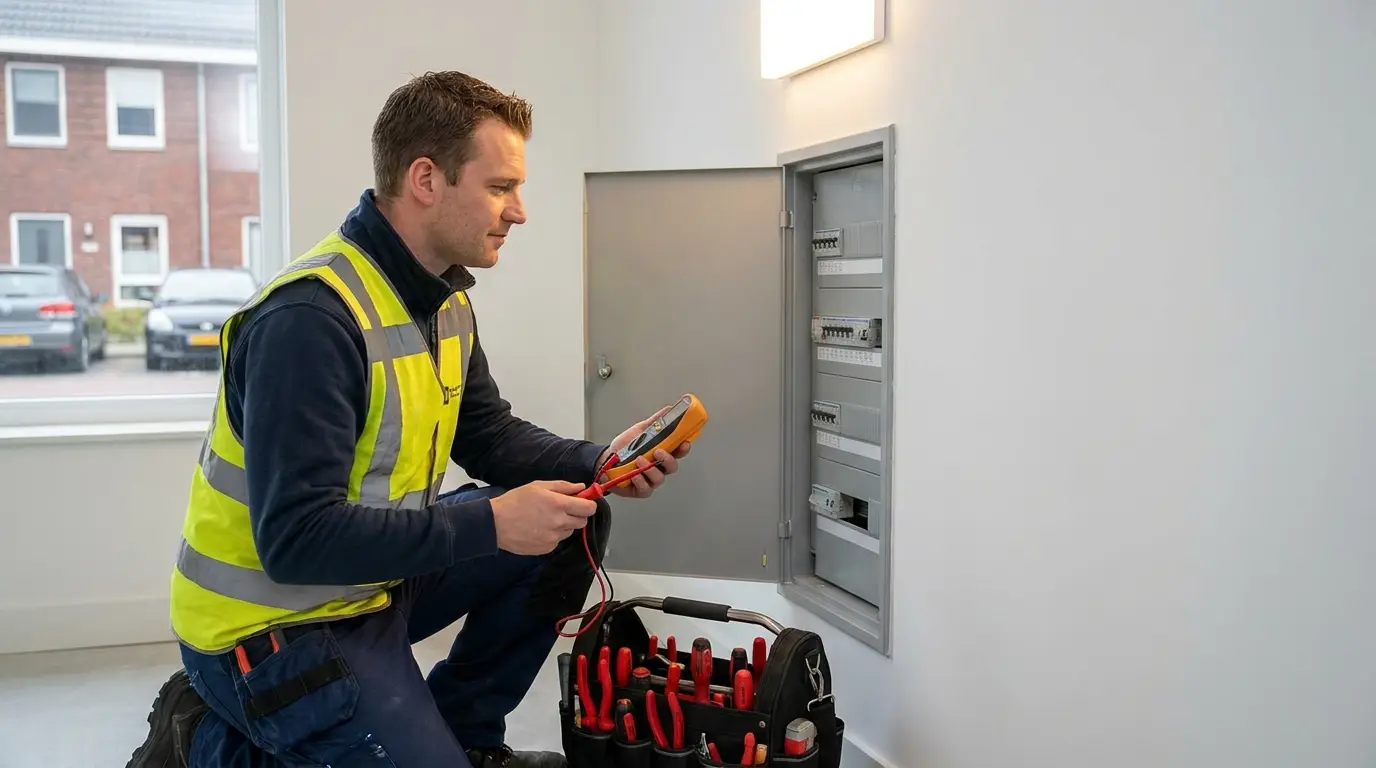
Cost of repairing an EV charger or fixing a fault: everything you need to know
A broken EV charger can have a big impact on your daily driving range. Repair costs depend on the type of fault, the parts needed, and whether the work can be done remotely or has to be done on site. In this overview, you'll find current prices for common EV charger fault repairs in the Netherlands.
In this article
- ›Average cost of EV charger repair
- ›Prices by fault type
- ›Material and labor costs
- ›Hiring a contractor vs. doing it yourself
- ›Step by step: how does the repair work?
- ›Money-saving tips for EV charger faults
- ›Frequently asked questions
Need a contractor for this?
Describe your job and get quotes from contractors near you.
average price
€210
diagnosis + repair incl. trip charge
average hourly rate
€85
EV charger installer (€70–120/hour)
turnaround time
1–3 days
depending on parts availability
€ Average price by type
| Fault type | Range | Average price |
|---|---|---|
| Software reset or firmware updatefault caused by outdated software or a communication error | €75 – €150 | €110avg.incl. labor |
| Diagnosis + simple repair (most popular)trip charge, diagnosis, and fixing a common fault | €125 – €280 | €210avg.incl. labor |
| Replacing a faulty charging unit or outletpart is defective, replacement including materials | €200 – €450 | €325avg.incl. installation |
| Repairing wiring or an RCDcable, fuse, or grounding problem | €175 – €400 | €280avg.incl. labor |
| Replacing the communication module or SIM cardcharger can't be reached via the app or network | €150 – €350 | €250avg.incl. installation |
Prices include the trip charge and diagnosis; parts can increase the final price. Based on Google price research.
Material and labor costs
Electrician (EV charger installer) hourly rate averages €70–€120/hour. The trip charge is usually billed separately.
Hiring a contractor vs. doing it yourself
| Job | Do it yourself | Via a contractor | Savings doing it yourself |
|---|---|---|---|
| Checking and resetting the RCD in the meter cabinetResetting a tripped breaker after a charger fault | DoableSafe to do without expert knowledge | €0 | Free to do yourself |
| Restarting the charger via the button or appRestart and factory reset via the manual or manufacturer's app | DoableNo expert knowledge needed, the manual is enough | €0 | Free to do yourself |
| Updating firmware or software via the manufacturer's appRunning the update via the manufacturer's web portal or OTA | With experienceTechnical knowledge recommended; the wrong version can damage the charger | €0–€50 | up to €150 |
| Replacing a faulty outlet or charging cableRemoving the part and installing a new one | Not recommendedLegally reserved for a certified electrician (NEN 1010) | €200–€450 | No legal savings possible |
| Repairing wiring, grounding, or the RCDChecking and modifying the electrical system | Not recommendedRisk of fire and electrocution; unauthorized work voids the warranty | €175–€400 | No legal savings possible |
EV chargers are connected to your home's electrical system and fall under NEN 1010, the Dutch safety standard for low-voltage installations. This means that all electrical work (replacing parts, repairing wiring, or modifying the RCD protection) may legally only be done by a certified electrician. If you do this work yourself, you not only void your warranty, but you're also liable in case of fire or personal injury. What you can safely do yourself: check and reset the RCD in the meter cabinet, restart the charger via the on/off button or the manufacturer's app, and run a software or firmware update via the manufacturer's official web portal, provided you're technically savvy. Not sure whether the update was done correctly, or does a new error message appear afterward? Then call in an EV charger installer or a licensed EV charger installer.
The full process step by step
Reporting and remote diagnosis
You describe the error message and the make and model of your EV charger. The installer checks the management portal for visible error codes and first tries a remote reset or firmware update to avoid a visit.
15–30 min
On-site visit and measurement
If remote support doesn't fix the fault, the EV charger installer comes by. They measure the voltage at the terminals, check the grounding and RCD, and inspect the wiring from the breaker panel to the charger.
30–60 min
Fault diagnosis and quote
After the measurement, the technician determines the cause (faulty part, cable problem, firmware error, or communication fault) and gives a transparent quote for the necessary repair and any parts.
15–30 min
Repair or ordering parts
Common parts such as outlets and fuses are usually replaced right away. Specific modules, charging units, or communication chips sometimes need to be ordered from the manufacturer or wholesaler, which takes 1–3 business days.
1–2 hours on site, or 1–3 days waiting time when ordering
Function test and handover
After the repair, the installer fully tests the charger: they check the charging speed (AC power), the communication with the app or management portal, the RFID authorization, and how the RCD protection works.
15–30 min
Reporting and follow-up
The installer provides a service report with the work done and any recommendations. For a warranty repair, this report is passed on to the manufacturer or supplier.
10–15 min
6 smart money-saving tips
Frequently asked questions
How much does EV charger repair cost on average?
On average €210 for diagnosis and repair, including the trip charge. Range: €75–€500, depending on the type of fault and the parts needed.
How long does it take to repair an EV charger?
An electrician can fix a simple fault in 1–2 hours. If parts need to be ordered, it usually takes 1–3 business days.
Is the repair covered by warranty?
Many EV chargers come with a 2–5 year manufacturer's warranty. Always check your warranty documents before you call in a technician; repairs within the warranty period are often free.
Can I fix an EV charger fault myself?
You can do basic checks yourself, such as checking the meter cabinet (where the electricity meter and the breaker panel are), resetting the charger, and reconnecting the app. By law, electrical work may only be done by a certified electrician.
Do I need a permit for EV charger repair?
No, a normal repair doesn't require a permit. Only when upgrading the connection or installing new wiring may you need to notify the regional grid operator.
What are common causes of an EV charger fault?
The most common causes are outdated firmware, a faulty outlet, a tripped residual current device (RCD), the European counterpart of a GFCI, in the meter cabinet, or a communication problem with the related app or network.
Related jobs
Ready to get your EV charger fault fixed?
Describe your job and receive quotes from verified EV charger installers near you.
Within 24 hours
response from a contractor
Verified
all contractors checked
Competitive price
compare quotes