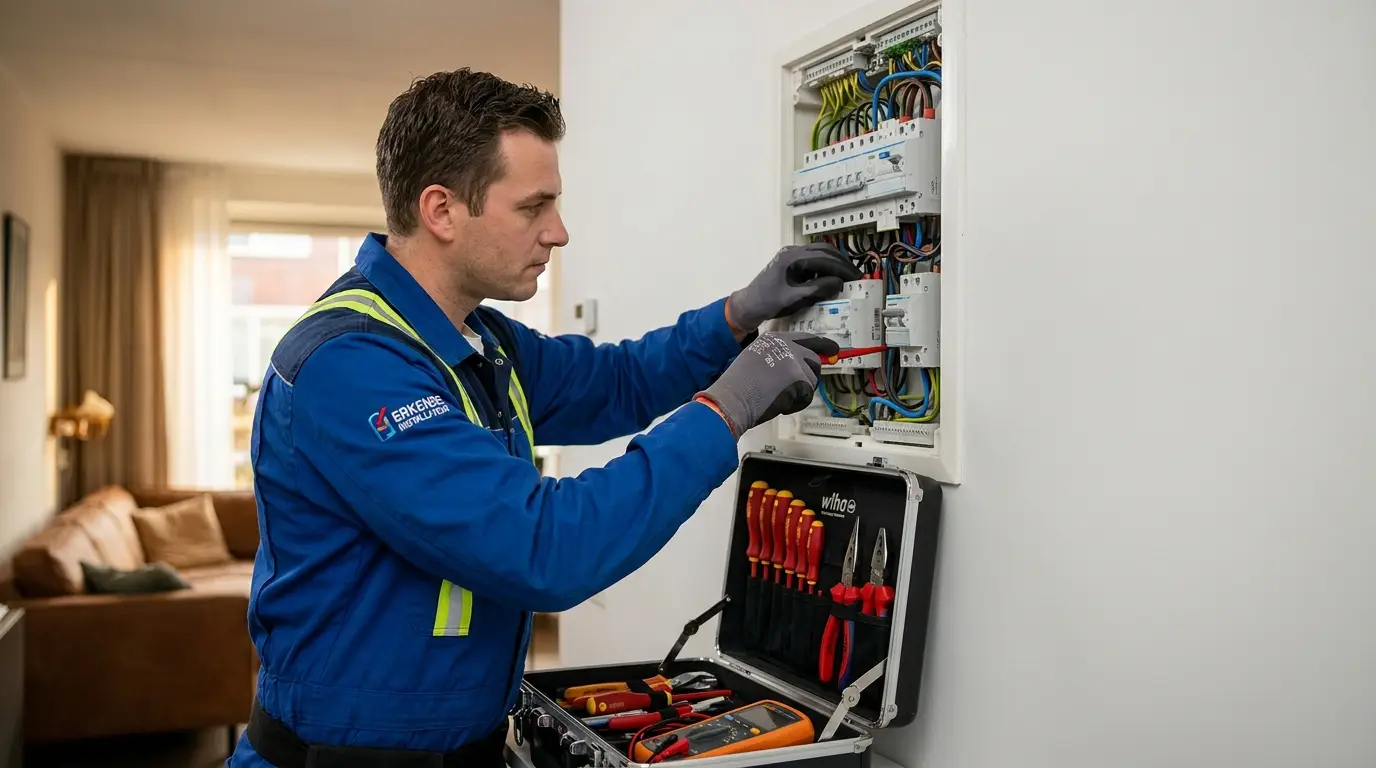
Cost of relocating an EV charger: everything you need to know
You relocate an EV charger when you park your car differently, your driveway changes, or you're renovating. The cost depends on the distance, the cable length, and whether digging is needed. On average, you'll pay €500 to €1,500 for a complete relocation by a licensed electrician.
In this article
- ›What does relocating an EV charger cost?
- ›Price overview by situation
- ›Material and labor costs
- ›Hiring an electrician vs. doing it yourself
- ›Step-by-step plan: how does an EV charger relocation work?
- ›Money-saving tips for EV charger work
- ›Frequently asked questions
Need a contractor for this?
Describe your job and get quotes from contractors near you.
average price
€850
removal, cabling, and reinstallation included
average hourly rate
€65
contractor hourly rate (€55–80/hour)
turnaround time
1–2 days
depending on cable length and digging
€ Average price by type
| EV charger relocation situation | Range | Average price |
|---|---|---|
| Short relocation on the same propertycharger moved max. 5 meters, no digging | €250 – €750 | €450avg.incl. installation |
| Standard relocation with cabling (most popular)new cable route 5–15 meters, existing charger reused | €500 – €1,200 | €850avg.incl. installation |
| Relocation with diggingcable buried, distance 15–30 meters | €900 – €2,000 | €1,350avg.incl. installation |
| Complex relocation with meter cabinet changesnew circuit, RCD, or service upgrade needed | €1,200 – €2,500 | €1,700avg.incl. installation |
Prices include removal, reinstallation, and inspection in line with NEN1010; digging and meter cabinet changes are quoted separately. Based on Google price research.
Material and labor costs
Electrician hourly rate averages €55–80/hour excl. VAT. NEN1010 inspection and certification are legally required after every reinstallation.
Hiring a contractor vs. doing it yourself
| Job | Do it yourself | Via a contractor | Savings doing it yourself |
|---|---|---|---|
| Disconnecting the EV charger from powerDe-energizing the 230V or 400V connection and freeing the cable | Not recommendedLegally reserved for a NEN-certified electrician; violating this makes you liable for fire or damage | €100–€250 | No legal savings possible |
| Digging cable trenches in the yard or drivewayDigging trenches by hand or with a mini excavator for the new cable route | DoableFirst request a KLIC notification so you don't hit existing cables or pipes | €300–€1,000 | up to €500 |
| Pulling cable through an existing conduitPulling a new EV charger cable through an empty conduit already in place | With experiencePulling cable is doable; connecting and inspecting must always be done by a licensed electrician | €75–€200 | up to €100 |
| Remounting and connecting the EV charger at the new locationMounting the charger, connecting the cable, and certifying the installation | Not recommendedConnection requires NEN1010 inspection; without a certificate the warranty is void and your insurer may deny claims | €200–€400 | No legal savings possible |
| Restoring paving and groundwork after relocationFilling cable trenches, relaying tiles or pavers, backfilling soil | DoableOnly do this after the electrician has finished and the installation is approved | €100–€300 | up to €200 |
Disconnecting and reconnecting an EV charger is legally reserved for a NEN1010-certified electrician. EV chargers run on 230V (single-phase) or 400V (three-phase): voltages where one mistake is immediately life-threatening. In addition, an inspection report after reinstallation is required: without this document, the manufacturer's warranty on the EV charger is void and your insurer can refuse to pay out for damage or fire. What you can safely and legally contribute yourself: digging cable trenches in your own yard or driveway, provided you've first filed a KLIC notification (a Dutch request for maps of underground cables and pipes) through the Kadaster, the Dutch land registry (free, 2 business days turnaround). Restoring the paving after the electrician is done also falls outside their hourly rate, and you can do it yourself. This saves you €200–€700 on the total bill without putting safety or certification at risk.
The full process step by step
Site visit and KLIC notification
The EV charger installer assesses the current setup, the desired new location, and the most logical cable route. If digging is needed, a KLIC notification is filed with the Kadaster in advance so the location of existing cables and pipes is known.
30–60 min
De-energizing and removing the EV charger
The relevant circuit in the breaker panel is switched off and locked out. The EV charger installer measures to confirm the connection is actually de-energized, disconnects the EV charger cable, and removes the mounting from its current spot.
30–60 min
Installing the new cable route
Depending on the route, a new cable is run along the exterior wall, through a cable tray, or in a buried trench. For underground work, the trenches are dug (possibly by you as the customer) and a conduit is installed to protect the EV charger cable.
1–4 hours
Mounting the EV charger at the new location
The charger is mounted at the new spot: on the exterior wall, on a post, or with a ground anchor. The EV charger cable is connected according to the manufacturer's specifications and the applicable NEN1010 standard.
30–90 min
Inspection, testing, and test charge
After connection, the EV charger installer performs insulation measurements and a grounding check in line with NEN1010. The EV charger is tested with an electric vehicle; for a smart EV charger, the app connection and any dynamic load balancing are also checked.
30–60 min
Certificate, handover, and notifying the grid operator
You receive an inspection report and installation certificate. If the connection is upgraded (for example, from single-phase to three-phase, or more than 25A), the regional grid operator is informed. This document is required for warranty, insurance, and any subsidy settlement.
15–30 min
6 smart money-saving tips
Frequently asked questions
What does it cost on average to relocate an EV charger?
On average, you'll pay €850 for a standard relocation where the existing charger is reused and a new cable route of 5 to 15 meters is installed. The range runs from €250 for a short relocation to €2,500 for a complex situation with digging and work in the meter cabinet (where the electricity meter and the breaker panel are).
How long does it take to relocate an EV charger?
A simple relocation on the same property takes half a day to a full day. If cable trenches need to be dug or the meter cabinet needs changes, plan for 1 to 2 workdays.
Do I need a permit to relocate an EV charger?
For relocation on your own property, you usually don't need a permit. The installation does have to comply with NEN1010 (the Dutch standard for electrical installations) and be approved by a licensed electrician. For digging in the public street, you need permission from the municipality.
Is it better to buy a new EV charger than to relocate the old one?
If your EV charger is less than 3 years old, relocating it almost always pays off. If it's older or you want to upgrade to more power (for example, from 7.4 kW to 11 kW), a new EV charger (€1,000–€3,000 incl. installation) may be the smarter choice.
What hourly rate does an electrician charge for EV charger work?
Electricians charge an average of €55 to €80 per hour excluding VAT for EV charger work. Depending on the region and the company, rates may be higher. Always request multiple quotes to compare.
Can I relocate the EV charger myself?
No, relocating an EV charger is reserved for licensed electricians. Disconnecting and reconnecting power cables (230V or 400V) falls under the Elektriciteitswet (the Dutch Electricity Act) and must be done by a NEN-certified electrician.
Related jobs
Ready to have your EV charger relocated?
Describe your job and get quotes from verified EV charger installers near you.
Within 24 hours
response from a contractor
Verified
all contractors checked
Competitive price
compare quotes