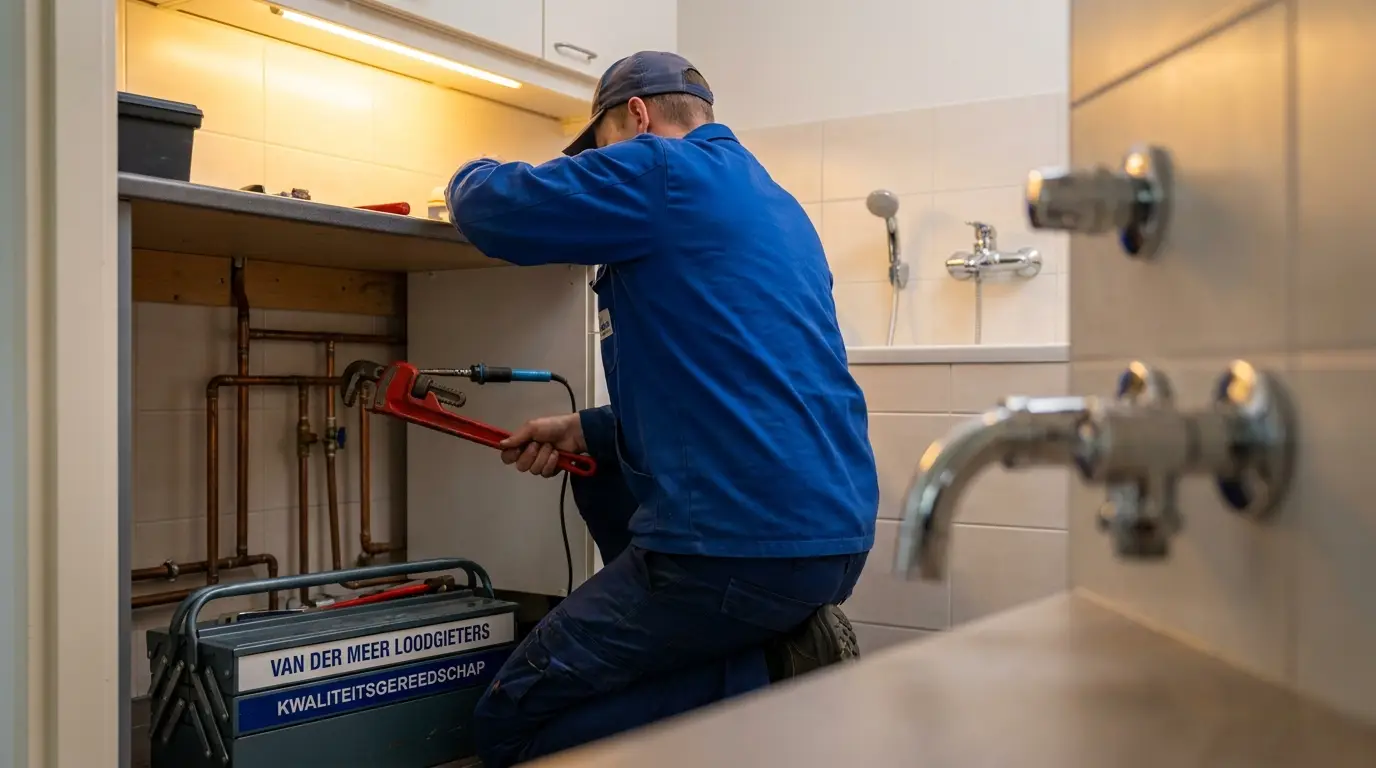
Cost of fixing a leak: everything you need to know
A leak can cause major damage if you don't act quickly. Costs vary widely: a small pipe leak can be fixed for €75–€200, while a hidden leak in the floor or a serious roof leak easily costs €500–€2,500. What you pay depends on where the leak is, how accessible it is, and whether leak detection is needed first.
In this article
- ›What does fixing a leak cost?
- ›Cost by type of leak
- ›Material and labor costs
- ›Hire a plumber or do it yourself?
- ›How a plumber works, step by step
- ›Money-saving tips for leak repairs
- ›Frequently asked questions
Need a contractor for this?
Describe your job and get quotes from contractors near you.
average price
€450
detection + repair included
average hourly rate
€65
plumber hourly rate (€45–85/hour)
turnaround time
1–3 days
depending on scope and detection
€ Average price by type
| Type of leak | Range | Average price |
|---|---|---|
| Faucet leak or visible pipeSmall repair to a faucet, coupling, or short water line | €75 – €250 | €150avg.incl. labor |
| Water line leak in floor or wall (most chosen)Including leak detection, opening up, and repair | €350 – €1,200 | €650avg.incl. labor |
| Sewer leak or clogged sewerLocating, unclogging, or partial replacement | €150 – €600 | €350avg.incl. labor |
| Roof leak repairSmall roof penetration or roof tiles; more for larger damage | €100 – €1,500 | €500avg.incl. labor |
| Hidden leak with extensive detectionPressure test, camera inspection, thermal imaging, or tracer gas | €300 – €2,500 | €950avg.incl. labor |
Prices include leak detection and exclude restoring tile or plaster, unless stated otherwise. Based on Google price research.
Material and labor costs
Plumber hourly rate averages €45–€85/hour. Urgent jobs (evening or weekend) often carry a surcharge of €30–€50 per hour.
Hiring a contractor vs. doing it yourself
| Job | Do it yourself | Via a contractor | Savings doing it yourself |
|---|---|---|---|
| Fixing a leaky faucetReplacing a washer, O-ring, or cartridge in a standard mixer faucet or shutoff valve | DoableA washer kit and Teflon tape cost €5–€20; tutorials are available online | €75–€150 | up to €130 |
| Repairing a visible pipe couplingLoose or leaking coupling on an accessible line after the water is shut off | With experienceThe right fitting size and press or threaded connection are crucial; connected wrong = new leak | €120–€250 | up to €190 |
| Hidden line in floor or wallLocating a leak behind tile or plaster and repairing the line | Not recommendedWithout leak detection equipment, you'll open up the wrong spot; risk of mold and structural damage | €350–€1,200 | No recommended savings |
| Fixing a sewer leak or clogged sewerLocating and repairing a leaking or clogged sewer system via camera inspection | Not recommendedRequires camera inspection and sewer know-how; hygiene and health risks if done wrong | €150–€600 | No recommended savings |
| Having leak detection doneLocating a hidden leak with a pressure test, thermal imaging, or tracer gas | Not recommendedProfessional measuring equipment (pressure test, thermal camera) is required and can't be rented by private individuals | €75–€350 | No legal savings possible |
With leak repairs, there's a clear dividing line: anything you can see and reach (a dripping faucet, a loose coupling under the sink) is doable for a handy DIYer with the right instructions. As soon as the leak location is unknown or sits behind a finish, a plumber is essential. Hidden lines require leak detection equipment (pressure test, endoscope, or thermal imaging camera) that private individuals can't use. On top of that, a wrong intervention in existing plumbing can lead to greater water damage, mold growth, and your homeowners insurance company denying the claim, since it demands proof that the repair was done professionally. There are no legal certification requirements for simple plumbing work, but connections to the main line or sewer system are subject to practical standards (NEN 1006, NEN-EN 12056, Dutch and European plumbing standards) that a licensed plumber knows and you don't.
The full process step by step
Visual inspection and assessment of symptoms
The plumber asks about the first symptoms (water stains, a higher water bill, pressure loss) and inspects all visible lines, couplings, faucets, and connection points. This quickly shows whether the cause is on the surface or hidden.
15–30 min
Performing leak detection
For a leak that isn't visible, the plumber uses measuring methods: a pressure test (pressurizing the water line and measuring the pressure drop), an endoscope or sewer camera for lines, or a thermal imaging camera to detect temperature differences in the floor and wall. If in doubt, tracer gas is used.
30–90 min
Gaining access
If the leak is behind tile, plaster, or a wood floor, the plumber makes an opening as precisely as possible. They always work at the exactly located spot to limit unnecessary demolition.
30–120 min
Fixing the leak and repairing the line
The defective line, coupling, O-ring, or connection is replaced with certified materials (PEX, copper, or press fittings per NEN 1006). After the repair, a pressure test follows to confirm the leak is fully sealed.
30–90 min
Temporary or permanent surface repair
Opened-up tile or plaster is temporarily closed or, if agreed, repaired right away. The plumber also advises on how long the structure needs to dry before the permanent repair, to prevent mold behind the finish.
30–60 min
Handover and documentation for your insurer
The plumber provides a work invoice describing the cause, the repair carried out, and the materials used. This document is essential for an insurance claim with your homeowners insurance company. They also give advice on preventive measures to keep it from happening again.
15–30 min
6 smart money-saving tips
Frequently asked questions
What does fixing a leak cost on average?
On average, you pay €450 to locate and fix a leak. The range is wide: a small visible pipe leak costs €75–€250, a hidden line in the floor easily €350–€1,200, and a complex leak with extensive detection can run up to €2,500.
How long does it take to fix a leak?
A simple repair is done in 1–2 hours. If leak detection is needed first and the floor or tiles have to be opened up, expect 1 to 3 days, including restoring the surface.
Do I need a permit for leak repairs?
No permit is required for standard plumbing work and repairs. If structural changes are involved (e.g., a new main connection or major sewer work), a notification or permit from the municipality may be needed. Check with your plumber.
Can I fix a leak myself?
You can try to seal small leaks at a faucet or visible coupling yourself with Teflon tape or a washer kit (cost: €5–€20). As soon as the leak is hidden, sits in the floor, wall, or roof, or you can't find the cause, always call in a licensed plumber to prevent bigger damage.
Does my insurance cover the cost of fixing a leak?
Homeowners insurance often covers consequential damage (such as wet floors or damaged walls), but not always the repair costs themselves. Check your policy terms and report damage right away. Waiting too long can lead to your claim being denied.
What does leak detection cost?
Leak detection costs €75 on average for a basic test and goes up to €350 for advanced methods such as thermal imaging or tracer gas. Some plumbers don't charge separately for detection if they also do the repair.
Related jobs
Ready to have your leak fixed professionally?
Describe your job and get quotes from verified plumbers near you.
Within 24 hours
response from a contractor
Verified
all contractors checked
Competitive price
compare quotes