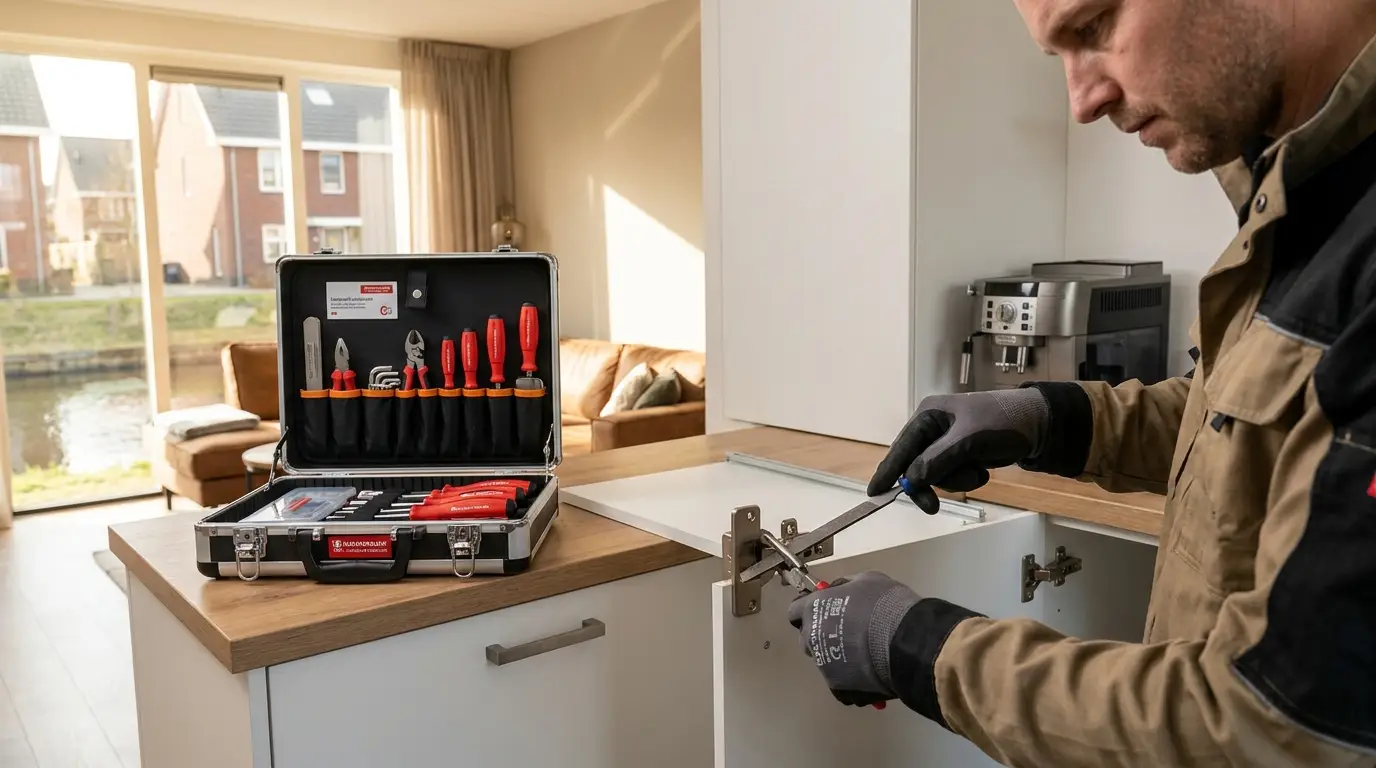
Cost of metalworking: everything you need to know
Metalworking covers a wide range of jobs: from welding and cutting to bending, milling, and finishing steel, aluminum, or stainless steel. The cost depends heavily on the type of work, the materials chosen, and the hours needed. In this overview, you'll find current prices so you know where you stand.
In this article
- ›Average cost of metalworking
- ›Prices by type of job
- ›Material and labor costs
- ›Hire a contractor or do it yourself?
- ›How does a metalworking job work?
- ›Money-saving tips for metalworking
- ›Frequently asked questions
Need a contractor for this?
Describe your job and get quotes from contractors near you.
average price
€750
including labor and materials
average hourly rate
€65
contractor hourly rate (€50–85/hour)
turnaround time
1–3 days
depending on scope
€ Average price by type
| Type of metalworking job | Range | Average price |
|---|---|---|
| Small welding jobrepair, welding a bracket or support | €75 – €250 | €150avg.incl. labor |
| Metal fence or gate (most popular)custom fence or gate including installation | €400 – €1,200 | €750avg.incl. installation |
| Steel staircase or railingcustom steel staircase or balustrade | €800 – €2,500 | €1,500avg.incl. installation |
| Steel structure or canopyload-bearing structure, carport, or patio cover | €1,500 – €5,000 | €3,000avg.incl. installation |
| Aluminum frame or profilecustom aluminum frame, door, or window | €500 – €1,800 | €1,000avg.incl. installation |
Prices are estimates for standard steel or aluminum; stainless steel and custom work are usually 20–40% higher. Based on Google price research.
Material and labor costs
Metalworker hourly rate averages €50–85/hour excluding VAT. A trip charge (€25–75) is billed separately.
Hiring a contractor vs. doing it yourself
| Job | Do it yourself | Via a contractor | Savings doing it yourself |
|---|---|---|---|
| Sanding a rust spot and repaintingremoving and treating surface rust on a fence, railing, or structure | DoableWith sandpaper, rust converter, and metal primer, you can easily do this yourself | €20–60 | up to €120 |
| Welding a small part (MIG/MAG)welding a broken bracket, hinge, or support profile | With experienceRequires a welder, shielding gas, and the right safety gear; inexperienced welders risk weak welds | €40–120 | up to €100 |
| Cutting a steel profile to sizecutting tubes or plates to length for use as a frame or support | With experienceAn angle grinder or hacksaw will do, but dimensional accuracy and safety need attention | €30–80 | up to €60 |
| Welding and installing a custom fence or gatefabricating and installing a steel or aluminum fence or gate | Not recommendedRequires professional welding, dimensional accuracy, and knowledge of ground anchors and hinge points | €400–1,200 | No recommended savings |
| Steel structure or load-bearing canopycarport, patio cover, or other steel load-bearing structure | Not recommendedStructural calculations, the right choice of profiles, and correct welds are required for a safe load capacity | €1,500–5,000 | No legal savings possible |
A professional metalworker is essential as soon as welding, structural strength, or custom work comes into play. Welding takes more than a welder: you also need knowledge of welding methods (MIG, TIG, stick), the right wire type for each metal, and shielding gas. A weak weld in a structural part, such as a staircase, railing, or support beam, can suddenly fail under load. For load-bearing steel structures, the profiles and connections must also meet structural requirements; a calculation by a professional prevents problems when you sell or insure your home. What you can safely do yourself: sand off surface rust and treat it with rust converter and metal primer, or cut off a loose part if you have the right saw and protection. For anything where strength, safety, or reliable connections matter, a skilled metalworker is the smart choice.
The full process step by step
Intake and on-site measurement
The metalworker visits the site, takes exact measurements, and discusses the desired result: material type (steel, stainless steel, or aluminum), profile thickness, joining method, and finish. Based on this, they can put together an accurate quote.
30–60 min
Quote and material purchasing
You receive an itemized quote with a breakdown of material and labor costs. Once you approve, the contractor orders the required steel, stainless steel, or aluminum from a steel supplier or wholesaler.
1–3 days
Prefabrication in the workshop
The metal is cut to size, bent, milled, or turned in the workshop. Welding and assembly of profiles and plates happen here. For complex custom parts, this phase takes the longest.
0.5–2 days
On-site installation and welding
The prepared parts are installed on site, welded on site if needed, and fastened to the wall, floor, or foundation. The contractor checks level, alignment, and structural rigidity.
2–8 hours
Sanding, priming, and coating
After installation, the metal is degreased, sanded, and primed. Then comes the final finish: paint, powder coating, or rust-protective coating, depending on the application and the desired look.
1–4 hours (excl. drying time)
Final inspection and handover
The contractor checks the connections, fastenings, and the look of the finish. They walk through the job with you, point out any maintenance (such as an annual check of outdoor coatings), and hand it over.
15–30 min
6 smart money-saving tips
Frequently asked questions
What does metalworking cost on average?
On average €750 for a standard job such as a fence or railing. Range: €75 for small welding work up to €5,000 for a custom steel structure.
How long does a metalworking job take?
Small welding work is often done within half a day. A fence or staircase takes 1 to 2 days. Larger structures or custom work can take 3 to 5 workdays, including any wait for materials.
Do I need a permit for metalworking?
For most jobs, no. If you want to install a large steel structure or canopy, ask your municipality whether a building permit is required. The contractor can often advise you on this.
Can I do metalworking myself?
Simple painting or screwing is something you can do yourself. But welding, bending, and cutting metal require special equipment and knowledge. Mistakes can be dangerous or make structures unsafe. Leave this to a contractor.
Which metal is cheapest for structures?
Steel is usually the cheapest. Stainless steel doesn't rust but costs more; aluminum is light and low-maintenance but also a bit more expensive to buy. The choice depends on the application and the desired lifespan.
What is powder coating and how much extra does it cost?
Powder coating is a durable color layer applied to metal through an electrostatic process. It protects against rust and wear. The extra cost is on average between €50 and €250, depending on the surface area.
Related jobs
Ready to have your metalworking done by a skilled contractor?
Describe your job and receive quotes from verified metalworkers near you.
Within 24 hours
response from a contractor
Verified
all contractors checked
Competitive price
compare quotes