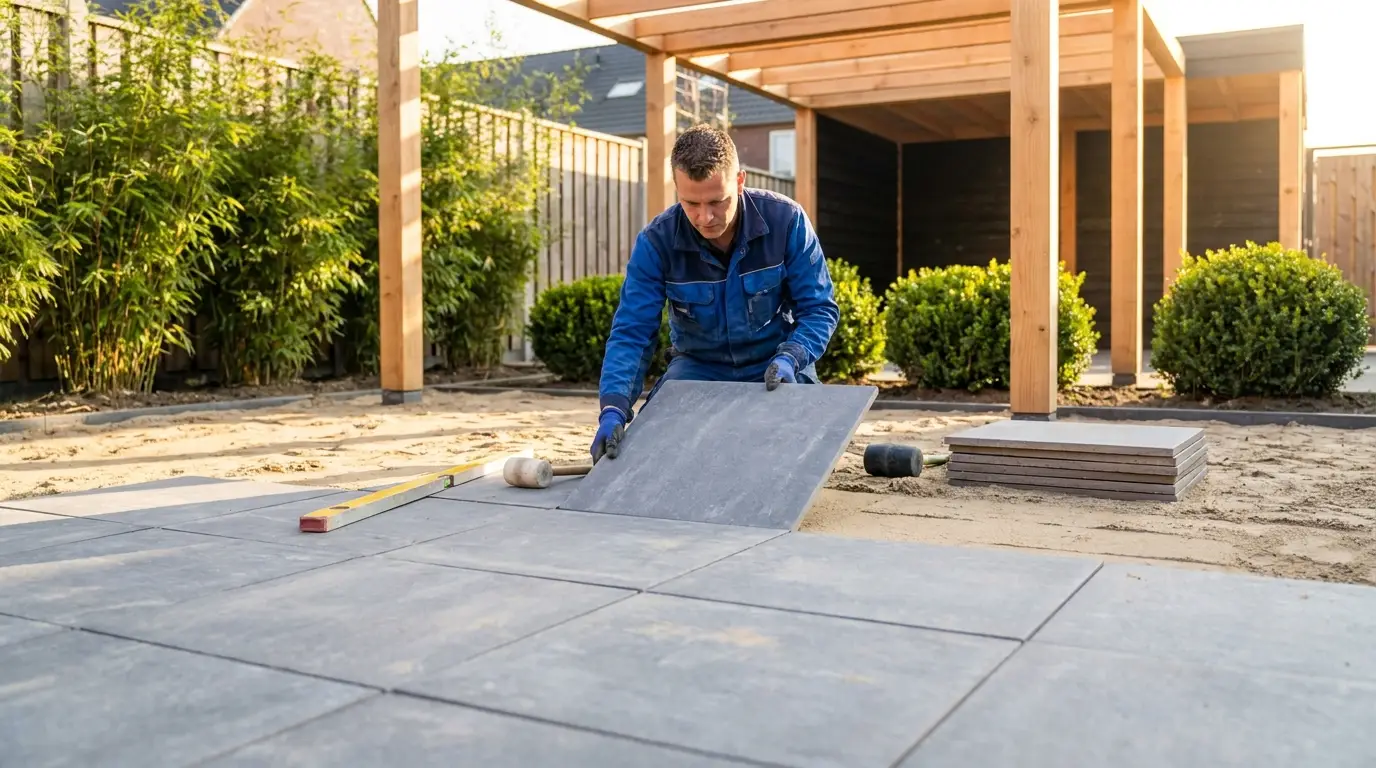
Cost of installing a pergola or garden shed: everything you need to know
A pergola or garden shed adds function and character to your yard, whether you want a covered spot to sit outside or extra storage space. The price depends on the material, the dimensions, and the finish. On average, you'll pay between €650 and €6,000, including installation by a contractor.
In this article
- ›What does it cost to install a pergola or garden shed?
- ›Prices by type of pergola and garden shed
- ›Material and labor cost breakdown
- ›Hire a contractor or install it yourself?
- ›How does installation work, step by step?
- ›Permit: when do you need one?
- ›Money-saving tips for a pergola or garden shed
Need a contractor for this?
Describe your job and get quotes from contractors near you.
average price
€2,200
including materials and installation
average hourly rate
€55
contractor hourly rate (€45–65/hour)
turnaround time
1–3 days
depending on scope and type
€ Average price by type
| Type of pergola or garden shed | Range | Average price |
|---|---|---|
| Wooden pergolasimple covered structure, treated pine or Douglas fir | €650 – €2,550 | €1,150avg.incl. installation |
| Aluminum pergola (most popular)maintenance-free, modern look, long lifespan | €1,350 – €5,050 | €2,800avg.incl. installation |
| Polycarbonate pergolatranslucent roof, affordable alternative | €850 – €2,050 | €1,400avg.incl. installation |
| Wooden garden shed (log cabin)prefab kit, standard size 2.5x3 m | €800 – €3,500 | €2,000avg.incl. installation |
| Custom wooden garden shedlarger size or custom build, pressure-treated wood | €2,500 – €6,000 | €4,000avg.incl. installation |
Prices include standard installation and exclude any permit costs or electrical connections. Based on Google price research.
Material and labor costs
Landscaper/paver and carpenter hourly rates average €45–€65/hour. Prices for foundation and concrete work may vary by region.
Hiring a contractor vs. doing it yourself
| Job | Do it yourself | Via a contractor | Savings doing it yourself |
|---|---|---|---|
| Assembling a prefab garden shedkit with instructions, standard size up to 15 m² | Doablevery doable with two people over a weekend; the instructions are enough | €400–€750 | up to €750 |
| Installing a wooden pergolaposts set in concrete, leveling beams and purlins | With experienceconcrete work and leveling require precision; a mistake here throws the whole structure off | €300–€600 | up to €600 |
| Pouring a concrete foundation or footingsgroundwork, setting forms, pouring concrete, and leveling | With experienceheavy physical work; on clay or peat soil, a professional assessment of foundation depth is strongly advised | €150–€350 | up to €350 |
| Installing a custom aluminum pergolacustom louvered roof, motorization, or guide rails | Not recommendedtolerances are tight; incorrect installation damages the louver mechanism and voids the warranty | contractor strongly recommended | No recommended savings |
| Running electrical to a garden shedbreaker panel, grounding, outlets, and lighting | Not recommendedthe NEN 1010 standard requires a licensed electrician; illegally installed wiring causes problems with insurance and selling your home | contractor required | No legal savings possible |
A prefab garden shed or a simple wooden pergola is quite doable for a handy DIYer, especially if the kit comes with clear instructions and you can count on a helping hand. Your savings on labor can then reach €750. Once you need a concrete foundation on wet or peaty soil, a custom aluminum structure with a louvered roof, or electrical connections, a contractor is essential. For electrical work, there's also a legal requirement: connection to the grid may only be done by an electrician certified under NEN 1010 (the Dutch standard for electrical installations). A mistake in the foundation or anchoring is costly to fix later and can create dangerous situations in strong winds.
The full process step by step
On-site assessment and measuring
The contractor visits the site, measures the available space, and checks the soil type. Sand bears loads differently than clay or peat, which directly determines the type of foundation. They also check the distance to the property line and any cables or pipes in the ground.
1–2 hours
Checking and applying for a permit
Structures smaller than 30 m² and lower than 3 meters in the backyard area are usually permit-free. Is the garden shed or pergola larger, in the front yard area, or in a protected historic district? Then the contractor or the customer applies for a building permit through the Omgevingsloket (the Dutch online permit portal). The wait is up to 8 weeks.
30–60 min to apply; wait up to 8 weeks
Groundwork and foundation
Depending on the soil conditions, footings, a steel frame, or a poured concrete slab are installed. The contractor levels everything. This is the most critical moment: a crooked foundation carries through into the doors, gutters, and the entire frame. Concrete needs 24–48 hours to cure enough for the next step.
half to a full day (excluding concrete curing time)
Assembling the frame and support structure
Posts are attached to the footings or concrete slab. Then the horizontal beams, purlins, and rafters are installed. For an aluminum pergola, the guide rails for the louvers or fabric are fitted. After each part, the contractor checks plumb and level again.
1–2 days depending on size
Installing the roof and wall finish
Polycarbonate panels, metal sheeting, roof tiles, or, for a garden shed, wood siding are installed. All joints and transitions are sealed with UV-resistant caulk to prevent leaks. Doors, windows, and any gutters are installed and adjusted.
half to a full day
Electrical connection (if desired)
If the garden shed gets electricity, a NEN 1010-certified electrician connects the breaker panel, grounding, outlets, and lighting. This is always a separate step from the structural installation, so the wiring diagram is accurate for any inspection.
2–4 hours
Handover and instructions
The contractor checks that the roof and all caulk joints are watertight, tests the doors and any motorization of the louvered roof, and explains maintenance: oil or stain wood regularly, and clean aluminum with soap and water. You receive the warranty documents and, if applicable, the electrician's inspection certificate.
1–2 hours
6 smart money-saving tips
Frequently asked questions
What does a pergola or garden shed cost on average?
On average, you'll pay €2,200 including materials and installation. A simple wooden pergola starts at €650, a custom aluminum pergola can run up to €5,050, and a large custom garden shed up to €6,000.
How long does it take to install a pergola or garden shed?
It takes 1 to 3 days, depending on type and size. A prefab kit is usually up in 1 day. Custom work with a concrete foundation takes 2 to 3 days, including curing time.
Do I need a permit?
Usually not, as long as the structure is in the backyard area, smaller than 30 m², and no more than 3 meters high. Always check the rules with your municipality, because stricter requirements apply in a protected historic district. Permit costs are usually €0–€300.
Can I do it myself?
Yes, many pergola and garden shed kits are designed for self-assembly. By doing the installation yourself, you save €400–€1,100 on labor costs. Note: electrical connections in a garden shed must always be done by a licensed electrician.
Which material is the cheapest?
Wood is the cheapest to buy (from €650), but it needs regular maintenance, such as oiling or painting. Aluminum costs more (from €1,350) but is virtually maintenance-free and lasts longer.
What does a pergola cost per m²?
Installation costs for a pergola average €50–€150 per m² when you hire a contractor. Material costs come on top of that and depend heavily on the chosen material and roof finish.
Related jobs
Ready to have your pergola or garden shed installed?
Describe your job and get quotes from verified carpenters and general contractors near you.
Within 24 hours
response from a contractor
Verified
all contractors checked
Competitive price
compare quotes