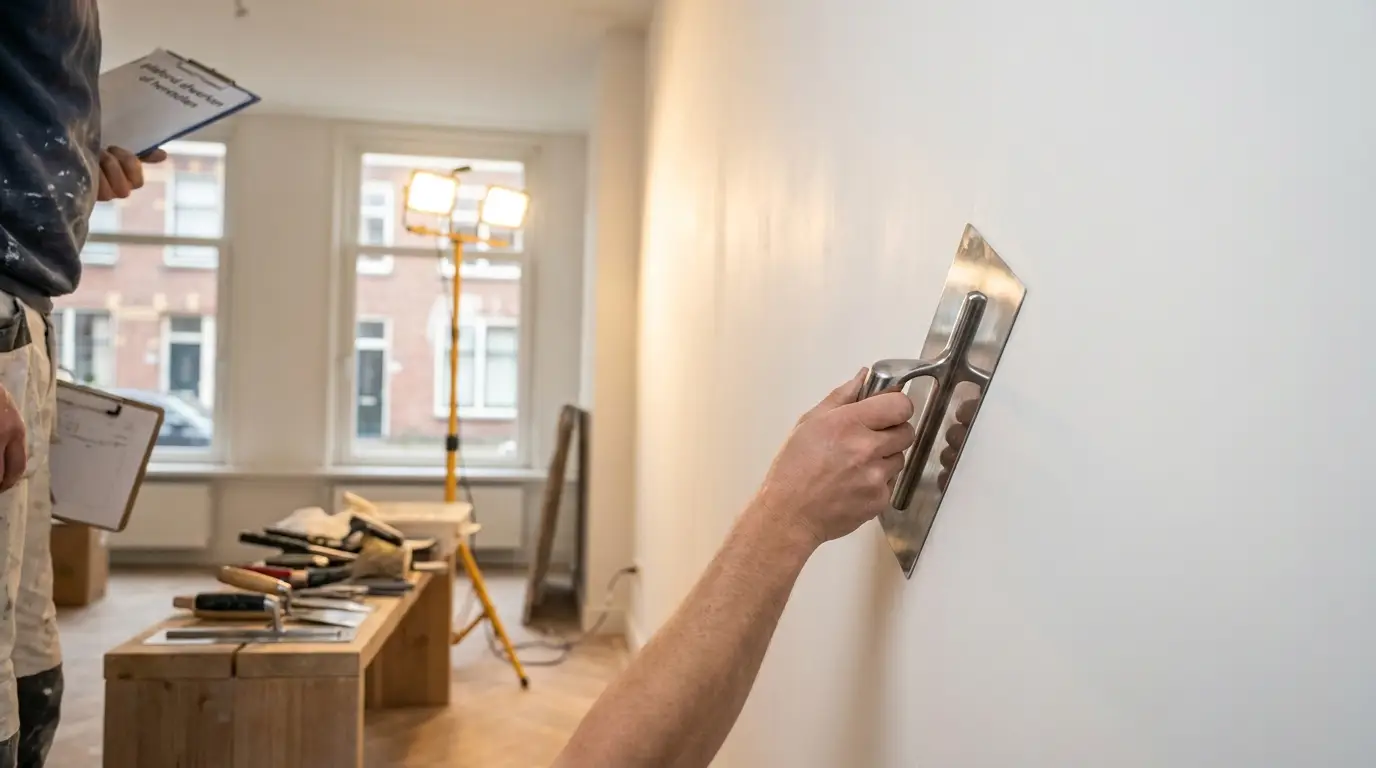
Cost of finishing or repairing a ceiling: everything you need to know
Having a damaged or outdated ceiling finished or repaired instantly gives your home a well-kept look. The cost depends on the type of finish, the surface area, and the condition of the existing ceiling. On average, you'll pay between €20 and €45 per m² for professional plastering, including labor and materials.
In this article
- ›What does finishing or repairing a ceiling cost?
- ›Prices by type of finish
- ›Material and labor costs
- ›Hire a contractor or do it yourself?
- ›How does the process work?
- ›Money-saving tips for ceiling work
- ›Frequently asked questions
Need a contractor for this?
Describe your job and get quotes from contractors near you.
average price
€950
average per room (approx. 20 m²)
average hourly rate
€48
contractor hourly rate (€35–65/hour)
turnaround time
1–3 days
depending on area and type
€ Average price by type
| Type of ceiling finish | Range | Average price |
|---|---|---|
| Ceiling skim coat (thin layer)Touching up existing plaster or filling holes, small area | €200 – €500 | €350avg.incl. labor |
| Full ceiling plastering (most popular)Completely new plaster in a room of approx. 20 m², including materials | €400 – €1,000 | €700avg.incl. labor |
| Ceiling repair after a leak or damageRepairing plaster damaged by moisture, cracks, or collapse | €350 – €900 | €600avg.incl. labor |
| Installing a drop ceilingLowered ceiling with tiles or drywall, per room of approx. 20 m² | €600 – €1,500 | €1,050avg.incl. installation |
| Sprayed or decorative plaster ceilingDecorative finish with decorative plaster or spray technique, per room | €800 – €2,000 | €1,400avg.incl. labor |
Prices include materials and labor for a room of approx. 20 m²; small repairs cost less. Based on Google price research.
Material and labor costs
Plasterer hourly rate averages €35–65/hour. Ceilings usually cost €3–5/m² more than walls due to the greater physical strain.
Hiring a contractor vs. doing it yourself
| Job | Do it yourself | Via a contractor | Savings doing it yourself |
|---|---|---|---|
| Touching up a small crack or damageFilling a small hole or hairline crack up to approx. 5 mm wide with repair plaster | DoableReady-made repair plaster is easy to work with; thorough sanding and priming are enough | €10–30 materials | up to €200 |
| Ceiling skim coat (thin leveling layer)Touching up or leveling existing smooth plaster over a larger area | With experiencePlaster sets quickly and requires good timing; uneven surfaces stand out clearly in raking light | €200–500 contractor | up to €300 |
| Fully replastering a ceilingApplying an even coat of plaster across an entire room, including priming | Not recommendedRequires the right plastering technique, a work platform or scaffold, and lots of practice: mistakes are almost impossible to fix without redoing everything | €400–1,000 contractor | No recommended savings |
| Repairing a ceiling after a leak or water damageRemoving damaged plaster and refinishing after a water leak | Not recommendedHidden moisture damage, mold growth, and loose plaster behind the surface are easily missed by a non-expert | €350–900 contractor | No recommended savings |
| Installing a lowered or drop ceilingInstalling a framework with tracks, drywall, or drop ceiling tiles | Not recommendedThe framework's load capacity, fire safety class, and working level require knowledge most DIYers don't have | €600–1,500 contractor | No recommended savings |
For small repairs (sealing a hairline crack or touching up a small patch of damaged plaster), you can manage just fine with ready-made repair plaster. Always make sure you get good adhesion: sand the surface and apply a primer first, or the repair will eventually peel off. For anything larger than the palm of your hand, a plasterer is the smart choice. Plastering an entire ceiling smooth and even takes years of experience: plaster sets quickly, and every imperfection becomes crystal clear as soon as the sun shines in at a low angle. With water damage, a contractor is essential, not only to repair the plaster but also to assess the cause of the leak and spot any mold growth in the substrate. If you overlook this, the damage will come back after the first rainstorm.
The full process step by step
Inspection and identifying the cause
The plasterer checks the ceiling for cracks, loose or hollow-sounding plaster, water rings, and any structural problems. If there are signs of a leak, they first confirm that the cause (a leaking roof, a leaking pipe, or condensation) has been fixed before the repair begins.
30–60 min
Clearing and preparing the substrate
Loose and damaged plaster is carefully removed until a solid base remains. The ceiling is cleaned of dust, and porous or dry substrates are primed with a bonding primer to prevent uneven absorption.
1–2 hours
Applying the base coat
For a full finish, the plasterer first applies a base coat (also called a scratch coat) to fill in irregularities and create a stable foundation for the finish coat. Holes and seams get extra attention.
1–3 hours
Plastering the finish coat
A thin, fine finish coat is applied over the dry base coat and smoothed with a trowel. This determines the final result: a well-executed finish coat is flat, smooth, and free of trowel marks or waves.
2–4 hours per room
Monitoring drying time
The plaster needs 24 to 48 hours to dry in a well-ventilated room, depending on the coat thickness, temperature, and humidity. Painting or taping right away while the plaster is still damp causes blistering and peeling.
24–48 hours drying time
Final inspection and touch-ups
Once dry, the ceiling is checked for flatness in raking light. Small imperfections are touched up before handover. After that, the ceiling is ready to be primed and painted.
30–60 min
6 smart money-saving tips
Frequently asked questions
What does finishing or repairing a ceiling cost on average?
On average, you'll pay €20 to €45 per m², including labor and material costs. For a 20 m² room, that comes to €400 to €900. For small repairs, such as a crack or a water stain, a plasterer often charges a minimum rate of about €250.
How long does it take to finish a ceiling?
A professional plasterer can finish an average 20 m² room in 1 to 2 workdays. After that, the plaster needs 24 to 48 hours to dry before it can be painted. So the whole process takes 2 to 3 days.
Is plastering a ceiling more expensive than a wall?
Yes, ceilings cost on average €3 to €5 per m² more than walls. That's because the plasterer works overhead, which is physically harder and takes more time. Extra scaffolding is also needed more often.
Do I need a permit for ceiling work?
No, in almost all cases you don't need a permit to finish or repair a ceiling. It's interior finishing without structural changes. Do check for major changes, such as a drop ceiling with a new framework.
Can I finish a ceiling myself?
You can handle small repairs, such as touching up a crack or minor damage, yourself with ready-made repair plaster. Plastering an entire ceiling smooth and even, however, requires skill and the right tools. It's a good idea to practice on a small, hidden area before you tackle larger surfaces.
When is a ceiling repair necessary?
A repair is necessary when you see visible cracks, loose plaster, water stains after a leak, or damage from construction or renovation work. Don't wait too long: loose plaster can keep crumbling and cause greater damage.
Related jobs
Ready to have your ceiling finished or repaired?
Describe your job and receive quotes from verified plasterers near you.
Within 24 hours
response from a contractor
Verified
all contractors checked
Competitive price
compare quotes