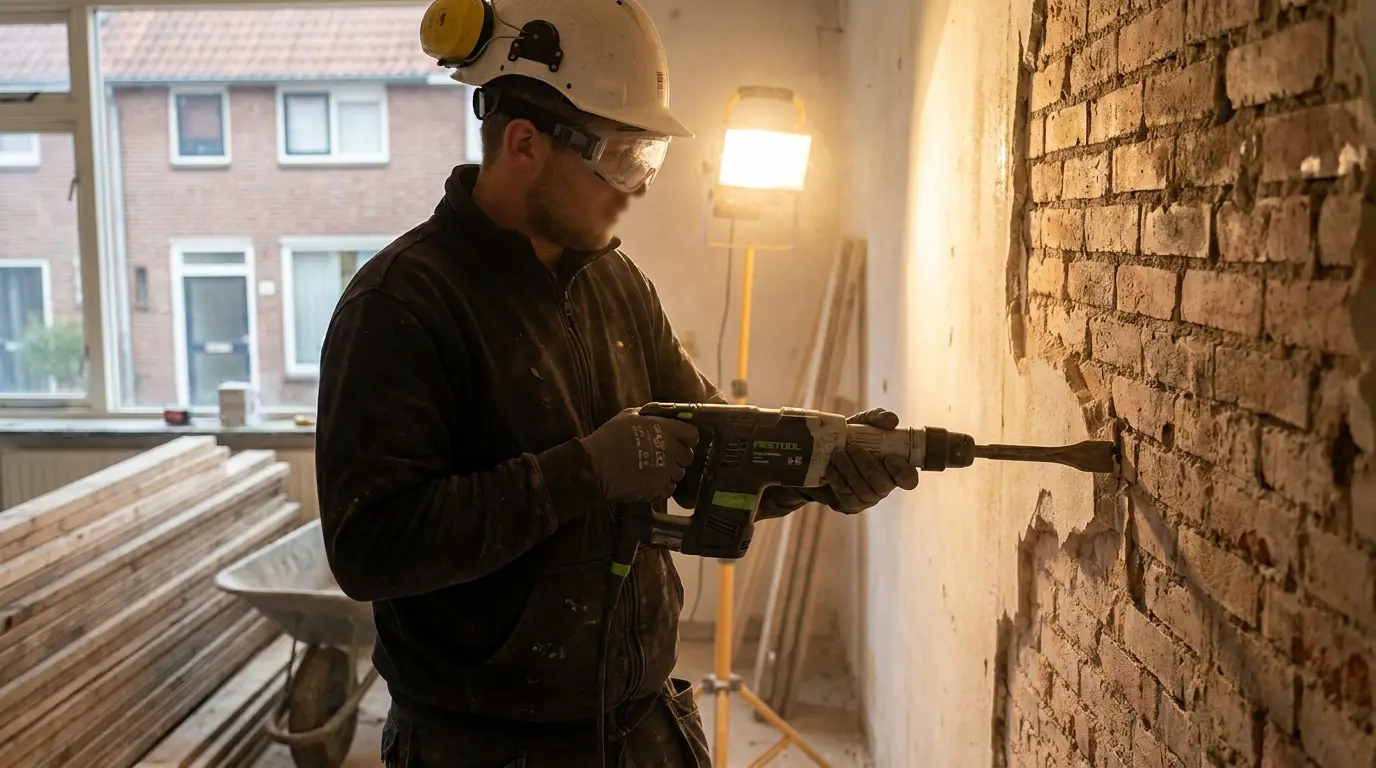
Cost of removing debris or furniture: everything you need to know
Removing debris or old furniture is a job you want off your plate quickly. The price depends on the amount and type of waste, the removal method you choose, and whether extra carrying or disassembly work is needed. With a contractor, you get it done hassle-free and within the rules.
In this article
- ›How much does debris or furniture removal cost?
- ›Price overview by removal type
- ›Material and labor costs
- ›Hire a contractor or do it yourself?
- ›Step by step: how does removal work?
- ›Tips to save on removal costs
- ›Frequently asked questions
Need a contractor for this?
Describe your job and get quotes from contractors near you.
average price
€350
pickup, loading, and removal included
average hourly rate
€45
contractor hourly rate (€30–60/hour)
turnaround time
1–2 days
depending on the amount of waste
€ Average price by type
| Removal job type | Range | Average price |
|---|---|---|
| Small amount (1–2 m³)A few boxes of debris, some furniture, or leftover waste after a small job | €80 – €200 | €140avg.incl. labor |
| Medium amount: 3 m³ dumpster (most popular)Ideal after a bathroom or kitchen renovation or clearing out one room | €125 – €220 | €175avg.incl. installation |
| Large 6 m³ dumpsterFor demolition waste, a full household, or a larger renovation | €250 – €400 | €325avg.incl. installation |
| Extra-large 10 m³ dumpsterFull basement clear-out, demolition, or multiple rooms | €350 – €550 | €450avg.incl. installation |
| Full household removal (contractor + movers)Pickup, disassembly, and removal of all furniture from a home | €300 – €800 | €550avg.incl. labor |
Prices include dumpster delivery and disposal fees at a licensed processing facility; surcharges for contaminated or mixed waste are not included. Based on Google price research.
Material and labor costs
Removal contractor hourly rate averages €30–60/hour. Disposal fees vary widely by municipality and type of waste; debris is usually cheaper than mixed construction and demolition waste.
Hiring a contractor vs. doing it yourself
| Job | Do it yourself | Via a contractor | Savings doing it yourself |
|---|---|---|---|
| Small amount of debris to the recycling centerA few buckets of demolition debris or construction leftovers after a small job | DoableThe municipal recycling center is free for household debris; your own car or trailer is enough | €0–€30 | up to €150 |
| Renting a dumpster and filling it yourselfLoading 3–6 m³ of construction or demolition waste into a rented dumpster | DoableOrdering and filling the dumpster yourself saves on labor costs, but you carry everything yourself | €125–€300 | €60–€150 |
| Disassembling and removing individual furnitureTaking apart and hauling away cabinets, sofas, and beds | With experienceHeavy and large furniture takes at least two people; risk of lifting injuries and damage to door frames and stairs | €50–€150 | €50–€100 |
| Clearing out a full householdEmptying an entire home, including disassembly of all furniture | Not recommendedTime-consuming, physically demanding, and requires a large vehicle or trailer; a contractor with movers works ten times faster | €300–€800 | No recommended savings |
| Removing asbestos-containing or hazardous wasteOld insulation, asbestos cement sheets, solvent-based paint, or chemical waste | Not recommendedCertified processing required by law (Wet milieubeheer); without certification, risk of heavy fines and health damage | €150–€500 | No legal savings possible |
For small amounts of household debris or individual pieces of furniture, the municipal recycling center offers a free or low-cost alternative, as long as you have your own transportation and the amount stays limited. Once the volume grows, heavy furniture needs to be disassembled, or the location is hard to reach, a licensed removal company is the better choice. A contractor has the right vans, hand trucks, and lifting equipment to move heavy furniture safely without damaging floors, stairs, or door frames. For material that may contain asbestos (think corrugated roof sheets, floor panels from the 1980s, or old insulation), a certified company is required by law. Improper removal falls under the Wet milieubeheer (the Dutch Environmental Management Act) and can result in heavy penalty payments. Always have questionable material assessed first by a licensed asbestos inspector (certified under SC-540) before removal starts.
The full process step by step
Assess and sort the waste
Map out how much and what kind of material needs to go: clean masonry debris, mixed construction waste, wood, drywall, or furniture. The cleaner the streams are sorted, the lower the disposal fees. Also note how accessible the location is: a narrow passage, a high floor, or parking problems affect the price.
30–60 min
Choose a removal method and request quotes
Decide whether a dumpster on your own property, a dumpster on the public road, or a contractor who picks up directly suits you best. Request at least two quotes and check whether disposal fees are included. Also have any permit costs itemized.
1–2 days
Arrange a municipal exemption if needed
If the dumpster is on the public road, a municipal exemption is required. Most removal companies arrange this for you for €20–€60. Ask in advance for confirmation that the exemption has been requested to avoid a fine.
1–3 business days
Dumpster delivery or contractor arrival
The contractor delivers the dumpster or arrives with a van and a moving crew. Make sure there's a clear path, protect floors with cardboard or walk boards, and remove obstacles along the route outside. For high floors, the method (stairs or crane truck) is agreed on in advance.
30–60 min
Loading, carrying, and disassembly
Debris is loaded in buckets or with shovels; furniture is disassembled where needed and removed by hand or with a hand truck. Heavy items such as washing machines, refrigerators, or concrete countertops sometimes require extra manpower or a lifting device.
2–6 hours
Transport to a certified processing facility
The waste is transported to a licensed recycling or disposal facility. You receive a weight ticket or proof of processing as evidence of correct, legally compliant processing. Keep this document for a renovation or sale of the home.
1–2 hours
Dumpster pickup and site check
Once finished, the dumpster is picked up or the contractor cleans up the loading area. Check that no leftover waste remains on the street or in the yard and that floors and door frames are undamaged.
30 min
6 smart money-saving tips
Frequently asked questions
How much does debris or furniture removal cost on average?
On average, you'll pay €350 for debris or furniture removal, including pickup and disposal fees. The range runs from €80 for a small amount to €800 for clearing out a full household.
How long does debris or furniture removal take?
For a normal amount, the job is done within one day. For large demolition jobs or full home clear-outs, a contractor plans for one to two workdays.
Do I need a permit for a dumpster on the street?
Yes, for a dumpster on a public road you usually need an exemption from the municipality. This costs between €20 and €60. If the dumpster is on your own property, no permit is needed.
Can I remove debris or furniture myself?
Yes, you can drive to the municipal recycling center (free for household waste) or a licensed landfill yourself. This saves on labor costs, but you'll need your own car or van. For large amounts of debris, a contractor with a dumpster is faster and safer.
What does it cost if the debris is mixed with drywall, wood, or plastic?
Mixed or contaminated waste has to be sorted by hand, which raises the price considerably. Expect a surcharge of €50–€200 on top of the regular rate. Clean masonry debris is always cheaper to dispose of.
Are there cheaper alternatives for furniture removal?
Furniture in good condition can be picked up for free by a thrift store or given away via Marktplaats (a popular Dutch online marketplace). The municipality sometimes collects bulky waste for free on set days. This saves the full removal cost.
Related jobs
Ready to have your debris or furniture removed?
Describe your job and get quotes from verified removal companies near you.
Within 24 hours
response from a contractor
Verified
all contractors checked
Competitive price
compare quotes