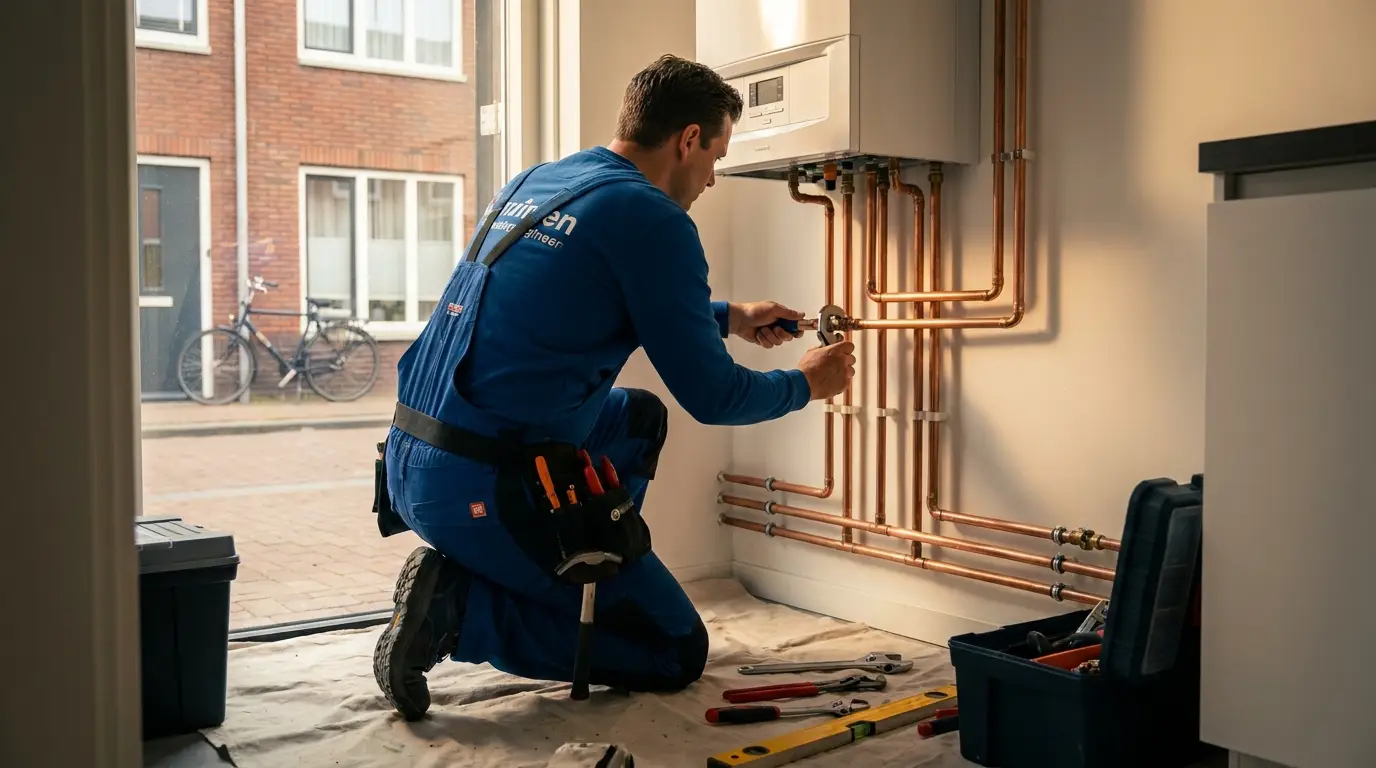
Cost of moving or replacing a radiator: everything you need to know
Moving or replacing a radiator seems simple, but the work includes draining the system, any pipe modifications, and properly pressure testing the installation. The total cost depends heavily on the type of radiator (panel radiator, designer radiator, or towel radiator), the distance to existing pipes, and whether floor or wall work is involved.
In this article
- ›How much does it cost to move or replace a radiator?
- ›Price overview by type of radiator
- ›Material and labor costs
- ›Hire a contractor or do it yourself?
- ›How does the installation work step by step?
- ›Money-saving tips for radiator work
- ›Frequently asked questions
Need a contractor for this?
Describe your job and get quotes from contractors near you.
average price
€375
radiator including installation
average hourly rate
€63
HVAC technician hourly rate (€50–75/hour)
turnaround time
1–2 days
depending on scope
€ Average price by type
| Type of radiator job | Range | Average price |
|---|---|---|
| Moving a radiator (short distance)reuse existing connections, no need to reroute pipes | €150 – €300 | €225avg.incl. installation |
| Replacing a panel radiator (most popular)standard steel panel radiator, connected to existing pipework | €200 – €450 | €325avg.incl. installation |
| Moving a radiator (rerouting pipes)pipes need to be rerouted through the floor or wall | €300 – €600 | €450avg.incl. installation |
| Installing a designer radiatorvertical or decorative radiator, often a custom connection | €400 – €900 | €650avg.incl. installation |
| Installing a towel radiator (bathroom)electric or on central heating, including brackets and connection materials | €250 – €700 | €475avg.incl. installation |
| Installing a low-temperature (LT) radiatorsuitable for a heat pump, larger surface area required | €500 – €1,200 | €850avg.incl. installation |
Prices include standard installation and VAT; rerouting pipes and extra materials are charged separately. Based on Google price research.
Material and labor costs
HVAC technician hourly rate averages €50–€75/hour. The trip charge (€30–€60) is usually charged once, even for several radiators on one day.
Hiring a contractor vs. doing it yourself
| Job | Do it yourself | Via a contractor | Savings doing it yourself |
|---|---|---|---|
| Replacing a panel radiator in the same positionReuse existing connection points, no pipe modifications needed | With experienceDraining and refilling the central heating system requires know-how; mistakes can void the boiler warranty | €80–€350 (materials) | up to €160 saved on labor |
| Mounting an electric towel radiatorVersion without a central heating connection, plugged into an existing wall outlet | DoableNo central heating system needed; a standard electrical connection is enough for most models | €100–€400 (radiator) | up to €130 saved on installation |
| Moving a radiator with pipe reroutingExisting pipes are rerouted through the wall or floor to the new position | Not recommendedFaulty connections cause leaks, pressure loss, or hidden moisture damage | €300–€600 | No recommended savings |
| Installing an LT radiator (for a heat pump)Large radiators matched to a low flow temperature, sometimes with modified pipework | Not recommendedIncorrect sizing or settings throw off the balance of the heat pump system | €500–€1,200 | No recommended savings |
| Connecting a designer or towel radiator to central heatingDecorative radiator with custom connections to the existing central heating circuit | Not recommendedConnection sizes often differ from standard; improper sealing leads to leaks | €400–€900 | No recommended savings |
For rerouting central heating pipes, connecting to a heat pump, or installing a designer radiator with non-standard connections, a licensed HVAC technician is essential. Mistakes in the pipework lead to water leaks, corrosion in the system, and (in many cases) loss of the warranty on the boiler or heat pump. In addition, the NEN 8025 standard (a Dutch technical standard for heating installations) requires central heating installation work to be carried out by a licensed company when changes are made to the pipe infrastructure. A handy DIYer can replace a standard panel radiator themselves if the connection points stay in the same place and the connection diameters match. Properly draining, bleeding, and refilling the system, including checking the system pressure and adding central heating inhibitor, is an absolute must. If you're not sure about this, it's better to leave it to a contractor.
The full process step by step
On-site inspection and quote
The HVAC technician looks at the current location of the radiator, the condition of the pipe connections, the type of central heating system, and the desired new position or new radiator type. Based on this, a fixed price or hourly rate is agreed upon, including any additional work for rerouting pipes.
30–60 min
(Partially) draining the central heating system
Using the drain valve or a special drain hose, the part of the system serving the radiator being worked on is drained. The HVAC technician checks the system pressure before and after draining and notes the starting reading so the system can be refilled correctly.
20–45 min
Removing the old radiator
The existing radiator is lifted off the wall brackets, and the radiator valves are closed and unscrewed. Residual water in the radiator is caught. When moving the radiator or replacing it with a different model, the brackets and fittings are removed as well.
20–40 min
Modifying the pipework (if applicable)
If the radiator is moving to a new position, the HVAC technician installs new supply and return pipes. This may include cutting channels in the wall or floor. The new pipes are soldered or press-fitted and fitted with the correct valve and bleed valve.
1–3 hours
Mounting and connecting the new radiator
The wall brackets are mounted at the right height and spacing. The radiator is hung and connected to the pipework with the correct fittings. A thermostatic radiator valve (TRV) and a lockshield valve are installed and set correctly.
30–90 min
Refilling, bleeding, and pressure testing the system
The central heating system is refilled to the correct system pressure (usually 1.5–2 bar). The HVAC technician bleeds the new radiator and any nearby radiators that have taken in air. The system is then pressure tested to check all connections for leaks. Central heating inhibitor is topped up where needed.
30–60 min
Handover, test run, and instructions
The boiler is started up, and the HVAC technician checks whether the new radiator heats up evenly. They set the thermostatic valve to the desired setting and explain how to use the radiator most efficiently. The work order is handed over, and any repair work to the wall or floor is discussed.
15–30 min
6 smart money-saving tips
Frequently asked questions
How much does it cost to replace a radiator on average?
On average €325 for a standard panel radiator including installation. The range runs from €150 (simple move) to €1,200 (LT radiator with pipework).
How much does it cost to move a radiator?
Moving without pipework costs €150–€300. If the pipes need to be moved too, expect €300–€600, depending on the distance and the construction of the wall or floor.
How long does it take to replace or move a radiator?
A standard replacement takes 1–3 hours. If pipes need to be rerouted or several radiators are done at once, the job can take a full workday or longer.
Do I need a permit?
No, you don't need a permit to replace or move a radiator. The installation must comply with applicable NEN standards (Dutch technical standards), though; a licensed HVAC technician takes care of this automatically.
Can I replace a radiator myself?
Hanging a radiator and connecting it to existing connections is possible to do yourself, but draining, filling, and bleeding the central heating system requires know-how and tools. Having pipework done by a licensed HVAC technician is wise and sometimes required to keep the warranty on your boiler.
Do I save money if I have several radiators replaced at once?
Yes. The trip charge and system work (draining/filling the central heating) are charged only once. Doing several radiators at once can easily save €50–€100 per radiator.
Related jobs
Ready to have your radiator moved or replaced?
Describe your job and receive quotes from verified HVAC technicians near you.
Within 24 hours
response from a contractor
Verified
all contractors checked
Competitive price
compare quotes