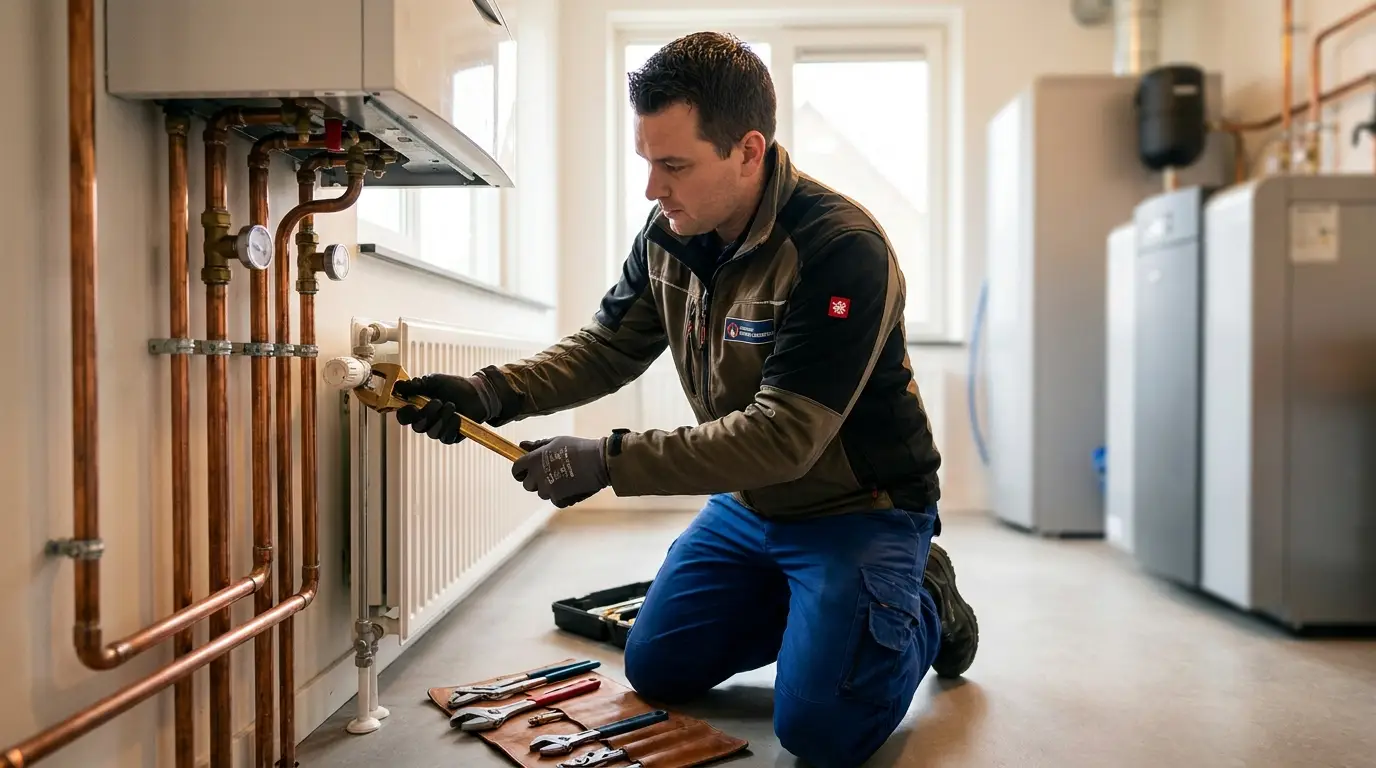
Cost of installing or replacing radiator valves: everything you need to know
Replacing a radiator valve is a small job with a big impact: a faulty or outdated valve can lead to energy loss, leaks, or a radiator that no longer responds properly to the thermostat. The cost depends on the type of valve, the number of valves to replace, and how accessible the system is. A plumber charges an average of €100 to €200 per valve, including materials and labor.
In this article
- ›What does it cost to replace a radiator valve?
- ›Prices by type of radiator valve
- ›Material and labor costs
- ›Hire a plumber or do it yourself?
- ›How does the replacement work step by step?
- ›Money-saving tips for radiator valves
- ›Frequently asked questions
Need a contractor for this?
Describe your job and get quotes from contractors near you.
average price
€125
per valve incl. materials and labor
average hourly rate
€75
plumber hourly rate (€65–100/hour)
turnaround time
1–3 hours
depending on number of valves
€ Average price by type
| Radiator valve type | Range | Average price |
|---|---|---|
| Replacing a manual valveSimple on/off valve without temperature control | €75 – €130 | €100avg.incl. installation |
| Thermostatic radiator valve (most popular)Automatic temperature control per room, energy-efficient | €100 – €220 | €155avg.incl. installation |
| Smart radiator valve (e-thermostat)Wi-Fi-controlled valve, connects to a smart thermostat or app | €150 – €300 | €210avg.incl. installation |
| Several valves at once (4–8 valves)Cheaper in one visit; the plumber combines the work | €350 – €800 | €550avg.incl. installation |
| Whole house (8+ valves)Full replacement including thermostatic valves in every room | €700 – €1,600 | €1,100avg.incl. installation |
Prices include materials and labor; with several valves in one visit, the cost per valve drops thanks to a shared trip charge. Based on Google price research.
Material and labor costs
Plumber hourly rate averages €65–100/hour. The trip charge (€15–€50) is usually billed once, even for several valves.
Hiring a contractor vs. doing it yourself
| Job | Do it yourself | Via a contractor | Savings doing it yourself |
|---|---|---|---|
| Swapping the thermostatic headReplacing only the knob on top of the existing valve | DoableNo tools needed: unscrew it and press on the new head | €10–€30 | up to €80 |
| Replacing a manual valve (accessible radiator)Swapping a simple on/off valve in an easy-to-reach spot | With experienceRequires shutting off the heating, operating the drain valve, and applying a new seal | €75–€130 | up to €60 |
| Installing a thermostatic radiator valveTRV including new seal, bleeding, and setting the temperature limiter | Not recommendedA poor seal leads to leaks; air in the system blocks heat output | €100–€220 | No recommended savings |
| Installing a smart radiator valve (Wi-Fi)E-thermostat including app pairing, adjustment, and watertight sealing | Not recommendedA mix of plumbing and technical setup; a mistake causes leaks or malfunctions | €150–€300 | No recommended savings |
| Replacing a valve in a hard-to-reach spotRadiator behind furniture, in a cabinet, or under a windowsill: extra work time needed | Not recommendedLimited space increases the chance of damaged threads or crooked installation | €130–€250 | No recommended savings |
The only part you can safely handle yourself is swapping the thermostatic head: the knob that sits on top of the valve. This takes no tools and no plumbing knowledge: unscrew it, press on a new one, and you're done. Replacing the valve itself is another story. The heating pump has to be switched off, the supply pipe shut off, and the remaining water caught. Then the new valve has to be screwed in watertight with hemp or PTFE tape and the system bled again. A small mistake in the seal leads to a slowly leaking valve that damages walls or floors: repair costs that quickly exceed the full installation price. So leave this work to a licensed plumber, especially if the pipe is copper or older steel: damaged threads can make it necessary to replace the entire pipe.
The full process step by step
Inspection and preparation
The plumber checks which valves need replacing, the type of connection (threaded or compression fitting), and whether the system needs to be partially drained first. With older systems, the condition of the threads is assessed to avoid surprises when unscrewing.
5–10 min
Shutting off the heating and closing the pipes
The heating pump is switched off and the supply and return pipes at the radiator are closed with the shutoff valve or a pipe clamp. The water in the pipe is allowed to cool a bit so no hot water escapes when the valve is loosened.
10–20 min
Removing the old valve
Using a wrench, the existing radiator valve is unscrewed from both the radiator and the connecting fitting. Remaining water is caught in a bucket or with an absorbent cloth. The threads on the pipe and the radiator connection are checked for corrosion or damage.
10–20 min
Installing and sealing the new valve
The new valve is screwed tightly onto the pipe with fresh sealing material (hemp with jointing paste or PTFE tape). For thermostatic valves, the thermostatic head is fitted and the maximum temperature limiter set to the desired position (usually setting 3 or 4 for living rooms).
15–25 min
Repressurizing the system and checking for leaks
The shutoff valve is opened slowly so the system gradually comes back up to pressure. The plumber immediately checks whether the new connection is watertight by wiping it dry and watching it for a few minutes. At the slightest drip, it's resealed right away.
5–10 min
Bleeding and function test
Air is released from the system through the bleed valve on top of the radiator until a steady stream of water comes out. Then the heating pump is switched back on and the plumber checks that the radiator heats up fully and the thermostatic valve responds correctly to the control knob.
10–20 min
6 smart money-saving tips
Frequently asked questions
What does it cost on average to replace a radiator valve?
On average €125 per valve including materials and labor. Range: €75 for a simple manual valve up to €300 for a smart Wi-Fi valve with installation.
How long does it take to replace a radiator valve?
A plumber needs 30 to 60 minutes per valve. With several valves in one visit, the whole job takes 1 to 3 hours, depending on how accessible the radiators are.
Do I need a permit to replace radiator valves?
No, you don't need a permit to replace radiator valves. It's maintenance work on your own central heating system.
Can I replace a radiator valve myself?
You can swap the thermostatic head (the turning knob) yourself; it's just a matter of unscrewing it and pressing a new one on. Replacing the valve itself requires shutting off the heating and working on the water pipes. Only do this if you're handy; otherwise you risk leaks. A plumber is cheaper than water damage.
When should I replace a radiator valve?
Signs that a radiator valve needs replacing: the radiator no longer heats up while the valve is open, there's a visible leak around the valve, the valve is stuck or rusted, or the thermostat no longer responds to the control knob.
What's the difference between a radiator valve and a thermostatic head?
The radiator valve is the valve body that controls the water flow: it's fixed to the radiator and the pipe. The thermostatic head is the turnable attachment that controls the valve. Replacing just the head costs €10–€30 (materials). Replacing the whole valve costs €75–€220 including labor.
Related jobs
Ready to have your radiator valves replaced?
Describe your job and receive quotes from verified plumbers near you.
Within 24 hours
response from a contractor
Verified
all contractors checked
Competitive price
compare quotes