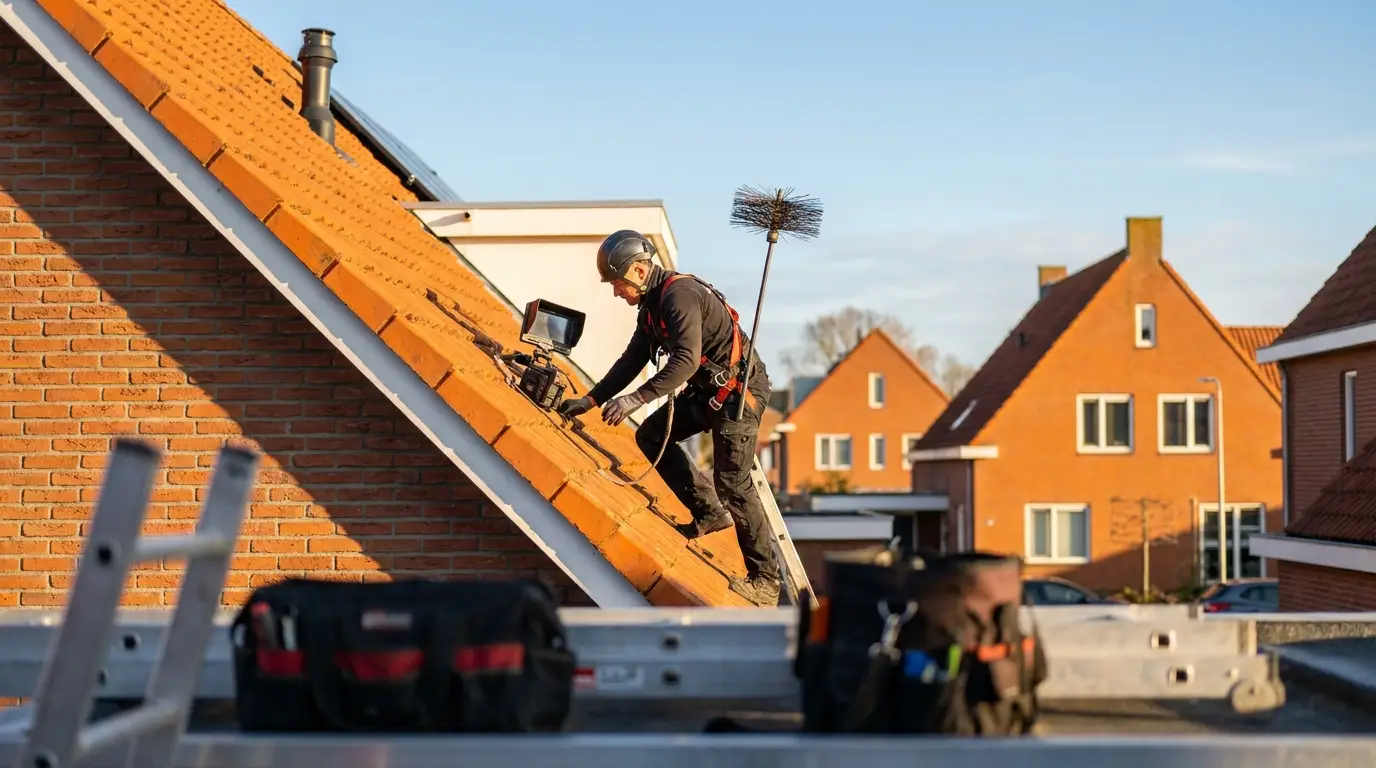
Cost of chimney sweeping or inspection: everything you need to know
A chimney sweep cleans soot, tar, and buildup from the flue and checks the safety of your heating appliance. The cost depends on the type of appliance, the length of the flue, and whether you also have a camera inspection done. An annual sweep is required by many insurers and keeps your home fire-safe.
In this article
- ›What does a chimney sweep cost?
- ›Prices by type of appliance
- ›Camera inspection costs
- ›Hire a contractor or do it yourself?
- ›How a chimney sweep works step by step
- ›Money-saving tips for chimney maintenance
- ›Frequently asked questions
Need a contractor for this?
Describe your job and get quotes from contractors near you.
average price
€80
standard sweep including trip charge
average hourly rate
€55
chimney sweep hourly rate (€50–75/hour)
turnaround time
1–2 hours
depending on type of appliance
€ Average price by type
| Type of chimney service | Range | Average price |
|---|---|---|
| Gas stove sweepstandard flue, one sweep including trip charge | €45 – €70 | €57avg.incl. labor |
| Wood stove sweep (most popular)standard flue, including trip charge and inspection after sweeping | €60 – €100 | €80avg.incl. labor |
| Pellet stove sweepflue and exhaust vent, including cleaning the exhaust grate | €65 – €100 | €82avg.incl. labor |
| Camera inspection without sweepingvisual assessment of the flue with report, sweep not included | €100 – €200 | €150avg.incl. labor |
| Sweep plus camera inspectionsweep and full camera inspection with report and recommendations | €180 – €280 | €230avg.incl. labor |
| Annual maintenance contractfixed price per year, including one or more sweeps and priority service | €50 – €150 | €100avg.incl. labor |
Prices include the trip charge and exclude VAT; wood stoves usually require a more intensive sweep than gas stoves. Based on Google price research.
Material and labor costs
Chimney sweep hourly rate averages €50–75/hour. The VAT rate on labor is 9% for homes older than two years.
Hiring a contractor vs. doing it yourself
| Job | Do it yourself | Via a contractor | Savings doing it yourself |
|---|---|---|---|
| Chimney sweeping: wood stove or pellet stoveRemoving soot, tar, and creosote from the flue with a brush and sweeping rods | Not recommendedFire insurers usually don't accept sweeping it yourself as valid proof of maintenance; tar and creosote are a fire hazard and require expert cleaning | €60–€100 | No legitimate savings possible |
| Flue camera inspectionVisual assessment of the inside of the flue with a professional inspection camera and written report | Not recommendedRequires certified inspection equipment; a consumer camera doesn't produce a valid inspection report for insurance or a home sale | €100–€200 | No legitimate savings possible |
| Chimney sweeping: gas stove (light buildup)Removing light soot buildup from a rarely used gas flue | With experienceTechnically doable with a sweeping kit for DIYers, but doesn't produce an insurance certificate; only useful as an in-between step alongside annual certified maintenance | €45–€70 | up to €50 |
| Comparing quotes and signing a contractRequesting three quotes and signing an annual maintenance contract with an accredited company | DoableAnyone can contact several chimney sweeps and compare contracts; it takes little effort and gives you an ongoing discount | €50–€150/year | up to €30 per year |
| Protecting the work area before the sweepCovering the floor and furniture around the fireplace with drop cloths or sheets | DoableYou can prepare the room yourself so the chimney sweep can get started right away; this saves time and therefore money | €0 (your own materials) | up to €15 on labor time |
A certified chimney sweep is essential for most work on the flue. Only an accredited company provides the proof of maintenance that fire insurers require: sweeping it yourself, however thoroughly, is accepted by virtually no insurer. In addition, a contractor recognizes dangerous defects that aren't visible to the naked eye: cracks in the flue, tar blockages, or creosote deposits that can catch fire at high temperatures. A camera inspection requires professional equipment that customers can't rent or operate without training. What you can arrange yourself: preparing the work area, requesting multiple quotes, and comparing and signing a maintenance contract. By choosing an annual contract and scheduling sweeps outside the busy heating season, you save consistently without compromising on safety or insurance coverage.
The full process step by step
Schedule an appointment and share your appliance details
You share the type of stove or fireplace (wood stove, gas stove, pellet stove, or open fireplace), the service you want (sweeping only, or sweeping with a camera inspection), and details such as a long shaft or an angled roof penetration. The chimney sweep can then plan the right equipment and enough time.
5–10 min
Set up the work area and visually assess the flue
The contractor lays down drop cloths around the fireplace or stove door and inspects the firebox, the grate, and the flue opening for visible deposits, blockages, or damage. That way they know in advance how heavy the buildup is and whether extra cleaning time is needed.
5–10 min
Sweep the flue from above or below
Flexible sweeping rods and a brush matched to the flue loosen soot, tar, and creosote. Depending on how the shaft is built, the contractor works from above via the roof or from below via the stove door. Loosened material is immediately vacuumed up with a HEPA-filter vacuum to keep it from spreading through the room.
20–45 min
Camera inspection of the cleaned flue (if requested)
After sweeping, the clean flue offers the best visibility. A flexible inspection camera is fed through the shaft. Cracks in joints, fractures in the pipe, collapsed sections, or remaining blockages are captured on video. The contractor writes a report with findings and recommendations.
20–30 min
Check flue exhaust and draft
The chimney sweep tests the flue's draft: how well combustion gases are carried away. A smoke test or draft gauge confirms that the exhaust works properly and that no flue gases flow back into the living space.
5–10 min
Hand over the report and proof of maintenance
You receive proof of the sweep or a full inspection report (with a camera inspection). This document lists the date, type of appliance, findings, and recommendations. Keep it for your fire insurance and for any future home sale.
5 min
6 smart money-saving tips
Frequently asked questions
What does chimney sweeping cost on average?
On average €60 to €100 for a standard sweep. With a camera inspection, the price goes up to €180–€280. Range for all services: €45–€280.
How long does a sweep take?
A standard sweep takes 30 to 60 minutes. A combination of sweeping and a camera inspection takes 1 to 2 hours.
Do I need a permit for chimney maintenance?
No, you don't need a permit to sweep or inspect an existing chimney. Only when installing a new exhaust vent or changing the structure may a building permit be required.
Can I sweep my chimney myself?
You can buy a sweeping kit, but it's not recommended. A certified chimney sweep recognizes dangerous defects, is properly insured, and provides proof of maintenance for your fire insurance. Sweeping it yourself usually doesn't meet insurance requirements.
When is a camera inspection needed?
When buying a home with a fireplace, after a chimney fire, if you have smoke problems or blockages, and if the flue hasn't been inspected for decades. The inspection maps out cracks, blockages, or risks of collapse.
Do I pay the reduced VAT rate for chimney sweeping?
For homes older than two years, the reduced VAT rate of 9% applies to labor costs. Material costs always fall under the standard rate of 21%. Ask your chimney sweep for a split invoice.
Related jobs
Ready to have your chimney safely swept or inspected?
Describe your job and get quotes from verified chimney sweeps near you.
Within 24 hours
response from a contractor
Verified
all contractors checked
Competitive price
compare quotes