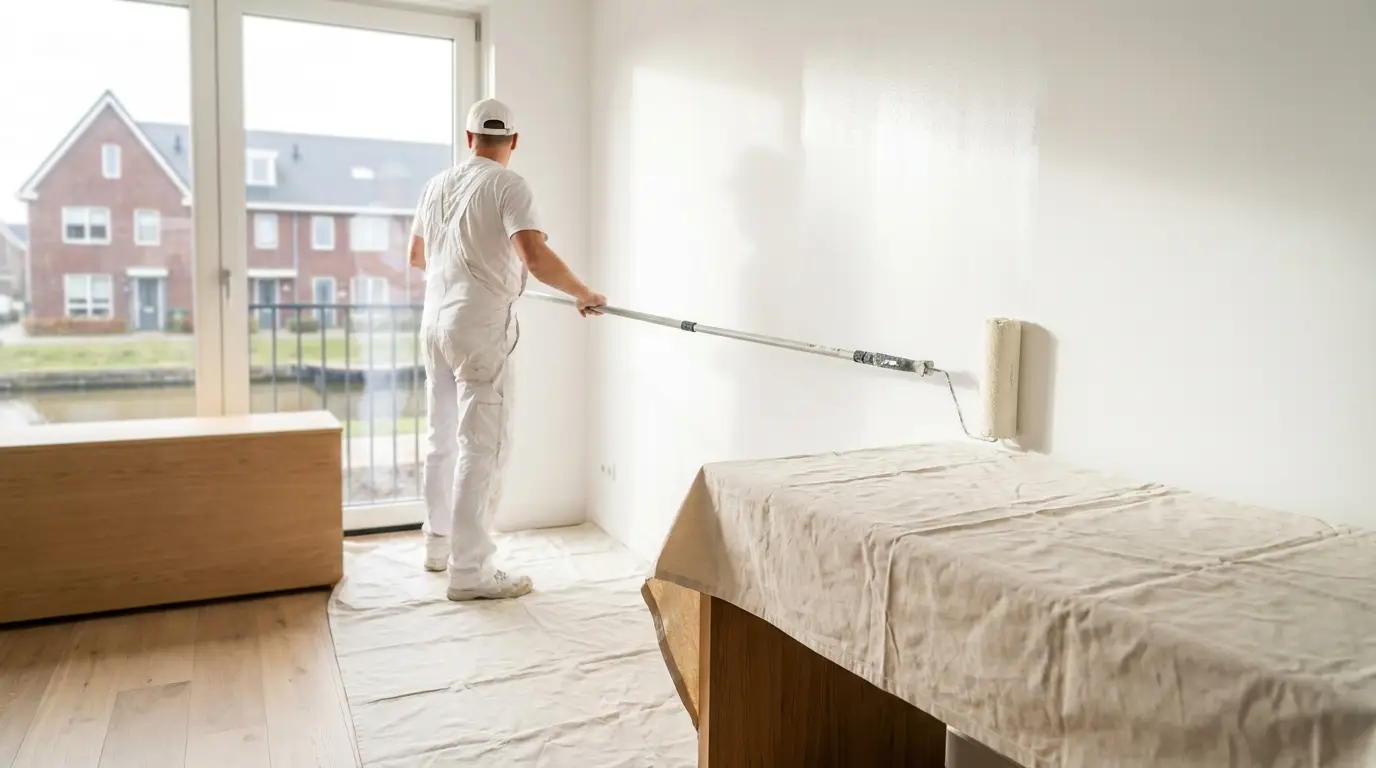
Cost of spray painting window frames, doors, and furniture: everything you need to know
Spray painting gives window frames, doors, and furniture a smooth, even finish you'll never achieve with a brush or roller. The price depends on the number of items to spray, the color, the surface, and whether disassembly is needed. A contractor charges an average of €35 to €45 per hour for spray painting and works a lot faster than with traditional painting.
In this article
- ›What does spray painting cost by type?
- ›Price table per item
- ›Material and labor costs
- ›Hire a contractor or do it yourself?
- ›How does the spray painting process work?
- ›Money-saving tips for spray painting
- ›Frequently asked questions
Need a contractor for this?
Describe your job and get quotes from contractors near you.
average price
€450
average price per door or window frame (including labor)
average hourly rate
€40
contractor hourly rate (€35–45/hour)
turnaround time
1–3 days
depending on scope and drying time
€ Average price by type
| Type of spray painting | Range | Average price |
|---|---|---|
| Spray painting an interior doorper door including frame, without disassembly | €100 – €250 | €165avg.incl. labor |
| Spray painting an exterior window frame (most popular)per frame including primer and 2 coats, standard size | €200 – €600 | €380avg.incl. labor |
| All exterior frames and doorsrow house, including front door and garage door | €2,000 – €4,500 | €3,000avg.incl. labor |
| Spray painting furniture (cabinet or kitchen fronts)per item, including sanding and primer | €250 – €800 | €475avg.incl. labor |
| Having all kitchen fronts spray paintedcomplete kitchen, including disassembly and reassembly | €800 – €2,500 | €1,500avg.incl. labor |
Prices include primer and two topcoats; removing doors or kitchen cabinet doors is charged separately. Based on Google price research.
Material and labor costs
Painter hourly rate averages €35–45/hour. Spray equipment adds a surcharge; for small jobs, the contractor sometimes charges a minimum price of €150–€200.
Hiring a contractor vs. doing it yourself
| Job | Do it yourself | Via a contractor | Savings doing it yourself |
|---|---|---|---|
| Spray painting a single interior door1–2 doors off the frame, solid color | DoableTake the door off its hinges and spray outside or in a well-ventilated room with a rental gun | €30–80 materials | up to €170 |
| Spray painting all exterior frames of a houseall facades, including front door and garage door | Not recommendedOverspray on brickwork and glass, scaffolding, and weather are too risky | €300–600 materials | No recommended savings |
| Spray painting kitchen frontscomplete kitchen, disassembly and reassembly included | Not recommendedSpraying indoors requires professional extraction; uneven coats on cabinet doors are visible and hard to fix | €150–350 materials | No recommended savings |
| Spray painting a cabinet or piece of furnitureone loose piece, solid RAL color | With experienceThorough sanding and degreasing are crucial; spray outside or rent a spray booth to keep dust out of the finish | €50–120 materials | up to €330 |
| Touching up a few window frames (color accent)1–3 frames in a different color, interior side | With experiencePrecisely masking glass and walls is time-consuming; inexperienced masking leads to overspray that's hard to remove | €40–100 materials | up to €250 |
For exterior window frames and kitchen fronts, a contractor is almost always the better choice. Removing overspray from glass or brickwork is time-consuming and costly; uneven coats on kitchen fronts stand out immediately and can hardly be touched up without sanding the entire surface again. A professional airless spray system also atomizes the paint more finely than consumer equipment, so the finish adheres more evenly and lasts longer. For loose furniture or interior doors you can remove from the frame, doing it yourself is doable as long as you have experience with spray guns and surface prep. Rent an airless or HVLP gun from a paint wholesaler (€40–80/day), dry-sand all surfaces, and work outside or in a clean, well-ventilated room. The biggest risks when you do it yourself are dust in the finish and a coat that's too thick and runs: allow plenty of drying time between coats.
The full process step by step
Inspection and quote
The painter inspects the surface of the window frames, doors, or furniture: they check for peeling paint, pitting, rust on steel frames, or damage to the wood. Based on this, they determine how much sanding, filler, and primer is needed and draw up an itemized quote with per-item prices.
30–60 min
Prep: sanding, degreasing, and filling
All surfaces to be sprayed are dry-sanded (P80–P120 for poor surfaces, P180 for good ones), degreased with a cleaner, and filled or caulked where needed. Damage to frames or door panels is repaired so the final spray coat lies flat. This phase determines at least 70% of the quality of the end result.
0.5–1 workday
Masking and shielding
Everything around the items to be sprayed is carefully covered: glass is taped off with special painter's tape and film, facades are protected with fleece-backed film, and floors with cardboard or plastic. For exterior work, neighbors, facade materials, and cars are also shielded. Don't cut corners on this labor-intensive work: overspray on glass or brickwork is hard to remove.
1–3 hours
Applying primer
An adhesion primer is sprayed on all bare or sanded surfaces. When changing from dark to light, an opaque primer in the target color is applied first so the topcoat covers fully in one or two coats. After spraying the primer, the contractor waits the prescribed drying time, usually two to four hours, before continuing.
1–2 hours + drying time
Spraying the topcoats
Using a professional airless spray gun, the contractor applies one or two topcoats in the desired RAL color and gloss level (matte, satin, or high gloss). They keep an even distance and work in steady passes to prevent pressure differences and runs. Drying time is needed again between coats; the contractor checks for even coverage along the way.
2–6 hours
Removing masking and touching up
Once the last coat has dried enough, all masking tape and film are carefully removed. The contractor inspects the result for sharp edges, contact points, or small imperfections and touches them up with a small brush. Frame joints and seams are recaulked if needed.
30–60 min
Handover and aftercare
The contractor walks through the work with you. You check color match, gloss, and finish on all items. Once you approve, you sign off on the handover. The contractor tells you after how many hours or days the finish is fully cured and how best to maintain the surfaces to maximize their lifespan.
15–30 min
6 smart money-saving tips
Frequently asked questions
What does spray painting cost on average per window frame or door?
On average €165 to €380 per item. An interior door costs €100–€250, an exterior window frame €200–€600. For a whole house, expect €2,000 to €4,500.
How long does spray painting window frames and doors take?
A contractor spends an average of 1 to 3 workdays on a whole row house. Per interior door, including prep, expect 1 to 3 hours. Spray painting kitchen fronts takes 2 to 4 workdays including drying time.
Do I need a permit for spray painting?
No, you don't need a permit to spray paint window frames, doors, or furniture. Keep in mind: for homes in a protected historic district or landmark buildings, restrictions may apply to the exterior color.
Can I do spray painting myself?
Spraying is technically harder than painting with a brush. You need a professional spray gun, the right paint, and experience masking and protecting adjacent surfaces. Mistakes like overspray or uneven coats are hard to fix. For a smooth result on window frames or furniture, we recommend a contractor.
What are the advantages of spray painting compared to regular painting?
Spray painting gives a more even, smoother finish without brush marks. It's faster on large, smooth surfaces. The downside is the extensive prep: everything around it has to be carefully covered. Spray paint is also more durable than regular exterior paint.
What determines the price of spray painting?
The main factors are the number of items to spray, the condition of the current surface (peeling, rust, pitting), the color change (dark to light requires an extra primer coat), disassembly and reassembly of furniture or doors, and accessibility (ladder or scaffolding for exterior work).
Related jobs
Ready to have your window frames, doors, or furniture spray painted?
Describe your job and get quotes from verified painters near you.
Within 24 hours
response from a contractor
Verified
all contractors checked
Competitive price
compare quotes