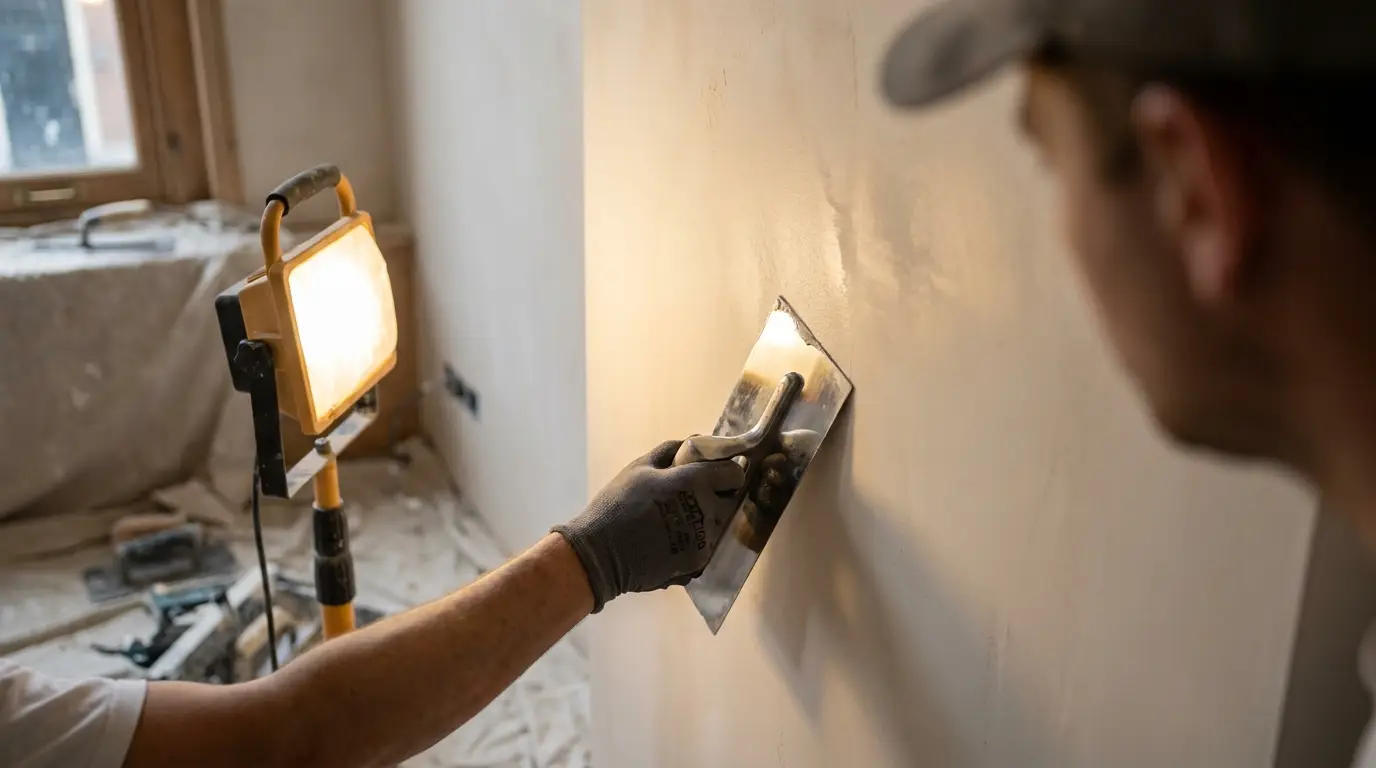
Cost of plastering: everything you need to know
Plastering gives walls and ceilings a crisp, smooth finish and instantly improves the quality of your home. The cost depends on the type of plastering, the number of m², the condition of the substrate, and the finish you want. A skilled plasterer charges on average €20 to €25 per m² for smooth plaster, including materials and labor.
In this article
- ›How much does plastering cost per m²?
- ›Prices by type of plastering
- ›Material and labor costs
- ›Hiring a contractor vs. doing it yourself
- ›How does plastering work step by step?
- ›Money-saving tips for plastering
- ›Frequently asked questions
Need a contractor for this?
Describe your job and get quotes from contractors near you.
average price
€4,000
average price to plaster a whole house
average hourly rate
€48
contractor hourly rate (€40–55/hour)
turnaround time
2–5 days
depending on scope and type of plastering
€ Average price by type
| Type of plastering | Range | Average price |
|---|---|---|
| Spray-applied skim coatsprayed finish, suitable as a paint-ready surface | €9 – €16 | €12avg.incl. labor |
| Smooth plaster (most popular)traditional hand-troweled smooth plaster, per m2 | €20 – €25 | €22avg.incl. labor |
| Ceiling plasteringsmooth plaster ceiling, slightly more labor than walls | €22 – €30 | €26avg.incl. labor |
| Exterior wall renderingrendering exterior walls per m2, including bonding and finish | €35 – €65 | €48avg.incl. labor |
| Decorative plasterVenetian or textured plaster, high-end finish per m2 | €55 – €120 | €80avg.incl. labor |
Prices include materials and labor; ceilings and exterior walls take more work and therefore cost more per m². Based on Google price research.
Material and labor costs
Plasterer hourly rate averages €40–€55/hour. Multi-coat work (scratch coat + finish coat) counts double in labor hours.
Hiring a contractor vs. doing it yourself
| Job | Do it yourself | Via a contractor | Savings doing it yourself |
|---|---|---|---|
| Filling hairline cracks and minor damageRepairing surface hairline cracks, small holes, or flaking in existing plaster | DoableReady-mixed repair plaster or acrylic caulk is enough; the technique is easy to learn | €10–€40 materials | up to €150 |
| Having a spray-applied skim coat appliedSprayed finish coat as a paint-ready surface on walls or ceilings | With experienceYou can rent spray equipment, but an even coat without blotches takes practice | €9–€16 per m² | up to €300 |
| Smooth plastering a roomFully hand-troweled smooth plaster on the walls of one room | Not recommendedSmooth plastering is a craft; unevenness and shrinkage cracks only show after painting | €400–€700 | Risk of costly repairs |
| Smooth plastering a ceilingOverhead smooth plastering on a horizontal surface | Not recommendedApplying plaster over your head and leveling it evenly takes specific technique and the right tools | €500–€900 | No recommended savings |
| Venetian or decorative plasterMulti-coat polished plaster as a designer finish, also known as Marmorino or Tadelakt | Not recommendedKnowledge of materials, the right substrate buildup, and polishing technique are essential; mistakes can't be fixed without removing everything | €55–€120 per m² | No recommended savings |
Smooth plastering is a craft that takes years of practice. The technique lies in the right mixing ratio of the gypsum plaster, the timing of the troweling, and repeatedly going over it with a damp trowel: working too slowly or too quickly inevitably leaves unevenness that only becomes visible after painting or wallpapering. For small repairs and surface cracks, you'll do fine yourself with the right products, but once it comes to entire walls, ceilings, or decorative plaster, a skilled plasterer is essential. Exterior rendering also has specific requirements for bonding and weather resistance of the plaster mortar. Mistakes lead to moisture infiltration or the plaster coming loose: damage that then costs more to repair than the original job. A certified plasterer knows the right buildup for your type of facade and uses products suited to the substrate material.
The full process step by step
Inspection and substrate check
The plasterer checks the substrate for moisture, cracks, loose layers, and height differences. For aerated concrete, smooth concrete, or old lime walls, they determine which bonding agent or scratch coat is needed. Damp walls are flagged: plastering over active moisture is pointless.
30–60 min
Preparing the substrate
Loose plaster, grease, and dust are removed. The plasterer applies a primer or bonding agent suited to the substrate material. Edges along window frames and the ceiling are masked with tape or plastic; floors are protected with plastic and drop cloths.
1–2 hours
Applying a scratch coat or screeds (if needed)
On rough or uneven substrates, a scratch coat is applied first: a thin, sharp bonding mortar that levels the surface and improves the adhesion of the finish coat. Where height differences vary a lot, screeds (plaster strips) are set as guides.
Day 1 (drying: at least 24 hours)
Smooth plastering the finish coat
The plasterer applies the gypsum plaster coat and troweles over it several times with a stainless steel trowel. As soon as the plaster starts to set, the surface is dampened and troweled again to a crisp, mirror-smooth finish. Corners are carefully finished with a corner trowel.
Day 1–2 per room
Drying and ventilation
Fresh plaster has to dry gradually: at least 24–48 hours for thin coats, longer for thicker coats or high humidity. Make sure there's enough ventilation through open windows, but avoid direct drafts or extra heating: drying too fast causes shrinkage cracks.
1–3 days
Final walkthrough and touch-ups
After drying, the plasterer inspects the work with you for flatness, color, and the finish in corners and edges. Small imperfections are touched up right away. Only after full approval is the job ready for painting or wallpaper.
30–60 min
6 smart money-saving tips
Frequently asked questions
How much does plastering cost on average?
Smooth plaster costs on average €20–€25 per m2. For a whole house, the total cost is between €3,500 and €5,000. A spray-applied skim coat is cheaper (€9–€16 per m2), and decorative plaster is more expensive (€55–€120 per m2).
How long does plastering take?
Plastering a room takes 1 to 2 workdays on average. A whole house takes 3 to 5 days. After that, allow 1 to 2 days of drying before you can paint or hang wallpaper.
Do I need a permit for plastering?
No, you don't need a permit for plastering interior walls and ceilings. In most cases, rendering an exterior wall doesn't require a permit either, unless you own a landmark building.
Can I do the plastering myself?
You can handle small repairs and fixing cracks yourself with a ready-mixed filler. For smooth plastering an entire room, a contractor's skill is essential: inexperienced work leaves visible unevenness that only shows up after painting.
What's the difference between plastering and a spray-applied skim coat?
Smooth plaster is applied by hand and gives a very smooth finish suitable for any paint. A skim coat is sprayed on and faster, but leaves a lightly textured surface. The spray-applied skim coat is cheaper; smooth plaster lasts longer and looks more high-end.
What determines the price of plastering?
The price depends on the type of plastering, the number of m2, the condition of the substrate (cracks, moisture, layer buildup), the ceiling height, and the region. Ceilings and exterior walls take more work and therefore cost more per m2 than regular interior walls.
Related jobs
Ready to have your walls and ceilings plastered by a skilled contractor?
Describe your job and get quotes from verified plasterers near you.
Within 24 hours
response from a contractor
Verified
all contractors checked
Competitive price
compare quotes