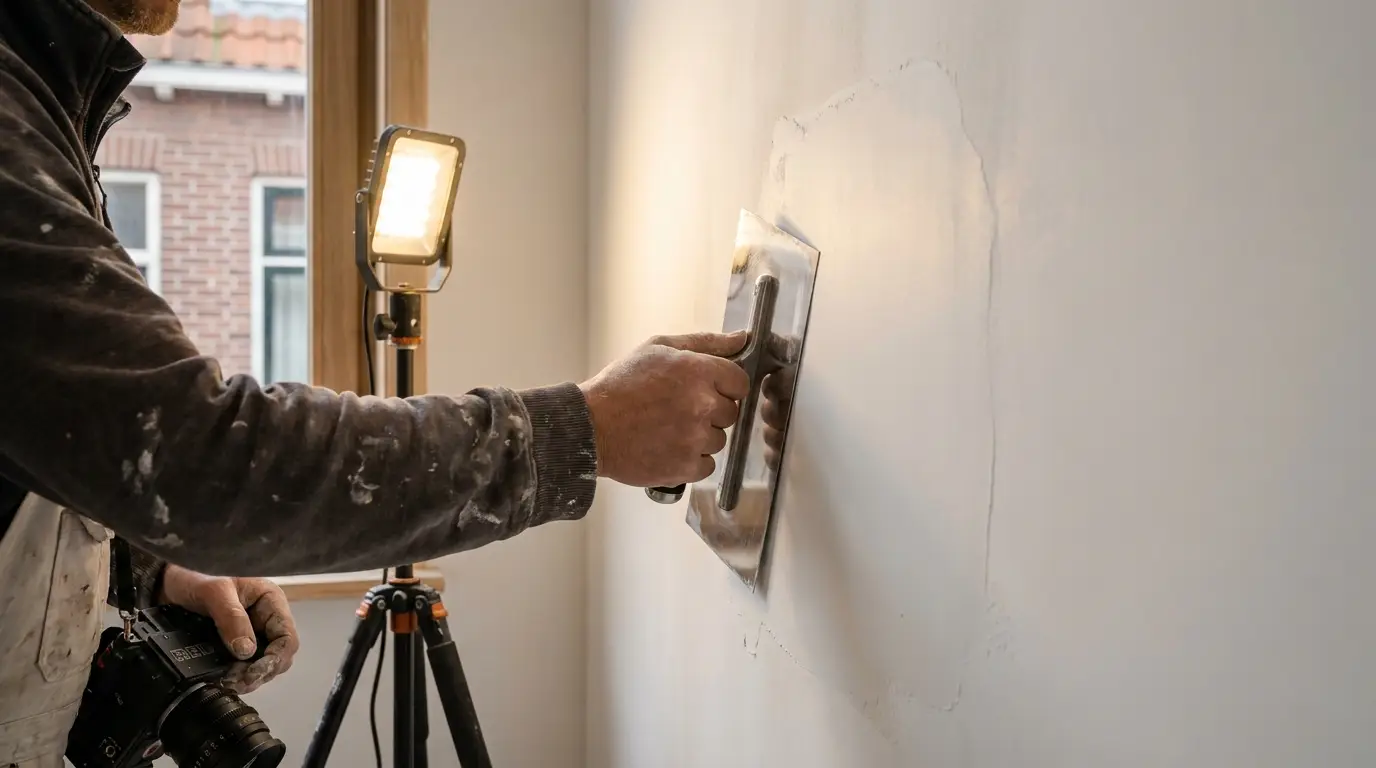
Cost of plaster repair: everything you need to know
Plaster repair covers fixing cracks, holes, loose plaster, or damaged areas on a wall or ceiling. The cost depends on the extent of the damage, the type of plaster, and whether the area needs touching up or replastering after the repair. With the right contractor, your wall will look like new again.
In this article
- ›What does plaster repair cost?
- ›Cost by type of repair
- ›Material and labor costs
- ›Hire a contractor or do it yourself?
- ›How does the repair work?
- ›Money-saving tips
- ›Frequently asked questions
Need a contractor for this?
Describe your job and get quotes from contractors near you.
average price
€300
small to medium repair including finishing
average hourly rate
€52
contractor hourly rate (€40–65/hour)
turnaround time
1–3 days
depending on scope and drying time
€ Average price by type
| Type of plaster repair | Range | Average price |
|---|---|---|
| Small crack or holerepair up to approx. 0.5 m², e.g., 1–3 cracks or nail holes | €75 – €175 | €120avg.incl. labor |
| Medium repair (most chosen)area of 1–5 m², e.g., moisture damage or loose plaster | €175 – €450 | €300avg.incl. labor |
| Large area repair5–15 m², e.g., after a leak or across several walls | €450 – €900 | €650avg.incl. labor |
| Ceiling repair1–10 m² of ceiling plaster; extra surcharge for working height | €200 – €700 | €420avg.incl. labor |
| Repair + full skim coatrepair and smooth finish of the entire wall/room, ready for painting | €500 – €1,400 | €900avg.incl. labor |
Prices include material and labor costs; ceiling work can be 10–15% more expensive due to the working height. Based on Google price research.
Material and labor costs
Plasterer hourly rate averages €40–65/hour. Small repairs often have a minimum charge of €100–€150 because of the trip charge.
Hiring a contractor vs. doing it yourself
| Job | Do it yourself | Via a contractor | Savings doing it yourself |
|---|---|---|---|
| Filling a nail or screw holeHole smaller than 1 cm in diameter, no loose material around it | DoablePolyfilla or ready-mixed filler from the hardware store is enough; no special knowledge needed | €5–€15 | up to €110 |
| Touching up a hairline crackSurface crack up to approx. 30 cm, not a recurring problem | With experienceRequires fiberglass mesh tape and plaster mortar; without good technique, the seam stays visible after painting | €15–€40 | up to €130 |
| Repairing loose plasterLarger area that sounds hollow or is already coming away from the substrate | Not recommendedThe cause (moisture, poor adhesion, settling) must first be identified and fixed: an incorrect repair worsens the damage | €175–€450 | No recommended savings |
| Repairing a crack caused by moisture damagePlaster damaged by a leak or persistent condensation | Not recommendedA damp substrate must be completely dry before repair; the cause of the moisture problem must first be fixed by a contractor | €200–€600 | No recommended savings |
| Ceiling repairPlaster work at height (1–10 m²), e.g., after water damage from the floor above | Not recommendedRequires sturdy scaffolding or a platform; getting a flat, even finish at height is hard even for experienced DIYers | €200–€700 | No recommended savings |
Small holes and surface hairline cracks without an underlying problem are fine to fill yourself with filler from the hardware store: that saves you the trip charge and a plasterer's minimum charge. Once the crack is wider than half a centimeter, comes back after an earlier repair, comes with discoloration or bulging, or the plaster sounds hollow when you tap it, a plasterer is essential. An incorrect repair only masks the problem: loose plaster that's simply plastered over without properly treating the substrate is guaranteed to come loose again. There are no legal certification requirements for plaster work, but a contractor has the right mortars, bonding primers, and tools (such as a stainless steel trowel and sanding float) to guarantee a seamless finish that stays invisible after painting.
The full process step by step
Damage inspection and identifying the cause
The plasterer starts with a thorough inspection: they tap the wall to hear whether the plaster is hollow, check for damp spots or discoloration, and ask about the history of the damage. Only once the cause (settling, moisture, poor adhesion, or impact damage) is identified do they decide on the approach. This prevents the same crack from reappearing over time.
15–30 min
Removing loose and damaged plaster
With a pry bar, hammer, or sander, all loose, brittle, or damaged plaster is knocked off down to the sound substrate. With moisture damage, the substrate is first dried out completely, sometimes with a construction dehumidifier, before work continues. Dust and debris are vacuumed up and the floor is covered.
30 min – 2 hours
Cleaning and priming the substrate
The exposed substrate is cleaned of dust and loose residue. The plasterer then applies a bonding primer or pre-coat to even out the absorbency of the substrate. For visible cracks, fiberglass mesh tape is embedded in the first coat of plaster so the crack doesn't return due to shrinkage or movement.
20–45 min + primer drying time
Applying plaster mortar in coats
The plasterer applies the plaster mortar or gypsum plaster in one or more coats. Each coat is leveled with a stainless steel trowel and pressed lightly to prevent air bubbles. Larger repairs need a base coat followed by a thin finish coat. Finally, the surface is smoothed until it blends with the surrounding plaster.
1–4 hours
Monitoring drying time
Gypsum plaster needs at least 24–48 hours to dry through; cement-based plaster sometimes longer. The plasterer advises on ventilation and temperature in the room. Painting too early is a common mistake: moisture still in the plaster can cause paint to blister or peel.
24–72 hours
Sanding and seamless finishing
After drying, the repaired area is lightly sanded with fine-grit sandpaper (P120–P180) until it sits completely flush with the surrounding plaster. The plasterer checks with a straightedge or a work lamp at a raking angle for any visible unevenness. The surface is then ready for painting.
30–60 min
6 smart money-saving tips
Frequently asked questions
What does plaster repair cost on average?
On average, you pay €300 for a small to medium repair. The range runs from €75 for a small hole to €1,400 for a large area with a full skim coat. Based on Google price research.
How long does plaster repair take?
A small crack is done in 1–2 hours. Larger repairs take 1 to 3 days, including drying time. Plaster needs to dry for at least 24–48 hours before you can paint it.
Do I need a permit for plaster repairs?
No, you don't need a permit to repair plaster on existing walls and ceilings. However, if your home is a historic building, contact the municipality beforehand.
Can I repair plaster myself?
You can fill small holes and surface cracks yourself with a tube of filler from the hardware store. Larger or recurring cracks, loose plaster, or moisture damage call for a contractor: an incorrect repair can make the damage worse.
Why is plaster work more expensive on a ceiling?
Working at height takes more time and requires scaffolding or a stepladder. Plasterers charge an average surcharge of €5 per m² for ceiling work compared to wall work.
What causes cracks in plaster?
Common causes are settling of the house, moisture problems, a poor substrate, or plaster that dried too quickly. A good plasterer investigates the cause before they repair, so the crack doesn't come back.
Related jobs
Ready to have your plaster professionally repaired?
Describe your job and receive quotes from verified plasterers near you.
Within 24 hours
response from a contractor
Verified
all contractors checked
Competitive price
compare quotes