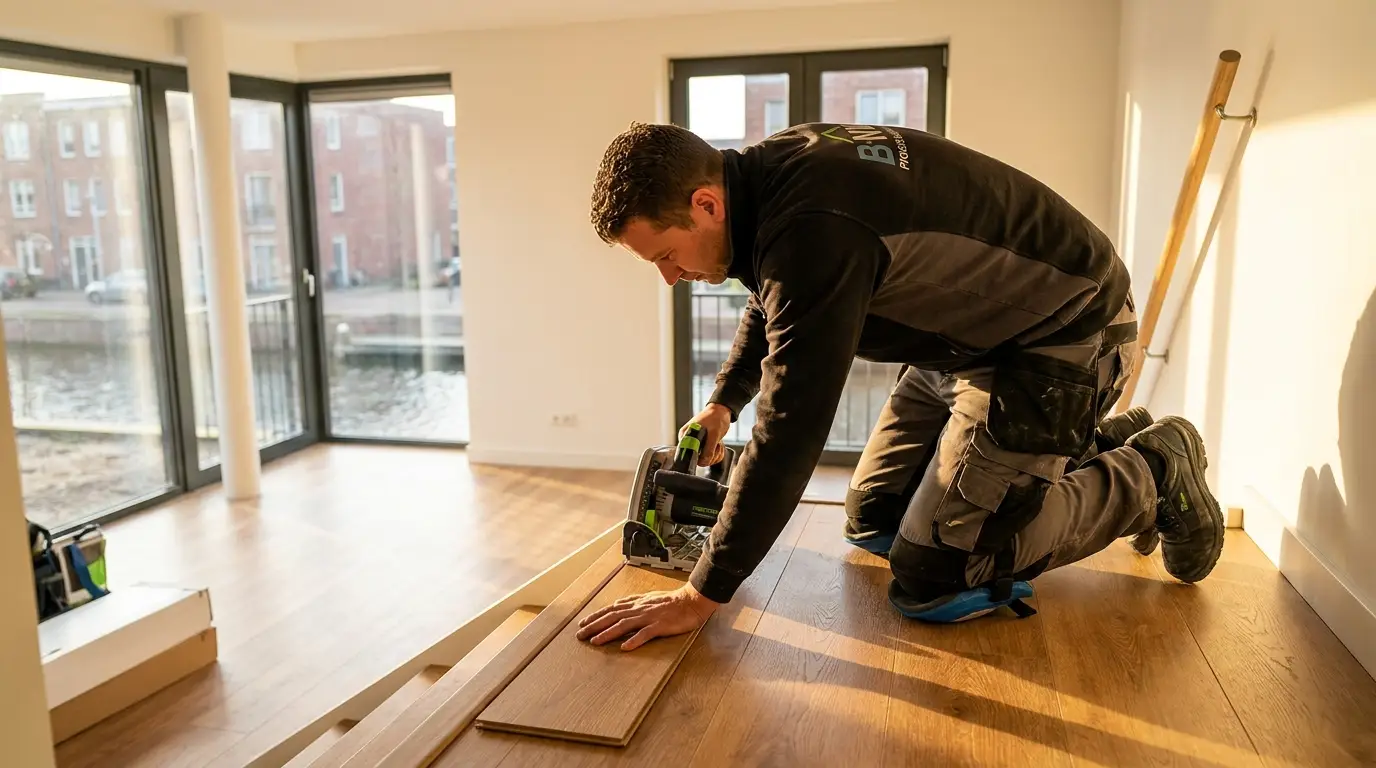
Cost of laying carpet or flooring on stairs: everything you need to know
Laying carpet or flooring on your stairs instantly makes your home feel warmer and quieter. The total price depends on the material you choose, the number of steps, and whether you hire a contractor or do the work yourself. In this overview, you'll find current prices by material type, tips to save on costs, and an explanation of when you need a specialist.
In this article
- ›What does carpet or flooring on stairs cost?
- ›Prices by type of covering
- ›Material and labor cost breakdown
- ›Hiring a contractor vs. doing it yourself
- ›How does the installation process work step by step?
- ›Smart money-saving tips
- ›Frequently asked questions
Need a contractor for this?
Describe your job and get quotes from contractors near you.
average price
€850
including material and installation (standard staircase, 13 steps)
average hourly rate
€50
contractor hourly rate (€45–65/hour)
turnaround time
1–2 days
depending on staircase type and material
€ Average price by type
| Type of stair covering | Range | Average price |
|---|---|---|
| Budget carpetNeedle felt or basic synthetic carpet, standard straight staircase | €400 – €700 | €550avg.incl. installation |
| Mid-range carpet (most popular)Polyamide or wool blend, good wear resistance, including installation | €650 – €1,200 | €850avg.incl. installation |
| Luxury carpet or sisalWool or natural fiber carpet, greater thickness and comfort | €1,000 – €1,800 | €1,400avg.incl. installation |
| PVC strips on stairsDurable PVC stair runner, easy to keep clean | €1,200 – €2,000 | €1,600avg.incl. installation |
| Quarter-turn or half-turn staircaseMore complex measuring, more material waste, extra labor | €1,200 – €2,500 | €1,750avg.incl. installation |
Prices include material and installation by a contractor for a standard straight staircase with 13 steps; complex staircases (quarter-turn, half-turn) cost 20–40% more. Based on Google price research.
Material and labor costs
Flooring installer / stair carpet contractor hourly rate averages €45–€65/hour. For complex staircase shapes, contractors often charge a fixed job price instead of an hourly rate.
Hiring a contractor vs. doing it yourself
| Job | Do it yourself | Via a contractor | Savings doing it yourself |
|---|---|---|---|
| Laying needle felt or a simple stair runnerStraight staircase, tack strips and adhesive, no complicated custom work | DoablePerfectly doable yourself on a straight staircase with basic tools and patience | €280–€450 material | up to €350 saved |
| Fully wrapping carpet (waterfall or Hollywood method)Folding carpet tightly over the stair nose, working in edges with a bolster | With experienceRequires precision on every step; visible mistakes and unsafe fastening are a real risk | €380–€620 material | up to €300 saved |
| Covering a quarter-turn or half-turn staircaseComplicated custom work with triangular cuts and a lot of material waste | Not recommendedWithout expertise, there's a high chance of wrinkles, visible seams, and fall risk from poor fastening | €650–€1,100 material | No recommended savings |
| Installing a PVC stair runner or LVT treadsPrecise measuring and gluing each step with special contact adhesive | Not recommendedLoose PVC edges are an immediate tripping hazard and hard to fix | €550–€950 material | No recommended savings |
| Removing old stair coveringRemoving existing carpet, small nails, and adhesive residue for a flat surface | DoableNo special skills needed; saves the contractor 1–2 hours of labor | €0 (doing it yourself) | up to €150 saved |
For a straight staircase with a simple stair runner or needle felt, doing it yourself is a real option: the tools (knee kicker, bolster, utility knife) can be rented at the hardware store, and the technique can be learned. You can also remove the old covering yourself to save on labor costs. For complex staircase shapes such as quarter-turn or half-turn stairs, a contractor is essential. The cuts have to be exact, or the carpet will wrinkle or bulge. With PVC and LVT treads, precise gluing is also key to safety: a loose edge on a step is an immediate fall risk. A certified flooring installer knows the right fastening techniques for each subfloor (wood, concrete, OSB board) and guarantees a safe and durable result.
The full process step by step
Measuring and discussing material choice
The flooring installer measures the number of steps, the tread depth, and the riser height. They calculate the exact amount of carpet and discuss the material choice (needle felt, polyamide, wool, or PVC), the laying direction, and the desired finish of the stair nose.
30–60 minutes
Preparing the stairs
Existing covering, old nails, and adhesive residue are completely removed. Loose treads or risers are secured. The surface must be flat, clean, and dry: otherwise the carpet will bulge later or edges will come loose.
1–2 hours
Attaching tack strips
Tack strips are nailed or glued along the back of each tread, at a fixed distance from the risers. The small pins grip the carpet backing and hold the carpet securely in place without visible fasteners.
30–60 minutes
Cutting the carpet to size
The carpet is cut to size per step or as one continuous run (depending on the chosen method: waterfall or Hollywood). On quarter-turn or half-turn stairs, precise triangular cuts are made so the material runs tightly around the turn without wrinkles.
45–90 minutes
Laying and pressing the carpet
Using a knee kicker, the carpet is stretched tight and pressed onto the tack strips. The carpet is wrapped tightly over the stair nose. Edges are worked in with a bolster or stair tool so no loose corners remain. This is the most labor-intensive step.
2–4 hours
Finishing and safety check
Excess edges are trimmed and covered with a stair nosing strip or aluminum trim profile. The contractor checks each step for fastening, tightness, and visible seams. Only when all steps are firmly secured and no sharp edges stick out is the work handed over.
30–45 minutes
6 smart money-saving tips
Frequently asked questions
What does laying carpet on stairs cost on average?
On average, you'll pay €850 for a standard staircase with mid-range carpet, including installation. The range runs from €400 for a simple budget carpet to €2,500 for a complex staircase with luxury material.
How long does it take to lay carpet on stairs?
A contractor typically spends half a workday to one workday on a straight staircase with 13 steps. For a quarter-turn or half-turn staircase, this can be two workdays.
Do I need a permit for stair covering?
No. Stair covering is a cosmetic change and doesn't require a permit. You can start right away without notifying the municipality.
Can I lay carpet on the stairs myself?
Yes, doing it yourself is possible. Material costs are then €300–€600. Plan on a day of work. Pay close attention to fastening: carpet that comes loose is a fall hazard.
How long does carpet on stairs last?
Carpet on stairs lasts 5–10 years on average, depending on quality and heavy use. PVC or natural stone lasts considerably longer (15–25 years).
What's cheaper: carpet or a stair runner?
A stair runner (a strip down the middle of the stairs) is cheaper than fully covering the stairs with carpet, because you need less material. A stair runner costs about 20–30% less.
Related jobs
Ready to have your stairs professionally covered?
Describe your job and receive quotes from verified flooring installers near you.
Within 24 hours
response from a contractor
Verified
all contractors checked
Competitive price
compare quotes