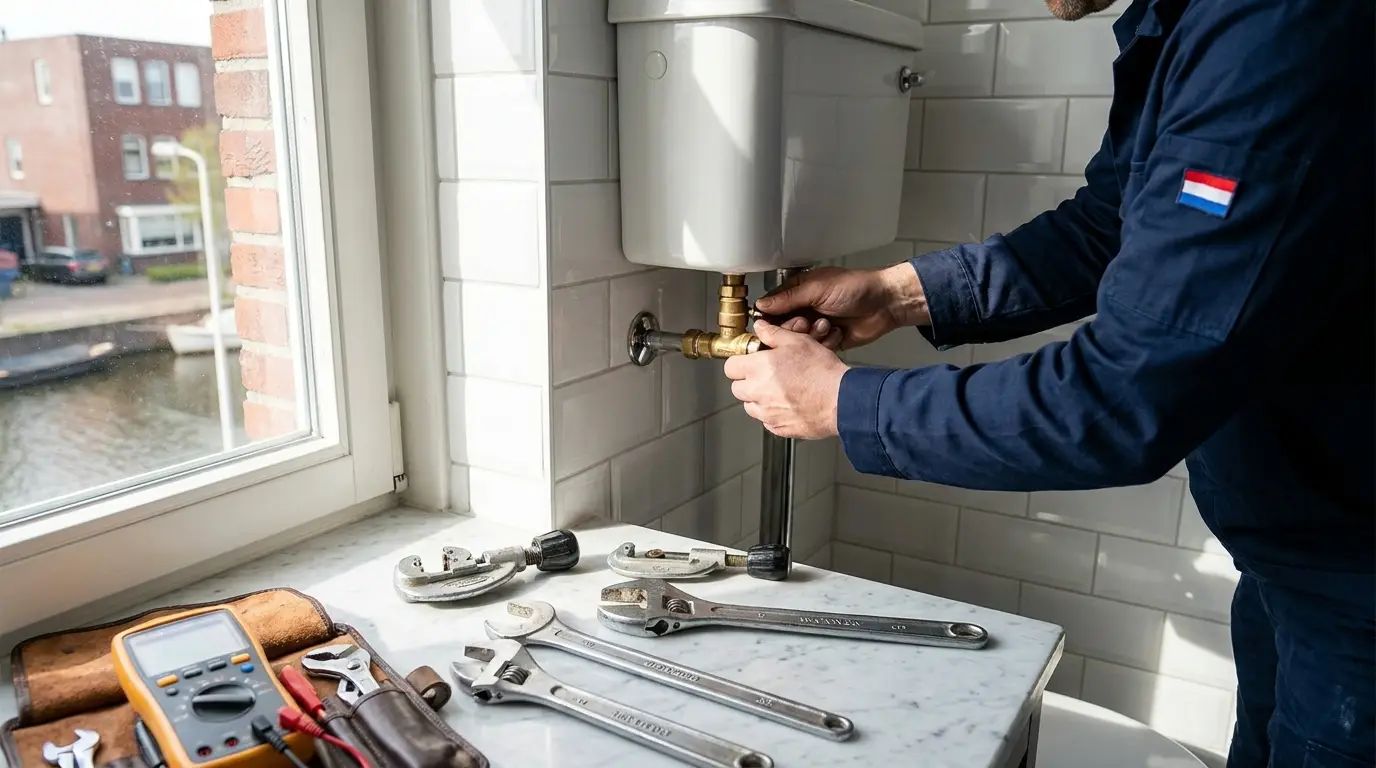
Cost of toilet repair: everything you need to know
A toilet repair can range from simple to complex: a leaking toilet tank, a float that no longer shuts off, or a toilet that keeps running. The total cost depends heavily on the type of defect, the parts needed, and the plumber's hourly rate. In this article, you'll read what to expect so you don't run into surprises.
In this article
- ›Average cost of toilet repair
- ›Prices by type of repair
- ›Material and labor costs
- ›Hire a contractor or do it yourself?
- ›How does a toilet repair work?
- ›Money-saving tips
- ›Frequently asked questions
Need a contractor for this?
Describe your job and get quotes from contractors near you.
average price
€130
incl. labor and parts
average hourly rate
€60
contractor hourly rate (€45–75/hour)
turnaround time
1–3 hours
depending on type of defect
€ Average price by type
| Type of toilet repair | Range | Average price |
|---|---|---|
| Replace float or fill valvetoilet keeps running or fills slowly | €60 – €120 | €90avg.incl. installation |
| Repair toilet tank (most popular)flush button, seal, or mechanism | €75 – €180 | €130avg.incl. labor |
| Unclog toiletclog in bowl or drain | €75 – €150 | €110avg.incl. labor |
| Fix water connection leakvalve, hose, or coupling is leaking | €80 – €200 | €140avg.incl. labor |
| Replace toilet tank completelyincluding new tank and mounting | €150 – €350 | €250avg.incl. installation |
| Repair in-wall tankmore complex job behind a tiled wall | €200 – €450 | €320avg.incl. labor |
Prices include labor and standard parts; in-wall tanks and rimless toilets can involve higher material costs. Based on Google price research.
Material and labor costs
Plumber hourly rate averages €45–75/hour. A trip charge (€25–50) isn't always included in the base price: ask about this in advance.
Hiring a contractor vs. doing it yourself
| Job | Do it yourself | Via a contractor | Savings doing it yourself |
|---|---|---|---|
| Replace float or fill valvetoilet keeps running or refills too slowly after flushing | DoableStandard part (€10–30) at any hardware store; no tools needed beyond an adjustable wrench | €10–30 | up to €90 |
| Replace flush button or flush mechanismbutton doesn't work, flush is off, or uses too much/too little water | DoableUniversal kits fit most toilet tanks; briefly shutting off the water supply is enough preparation | €15–50 | up to €80 |
| Unclog toiletbowl or drain clogged, water drains slowly or not at all | With experienceA toilet plunger or toilet auger often does the trick; deeper clogs in the sewer line require a professional drain cleaning machine | €0–30 | up to €120 |
| Fix water connection leaksupply valve, supply hose, or coupling under the toilet tank is leaking | Not recommendedAn incorrectly tightened coupling or damaged gasket can keep leaking unnoticed and cause serious water damage to the floor and the ceiling below | - | No recommended savings |
| Repair or adjust in-wall tanktank is concealed behind a tiled wall or furred-out wall | Not recommendedAccess requires removing tile or access panels; setting the water level incorrectly causes the toilet to run continuously, resulting in a high water bill | - | No recommended savings |
For simple toilet tank parts (float, fill valve, flush button, or seal), doing it yourself is a realistic option. These parts cost €10–50 at the hardware store and can be replaced with basic instructions, without special tools or certifications. The one thing you really need to get right is shutting off the water supply at the shutoff valve behind or next to the toilet before you disconnect anything. Hire a licensed plumber as soon as the problem is in the water connection or the drain system, or when it involves an in-wall tank. A leak that goes unnoticed behind tile can lead to mold, wood rot, or structural moisture damage within weeks: damage that can easily cost ten times the original plumbing bill. The same goes for clogs deeper than the toilet bowl itself: professional drain augers and high-pressure jetting equipment are needed to keep the drain clean and intact.
The full process step by step
Problem diagnosis and visual inspection
The plumber determines exactly what's wrong: does the toilet keep running (fill valve or float), does the flush button not work, is there a visible leak at the water connection, or is the bowl clogged? By opening the toilet tank and flushing briefly, they can pinpoint the cause right away in most cases without extra measuring equipment.
10–20 min
Shut off the water supply and empty the toilet tank
Before anything is replaced, the contractor closes the shutoff valve behind or next to the toilet. The toilet tank is then flushed once so it's empty and dry. With an in-wall tank, the access panel is opened or, if needed, the front plate is removed.
5–10 min
Remove the defective part
The broken part (float, fill valve, flush mechanism, seal, or supply hose) is disconnected. The contractor notes the brand and type so the replacement part fits exactly. For clogs, the toilet auger or high-pressure jetter is used at this point.
15–30 min
Install and adjust the new part
The new part is installed and carefully adjusted. With a float, the water level is set so the toilet tank fills to the right height (usually the marked line in the tank). With a flush mechanism, the cable length and flush threshold are adjusted correctly.
20–40 min
Open the water supply and test the function
The shutoff valve is reopened and the toilet tank fills. The contractor flushes several times and checks that the toilet stops filling at the right level, the flush button responds correctly, and there's no leaking anywhere, including at the gaskets and connections.
10–15 min
Final check and explanation
The plumber briefly goes over what was done, which part was replaced, and what the warranty terms are. They also point out any other wear they noticed during the job, so you don't run into the same problem again within a year.
5–10 min
6 smart money-saving tips
Frequently asked questions
What does toilet repair cost on average?
On average €130 for a standard repair. Range: €60 for a small float replacement up to €450 for an in-wall tank repair.
How long does a toilet repair take?
It takes 1 to 3 hours depending on the defect. Replacing a float takes about 30 minutes; repairing an in-wall tank can take 2 to 3 hours.
Do I need a permit?
No, repairs to an existing toilet don't require a permit. Only when the drain or water line is structurally relocated might a permit come into play: check this with your municipality.
Can I do it myself?
Small repairs such as replacing a float or flush button are easy to do yourself with parts costing €10–50 from the hardware store. For leaks or in-wall tanks, hiring a plumber is wise to prevent damage.
When is replacing cheaper than repairing?
If the repair costs more than half the price of a new toilet, replacing is the better deal. A new toilet including installation starts at €300.
What are common causes of a running toilet?
The most common causes are a worn float, a defective fill valve, or an aging seal in the toilet tank. All of these parts are relatively cheap to replace.
Related jobs
Ready to have your toilet repaired?
Describe your job and receive quotes from verified plumbers near you.
Within 24 hours
response from a contractor
Verified
all contractors checked
Competitive price
compare quotes