Cost of landscaping a yard: everything you need to know
Having a new yard landscaped is a significant investment that depends on the area, the materials you choose, and the features you want. Think of paving, planting, lighting, and drainage. Total costs range from a few thousand euros for a basic approach to tens of thousands of euros for a complete luxury yard.
In this article
- ›What does landscaping cost on average?
- ›Prices by type of yard
- ›Material and labor costs
- ›Hire a landscaper or do it yourself?
- ›How does the landscaping process work?
- ›Money-saving tips for landscaping
- ›Frequently asked questions
Need a contractor for this?
Describe your job and get quotes from contractors near you.
average price
€6,500
complete incl. paving and planting
average hourly rate
€55
landscaper hourly rate (€45–70/hour)
turnaround time
2–5 days
depending on yard size
€ Average price by type
| Yard type | Range | Average price |
|---|---|---|
| Basic yardlawn, borders, and simple paving, up to 50 m² | €1,500 – €4,000 | €2,500avg.incl. installation |
| Standard backyard (most popular)paving, planting, borders, and drainage, 50–80 m² | €4,000 – €9,000 | €6,500avg.incl. installation |
| Extensive yardincl. pond, lighting, or patio cover, 80–120 m² | €8,000 – €18,000 | €12,000avg.incl. installation |
| Luxury or large yardcustom design, luxury materials, over 120 m² | €15,000 – €35,000 | €22,000avg.incl. installation |
Prices are estimates including materials and labor costs; custom work, soil type, and accessibility can affect the final price. Based on Google price research.
Material and labor costs
Landscaper hourly rate averages €45–€70/hour. Larger landscaping companies sometimes charge a minimum fee of €150–€250 for small jobs.
Hiring a contractor vs. doing it yourself
| Job | Do it yourself | Via a contractor | Savings doing it yourself |
|---|---|---|---|
| Seeding a lawn or laying sodDigging over the soil, leveling, seeding or rolling out sod and pressing it down | DoableNo special machinery needed; patience and good soil preparation are enough | €200–€600 | up to €500 |
| Planting borders and bedsPlanting perennials, shrubs, and seasonal flowers in the right spot | DoableRequires basic knowledge of plant spacing, soil type, and light needs: no tools or certification required | €300–€1,200 | up to €700 |
| Simple paths or patio in tiles or gravelLaying concrete or composite tiles on a sand bed, or spreading gravel on fabric | With experienceThe base and slope for drainage are critical: an uneven patio sinks or puddles after every rain | €500–€2,500 | up to €1,200 |
| Drainage and earthmovingInstalling drain pipes, excavating or raising soil, and hauling away soil waste | Not recommendedA mistake in the drainage plan leads to permanent flooding problems; hauling soil often requires a mini excavator and a dumpster | €600–€2,500 | No recommended savings |
| Complete landscaping (design to completion)Design, demolition, earthmoving, paving, planting, and finishing as a whole | Not recommendedRequires coordinating multiple trades, heavy machinery, and knowledge of materials; mistakes are costly to fix afterward | €4,000–€18,000 | No recommended savings |
Landscaping has a clear line: light work such as seeding a lawn, planting borders, or spreading gravel is fine to do yourself. You save hundreds of euros in labor costs and get to know your yard. As soon as earthwork, drainage, or larger-scale paving comes into play, a landscaper is essential. Drainage that isn't right causes years of puddles and damage to foundations and plants. Paving on an insufficiently compacted sand bed sinks within a few years. A certified landscaping company, such as members of Groei & Bloei or VHG (Vereniging van Hoveniers en Groenvoorzieners, the Dutch landscapers association), brings the right machinery, knows the local soil types, and stands behind the result. For projects over €3,000, always ask for a written design and a warranty clause on established plants.
The full process step by step
Consultation and yard design
The landscaper comes on site, measures the yard, and takes stock of your wishes: how you'll use it (play, relaxing, vegetable garden), style (modern or rustic), preferred materials, and budget. Based on this, they draw up a sketch design or planting plan with a rough cost breakdown.
1–3 days
Quote and material specification
You receive a detailed quote with material types, quantities, labor hours, and the total price. Check that drainage, soil removal, and any lines for lighting or an outdoor faucet are included: these items are often missing from cheap quotes.
2–5 business days
Demolition and removal
The existing yard is cleared: old paving is broken up, unwanted shrubs or trees are removed, and construction debris and soil are hauled away. The landscaper checks the soil type and decides whether raising the grade or drainage is needed.
0.5–2 days
Earthwork, drainage, and utilities
The soil is excavated or built up to the desired level. Drain pipes are laid in a layer of crushed stone. Any cables or water lines for yard lighting or an outdoor faucet are laid in the ground at the same time, so the paving doesn't need to be redone later.
1–2 days
Laying the paving
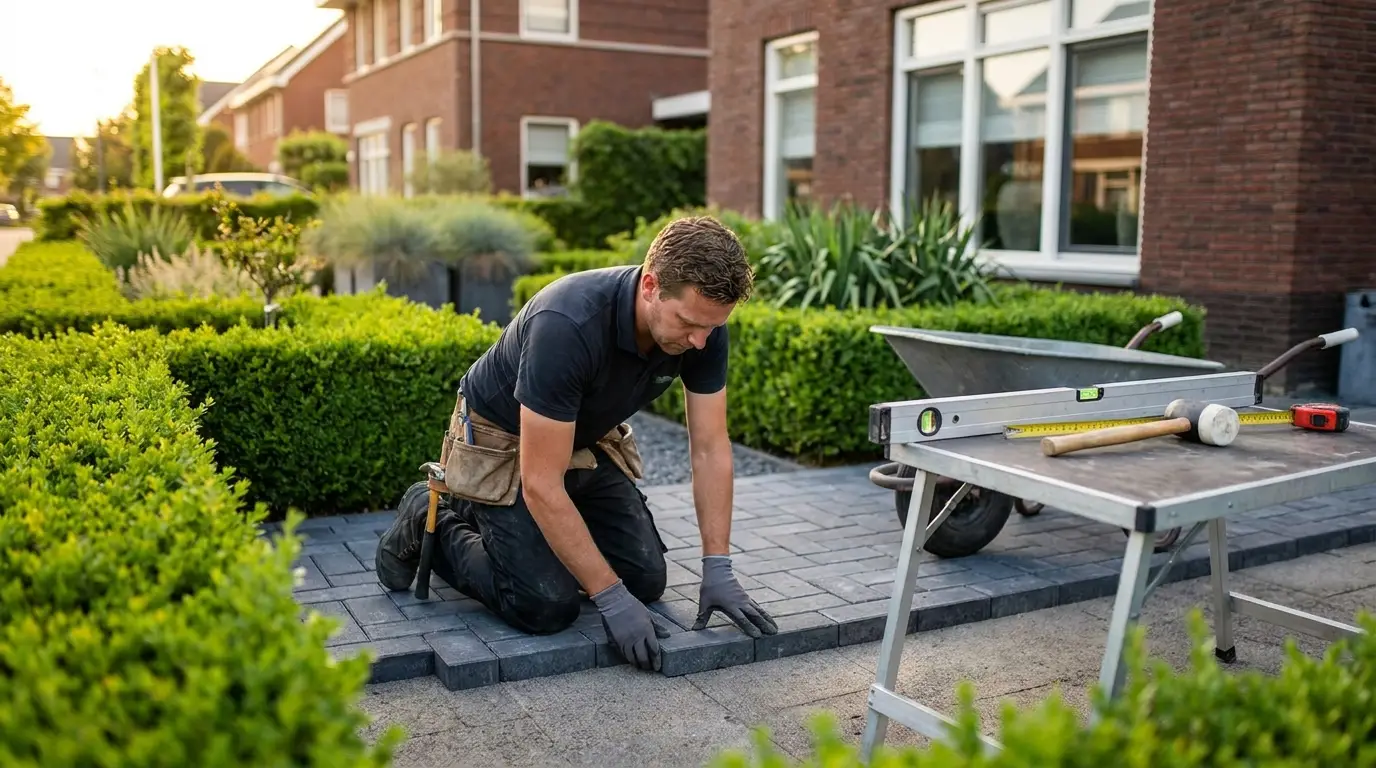
On a compacted sand bed or crushed-stone base, the tiles, pavers, or other paving materials are laid at the agreed slope (at least 1% away from the house). Joints are filled with joint sand or polymeric sand to keep weeds out.
1–3 days
Planting, lawn, and finishing
Borders are planted, and hedges and trees are set at the right depth and spacing. The lawn is seeded or laid with sod and rolled. The landscaper may apply bark mulch or a decorative top layer to suppress weeds and installs plant supports where needed.
1–2 days
Handover and care instructions
At handover, the landscaper walks through the yard with you, points out things to watch (watering frequency, pruning times), and discusses the warranty on established plants. Small imperfections are fixed right away. You receive custom maintenance advice.
1–2 hours
6 smart money-saving tips
Frequently asked questions
What does landscaping cost on average?
On average €6,500 for a standard backyard of 50–80 m². The range runs from €1,500 for a basic small yard to over €25,000 for a large luxury yard with a pond and custom features.
What does landscaping cost per m²?
Expect €50 to €150 per m² including materials and labor. Simple paving with gravel or inexpensive tiles is cheaper (€30–€60/m²), while fired clay pavers or natural stone quickly come to €80–€150/m².
How long does it take to landscape a yard?
An average backyard of 50–80 m² is done in 2 to 5 workdays. For larger yards or extra features such as a pond, patio cover, or outdoor lighting, it can take 1 to 2 weeks.
Do I need a permit for landscaping?
Standard landscaping (paving, planting, lawn) doesn't require a permit. If you want to put up a shed, a large patio cover, or a tall fence, a building permit may be required. Check with your municipality for local rules.
Can I landscape my yard myself?
Yes, simple work such as planting, seeding a lawn, or spreading gravel is easy to do yourself. For paving, earthwork, drainage, and larger features, it's wise to hire a landscaper for a durable, professional result.
When is the best time to landscape a yard?
Spring (March–May) and fall (September–October) are ideal: the soil is workable and plants root well. In summer, drought can make it harder for plants to take root. Paving work can be done year-round.
Related jobs
Ready to have your yard professionally landscaped?
Describe your job and receive quotes from verified landscapers near you.
Within 24 hours
response from a contractor
Verified
all contractors checked
Competitive price
compare quotes