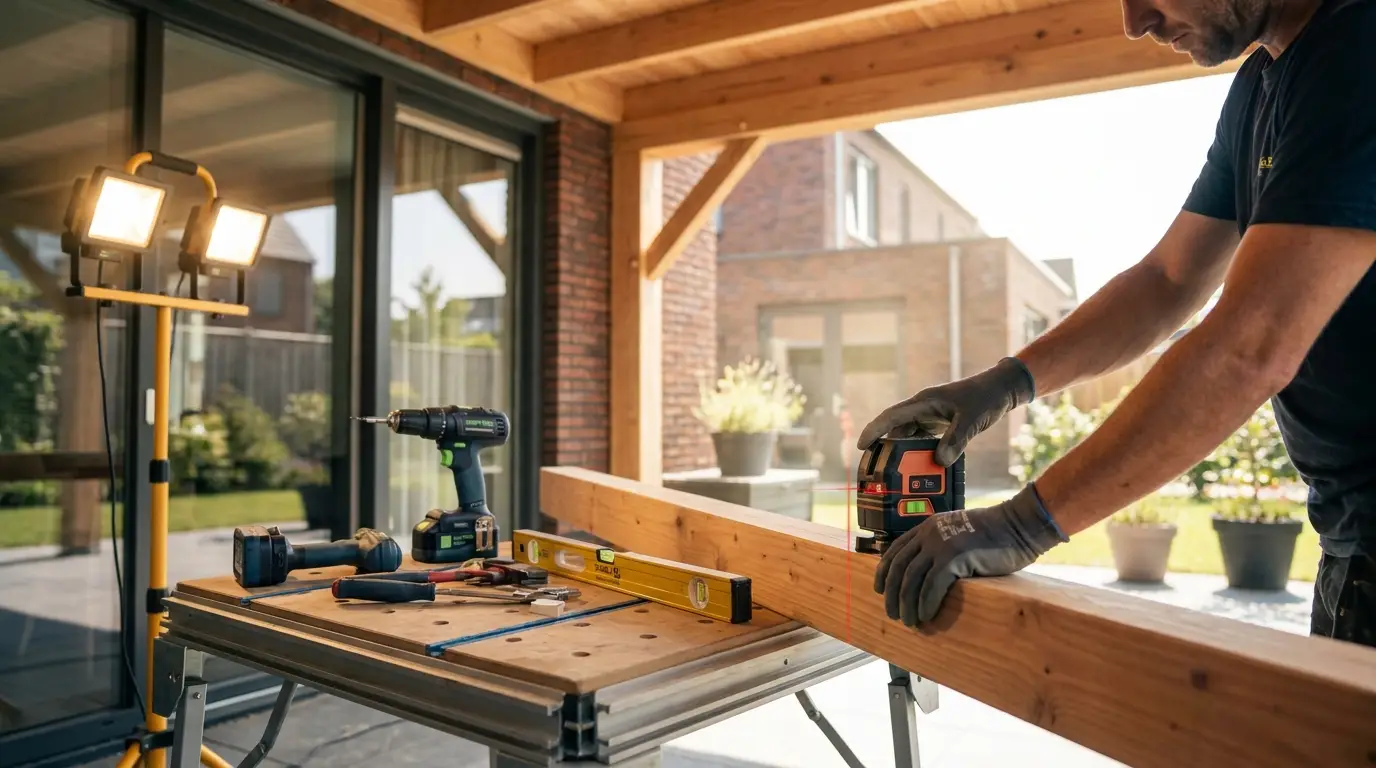
Cost of building or replacing a patio cover: everything you need to know
A patio cover makes your home more enjoyable and gives you a covered outdoor space all year round. The cost depends heavily on the material, the size, and whether it's new construction or a replacement. In this overview you'll find current Dutch prices, a breakdown by type of patio cover, and useful money-saving tips.
In this article
- ›Average cost of building or replacing a patio cover
- ›Prices by type of patio cover
- ›Material and labor cost breakdown
- ›Hire a contractor or do it yourself?
- ›Step by step: how is a patio cover installed?
- ›Saving money on your patio cover: 6 tips
- ›Frequently asked questions
Need a contractor for this?
Describe your job and get quotes from contractors near you.
average price
€9,500
standard aluminum patio cover approx. 15 m²
average hourly rate
€55
contractor hourly rate (€45–65/hour)
turnaround time
1–3 days
depending on scope and type
€ Average price by type
| Patio cover type | Range | Average price |
|---|---|---|
| Roof structure / simple canopyPrefab polycarbonate roof, steel or aluminum posts, up to approx. 10 m² | €2,500 – €6,000 | €4,000avg.incl. installation |
| Aluminum patio cover (most popular)Powder-coated aluminum frame, glass or polycarbonate roof panels, approx. 12–20 m² | €6,000 – €18,000 | €9,500avg.incl. installation |
| Glass patio cover / sunroomFully glass roof and side panels, high-quality aluminum frame, approx. 15 m² | €10,000 – €25,000 | €16,000avg.incl. installation |
| Wood patio coverHardwood or pressure-treated pine frame, including roofing, approx. 15 m² | €8,000 – €22,000 | €13,000avg.incl. installation |
| Freestanding patio cover / pool houseFreestanding structure, custom-made, including foundation, approx. 20–30 m² | €15,000 – €50,000 | €25,000avg.incl. installation |
Prices include materials and standard installation; custom work, extra foundation, or a glass option increase the cost. Based on Google price research.
Material and labor costs
The hourly rate of a contractor or patio cover company averages €45–65/hour. Prices exclude VAT; for customers, the VAT amount stated by the contractor applies.
Hiring a contractor vs. doing it yourself
| Job | Do it yourself | Via a contractor | Savings doing it yourself |
|---|---|---|---|
| Assembling a prefab aluminum patio coverAssembling and fastening a ready-made kit, approx. 12–15 m² | With experienceRequires basic construction knowledge, a level, and at least two people to lift the frame | €700–€1,800 | up to €1,800 |
| Pouring a foundation or concrete slabPouring a concrete slab as the base for the patio cover posts | Not recommendedA foundation that isn't level or is too light pulls the frame out of square and causes leaks: repair costs exceed the savings | €500–€2,500 | No recommended savings |
| Installing polycarbonate roof panelsFastening lightweight roof panels into the aluminum roof profile and sealing them | DoableVery doable with two people and the right caulk gun; panels are light and easy to cut to size | €200–€500 | up to €500 |
| Waterproofing the wall connectionApplying sealant between the patio cover's top beam and the exterior wall, including wall flashing | Not recommendedInsufficient overhang or the wrong sealant leads to moisture getting behind the exterior wall: mold and plaster damage only appear years later | €150–€400 | No recommended savings |
| Installing gutters and downspoutsAttaching gutters and connecting the drainage to the sewer or an infiltration system | With experienceTechnically doable, but the right slope (at least 5 mm per meter) is crucial to prevent overflow during heavy rain | €150–€350 | up to €350 |
A patio cover contractor is essential for two critical parts: the foundation and the wall connection. A badly poured concrete slab makes the frame sink or shift, so doors and side panels no longer close. A poorly sealed wall connection lets moisture get behind the exterior plaster: damage that only becomes visible once there's already mold in the cavity wall. For the steps in between (assembling a prefab aluminum frame, installing polycarbonate roof panels, and hanging gutters), a skilled DIYer with a level, hammer drill, and caulk gun can do the work just fine. Keep in mind that for a patio cover larger than 30 m² or a glass structure, the weight and structural calculation require a certified contractor. Also always check whether the zoning plan requires a building permit before you start.
The full process step by step
Measuring, advice, and material selection
The patio cover contractor comes on site to accurately measure the available space and assess the wall construction. They advise on the type (aluminum, wood, or glass), the roof shape (lean-to or gable roof), the color, and any side walls or sliding panels. Based on this, you make a final choice.
1–2 hours
Checking and applying for a permit
The contractor checks whether the planned patio cover is exempt from a permit under the rules for accessory structures (max. 4 m tall, percentage of the lot built on). If a building permit is required, for example because of historic building status or a special zoning plan, it's applied for before the job is finalized.
1–4 weeks (if a permit is required)
Preparing the foundation and base
If there's no suitable concrete slab or tiled floor yet, the foundation is laid. The slab must be completely level and strong enough to carry the posts. Any groundwork (excavating, filling with sand, pouring a frame) is done in this phase. The concrete has to cure for 24–48 hours before the frame is installed.
1–2 days + 1–2 days curing
Building and fastening the frame
The aluminum or wood posts are fastened to the anchor points in the slab. The roof beam on the wall side is secured to the wall with special anchors. Next, the crossbeams, roof purlins, and any side profiles are installed. Everything is checked with a level step by step.
4–8 hours
Installing roofing and side walls
The roof panels (polycarbonate, laminated glass, or aluminum roof sheets) are slid into the roof profiles and sealed at the ends with end caps and sealant. Any glass or aluminum side walls are hung between the posts and waterproofed. Sliding panels are adjusted on their track set.
2–5 hours
Rainwater drainage and wall sealing
Gutters are attached with the right slope (at least 5 mm per meter). Downspouts are routed to the sewer or an infiltration crate. The connection between the top roof beam and the exterior wall is finished watertight with construction sealant and wall flashing: this is the most critical part of the installation.
1–2 hours
Handover and final inspection
The contractor checks the stability of the frame, the waterproofing of all connections, the slope of the gutters, and the operation of any sliding panels. They explain what maintenance is needed (yearly sealant check, cleaning the aluminum), and you sign off on the handover.
30–60 min
6 smart money-saving tips
Frequently asked questions
What does building a patio cover cost on average?
On average you'll pay €9,500 for a standard aluminum patio cover of approx. 15 m², including installation. The range runs from €2,500 for a simple canopy to €50,000 for a large, custom freestanding structure.
How long does it take to build a patio cover?
The lead time is 1 to 3 days for a standard structure. A custom or larger patio cover can take 3 to 5 workdays. If a foundation or concrete slab still needs to be poured, that adds extra time.
Do I need a permit for a patio cover?
In most cases a patio cover doesn't require a permit, provided the structure is behind or beside the house, is no taller than 4 meters, and no more than 50% of the lot ends up built on. Always check with your own municipality for local rules or historic building status.
Can I build a patio cover myself?
Prefab kits can be assembled yourself and save you €700–€1,800 in labor costs. They do require basic construction knowledge, especially for the waterproofing and foundation. Mistakes are expensive to fix afterward.
What does replacing an existing patio cover cost?
Replacement costs on average €650–€1,200 extra for demolition and removal, on top of the price of the new structure. If the existing foundation can be reused, that saves a lot.
Aluminum or wood: which is cheaper?
Aluminum is slightly cheaper to buy than wood and needs almost no maintenance. Wood needs periodic painting or oiling (every 2–5 years, approx. €300–€800 each time). Over the long term, aluminum is therefore often the better value.
Related jobs
Ready to have your patio cover built or replaced?
Describe your job and receive quotes from verified patio cover contractors near you.
Within 24 hours
response from a contractor
Verified
all contractors checked
Competitive price
compare quotes