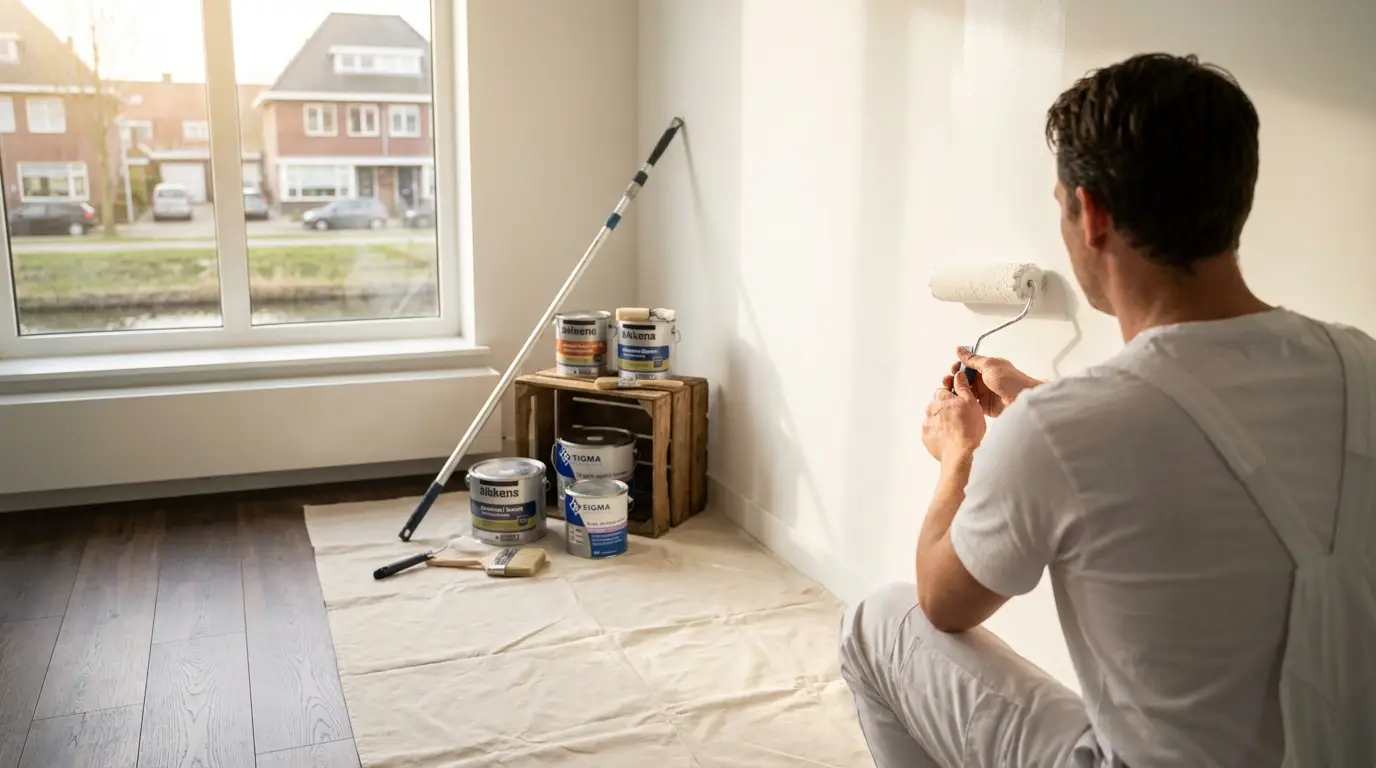
Cost of varnishing or painting window frames & furniture: everything you need to know
Varnishing or painting gives wooden window frames and furniture a fresh, durable protective coat. The cost depends on the number of frames, the condition of the wood, and the type of finish. A contractor carefully prepares the surface, scrubs, primes, and then applies the paint or varnish for a professional result.
In this article
- ›What does varnishing or painting cost on average?
- ›Prices by type of frame or furniture
- ›Material and labor costs
- ›Hire a painter or do it yourself?
- ›How does painting work step by step?
- ›Money-saving tips for painting frames and furniture
- ›Frequently asked questions
Need a contractor for this?
Describe your job and get quotes from contractors near you.
average price
€750
on average for a standard set of frames or piece of furniture
average hourly rate
€48
contractor hourly rate (€42–55/hour)
turnaround time
1–3 days
depending on scope and drying time
€ Average price by type
| Type of frame or furniture | Range | Average price |
|---|---|---|
| Painting interior framesper frame, including sanding and priming | €60 – €150 | €100avg.incl. labor |
| Painting exterior frames (most popular)per exterior frame, including prep and 2 coats | €100 – €250 | €165avg.incl. labor |
| Full set of frames (whole house)8–12 frames, inside and outside | €500 – €1,500 | €950avg.incl. labor |
| Painting a small piece of furniturechair, nightstand, or small table | €80 – €200 | €130avg.incl. labor |
| Painting a large cabinet or tablewardrobe, dining table, or bookcase | €200 – €500 | €320avg.incl. labor |
| Varnishing wooden furnitureclear protective coat, wood grain visible | €100 – €350 | €200avg.incl. labor |
Prices include sanding, priming, and two coats of paint or varnish; exterior work is on average 30–40% more expensive than interior work due to extra prep and weather resistance. Based on Google price research.
Material and labor costs
Painter hourly rate on average €42–€55/hour. Spray painting is faster but requires more expensive equipment and protective plastic sheeting for the surroundings.
Hiring a contractor vs. doing it yourself
| Job | Do it yourself | Via a contractor | Savings doing it yourself |
|---|---|---|---|
| Brush-painting interior frames1–2 frames on the ground floor, smooth wood, 2 coats of opaque paint | DoableWith a good brush, sandpaper, and water-based paint, very doable for the average DIYer | €30–€80 | up to €120 |
| Varnishing wooden furnitureGiving a chair, small table, or shelf a clear varnish | DoableVarnish is more forgiving than paint and can be applied with a brush or roller; good sanding prep is enough | €25–€60 | up to €140 |
| Painting exterior framesSanding to bare wood, priming, and applying 2 coats of exterior paint | With experienceBlistering and poor adhesion from insufficient prep or painting at the wrong temperature/humidity | €80–€150 | up to €300 |
| Spray-painting a large piece of furnitureEvenly finishing a cabinet, dining table, or bookcase with spray equipment | Not recommendedRequires a professional spray booth or dust-free room; without the right equipment you get drips, orange peel, and blotches | €150–€400 materials + rental | No recommended savings |
| Full set of frames, whole houseSanding, priming, and finishing 8–12 exterior frames | Not recommendedTime-consuming and error-prone over several workdays; one missed spot or wrong drying time means fully redoing that frame | €200–€500 | No recommended savings |
For interior frames and small pieces of furniture you treat with a brush or roller, doing it yourself is a realistic option, as long as you sand the wood thoroughly first (80 grit to 180 grit), apply a primer, and respect the drying time between coats. Use water-based paint indoors: it dries quickly, has little odor, and is easier to apply without streaks. A contractor is essential when it comes to exterior frames or when you want to spray-paint a large piece of furniture. Exterior paint must be applied at temperatures between 10°C and 25°C and must not be exposed to rain within 24 hours of application. A professional painter knows when conditions are right, has the right primer for each type of wood, and has spray equipment for a flawless finish coat without brush marks. A poorly finished exterior coat peels within two to three years and then costs more to fix than if you'd hired a contractor right away.
The full process step by step
Inspection and custom quote
The painter inspects each frame or piece of furniture for rot, deep cracks, peeling paint, and the condition of caulk joints. They assess how much sanding is needed and which primer adheres best to the existing surface. Based on this, they put together a detailed quote with the type of material, number of coats, and labor hours.
30–90 min
Stripping old paint and finish
All loose paint and peeling layers are removed with a scraper or heat gun. Then the wood is sanded: first with coarse sandpaper (60–80 grit) to open up the surface, then with finer paper (120–180 grit) so the primer adheres. Pits and cracks are filled with wood filler.
2–6 hours depending on surface
Applying primer and wood protection
A suitable primer, often an alkyd primer or wood preservative for exterior frames, is applied to prevent moisture from getting in and to help the opaque paint coat adhere as well as possible. For furniture, depending on the type of wood, a shellac sealer or standard furniture primer is used.
1–2 hours + 4–8 hours drying time
Applying an intermediate coat and lightly sanding
The first coat of paint or varnish is applied and, once fully dry, lightly sanded with fine sandpaper (220 grit). This removes raised fibers and ensures optimal adhesion of the finish coat. For frames, this step is also called the 'first finish coat'.
2–4 hours + 4–8 hours drying time
Applying the finish coat
The finish coat of paint or varnish is applied: on frames usually with a brush or sprayer, on furniture depending on the desired result. The painter works along the grain and checks for drips or sags. Masking tape stays on until the paint feels dry but hasn't fully cured, to prevent damaged edges.
2–4 hours + 12–24 hours curing
Inspection, cleanup, and care advice
After curing, the painter checks the result for evenness, coverage, and sharp edges at caulk joints. Masking materials and protective sheeting are removed. The customer gets advice on when the frames or furniture can be fully used (usually 48–72 hours for alkyd paint to fully cure).
30–60 min
6 smart money-saving tips
Frequently asked questions
How much does varnishing or painting window frames cost on average?
On average, you pay €100–€165 per frame for exterior work. For a whole house (8–12 frames), you'll pay €500–€1,500 in total. Interior frames are cheaper: €60–€150 each.
How long does painting window frames or furniture take?
An average job takes 1 to 3 days. Drying time between coats counts too: paint typically needs 4–8 hours of drying time per coat. A whole house with all its frames can take 2 workdays.
Do I need a permit to paint window frames?
No, you don't need a permit to paint or varnish window frames and furniture. It's purely maintenance work. Note: if you want to paint the frames of a historic building in a different color, the municipality may impose restrictions.
Can I paint window frames or furniture myself?
Painting it yourself is possible, but it takes good preparation: sanding, priming, masking, and applying multiple coats. A contractor has the right tools (spray equipment) and the experience for a smoother, more durable result. Material costs for doing it yourself are €50–€150.
How often do wooden window frames need repainting?
Exterior frames need a new coat every 5–8 years on average, depending on the weather and the quality of the previous treatment. Interior frames last much longer: 10–20 years.
What determines the price of painting window frames?
The price depends on the number of frames, the condition of the wood (a lot of peeling means more sanding), the chosen finish (opaque or clear), whether it's exterior or interior work, and the painter's hourly rate (on average €42–€55/hour).
Related jobs
Ready to have your window frames or furniture professionally painted?
Describe your job and receive quotes from verified painters near you.
Within 24 hours
response from a contractor
Verified
all contractors checked
Competitive price
compare quotes