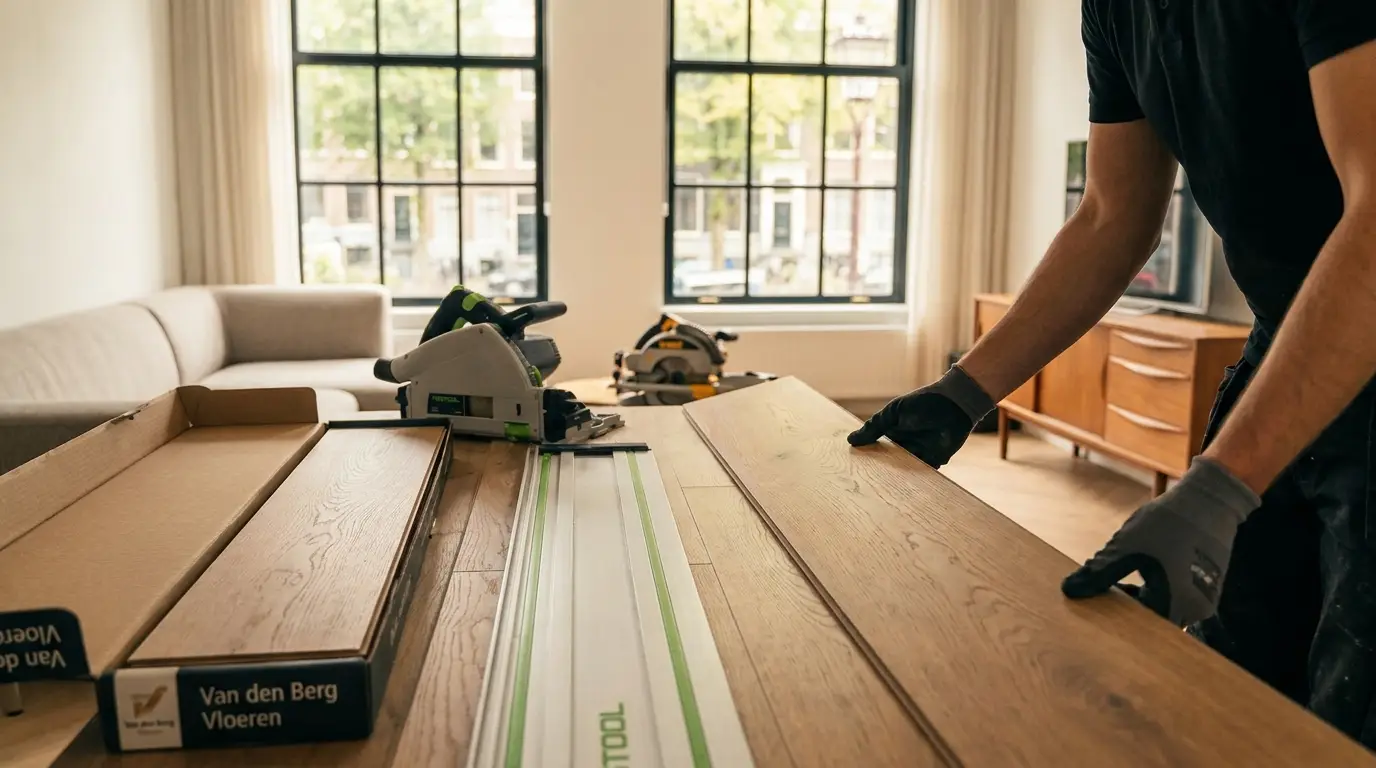
Cost of coating or treating a floor: everything you need to know
Coating or treating a floor gives concrete, cement, or other subfloors a durable, easy-to-clean finish. The cost depends heavily on the type of coating (epoxy, PU, water-based), the surface area, and the condition of the existing floor. In this overview, you'll find current prices per m², labor costs, and everything that determines the final price.
In this article
- ›What does floor coating cost on average?
- ›Prices by type of coating
- ›Material and labor cost breakdown
- ›Hiring a contractor vs. doing it yourself
- ›How does the process work step by step?
- ›Money-saving tips for floor coating
- ›Frequently asked questions
Need a contractor for this?
Describe your job and get quotes from contractors near you.
average price
€1,800
average for epoxy coating ~30 m²
average hourly rate
€45
contractor hourly rate (€35–55/hour)
turnaround time
1–3 days
depending on type and surface area
€ Average price by type
| Type of floor coating | Range | Average price |
|---|---|---|
| Water-based floor coatingLight protection, easy to apply yourself, limited lifespan | €500 – €900 | €700avg.incl. labor |
| Epoxy floor coating (most popular)Durable, wear-resistant, suitable for garages, basements, and workspaces | €800 – €1,800 | €1,300avg.incl. labor |
| Epoxy coating with quartz sand or color flakesDecorative and slip-resistant; popular in showrooms and commercial spaces | €1,200 – €2,500 | €1,850avg.incl. labor |
| PU (polyurethane) poured floorSeamless, UV-stable, suitable for living rooms and bedrooms | €1,800 – €3,000 | €2,400avg.incl. installation |
| Microcement or designer coatingSleek concrete-look finish with high aesthetic value | €2,500 – €4,500 | €3,500avg.incl. labor |
Prices include materials and labor for an average space of about 30 m²; for larger areas, the cost per m² goes down. Based on Google price research.
Material and labor costs
Floor coating contractor (carpenter/finisher) hourly rate averages €35–55/hour. Prices for two-component systems (epoxy, PU) rise slightly each year due to raw material costs.
Hiring a contractor vs. doing it yourself
| Job | Do it yourself | Via a contractor | Savings doing it yourself |
|---|---|---|---|
| Applying water-based floor coatingSimple protective layer applied with a roller on a clean, degreased concrete floor | DoableReady-made DIY kits available at home improvement stores; no mixing required | €150–€350 materials | up to €500 saved |
| Applying epoxy floor coatingTwo-component system with a precise mixing ratio and limited working time | With experienceThe wrong mixing ratio or too low a temperature causes blistering and delamination | €400–€700 materials | up to €900 saved |
| Preparing the subfloor (sanding, leveling, degreasing)Mechanical sanding or grinding, filling cracks with repair mortar, and applying primer | With experienceWithout opened pores and a dry subfloor, no coating will bond properly | €100–€250 materials + sander rental (± €80/day) | up to €400 saved |
| Applying a PU poured floorSeamless polyurethane finish poured and leveled in a single pass | Not recommendedRequires professional leveling technique, temperature control, and specialized tools | €600–€1,200 materials | No recommended savings |
| Applying microcement or designer coatingThin-layer concrete-look system built up in multiple coats and sealed | Not recommendedStains, cracks, and color differences can't be fixed without removing the entire layer | €800–€1,500 materials | No recommended savings |
With floor coating, subfloor preparation determines at least 70% of whether the coating lasts for decades or comes loose within a year. A contractor has a moisture meter (moisture content must be below 3–4%), a sander or grinder to open the pores, and knowledge of the right mixing ratio and application temperature for two-component systems. For epoxy and PU systems, professional application is therefore strongly recommended. Only a simple water-based coating on a clean, dry subfloor is realistically doable for most DIYers, provided the floor is thoroughly cleared and degreased first.
The full process step by step
Inspection and moisture measurement
The contractor checks the concrete floor for cracks, oil stains, efflorescence, and differences in level. With a moisture meter, they check whether the moisture content is below the allowed threshold: for epoxy, usually no more than 3–4%. If the floor is too damp, a moisture-blocking primer or another solution is discussed first.
30–60 min
Mechanical subfloor preparation
The floor is sanded, ground, or sandblasted to remove the top layer and open the pores so the primer can bond optimally. Cracks and pits are filled with quick-drying repair mortar. This is the most time-consuming step and the one that matters most for the final result.
4–8 hours (day 1)
Applying primer and letting it cure
The contractor applies a thin coat of primer that soaks deep into the subfloor and creates a mechanical bond between the concrete and the coating. The primer must cure completely before the next coat is applied: recoating too early is one of the most common mistakes.
1–2 hours to apply + 4–8 hours drying time
Applying the base coat
The coating is mixed to the manufacturer's exact ratio and applied in a single pass with a roller, squeegee, or pouring scoop. With epoxy containing quartz sand or color flakes, the decorative elements are broadcast right after pouring. Working time is limited: at higher temperatures, the material sets faster.
2–4 hours (day 2)
Applying the finish coat or topcoat
Once the base coat has cured, a clear or colored topcoat follows to protect the floor against wear, UV exposure, and chemicals. Sometimes multiple finish coats are applied for extra depth or slip resistance.
1–3 hours
Curing, final inspection, and handover
The contractor checks the adhesion, finish, and color uniformity. After 24 hours, the floor can take light foot traffic. The floor can only bear full loads from wheeled equipment after 5–7 days. The contractor provides written maintenance instructions.
24–72 hours drying time
6 smart money-saving tips
Frequently asked questions
What does floor coating cost on average?
On average, you pay €25–€60/m² for epoxy and €60–€95/m² for PU coating. For a 30 m² space, the total price including labor comes to €800–€2,850.
How long does coating a floor take?
Applying one or two coats of epoxy usually takes 1–2 workdays. Including preparation and drying time, the floor can bear full loads after 2–3 days.
Do I need a permit to coat my floor?
No, floor coating is a surface treatment and isn't work that requires a permit in the Netherlands.
Can I coat a floor myself?
You can apply a simple water-based coating yourself. Epoxy or PU requires a contractor's skill because of the critical mixing ratio and working time. Mistakes quickly lead to blistering or delamination.
How long does a floor coating last?
A professionally applied epoxy coating lasts 10–15 years with normal use. PU poured floors are even more durable: with good maintenance, you'll get 15–20 years without retreatment.
What does subfloor preparation cost?
Sanding, cleaning, and filling cracks costs an average of €150–€400 extra. With poor subfloors (cracks, oil stains, crumbling concrete), this can rise to €500 or more.
Related jobs
Ready to have your floor professionally coated or treated?
Describe your job and get quotes from verified floor contractors near you.
Within 24 hours
response from a contractor
Verified
all contractors checked
Competitive price
compare quotes