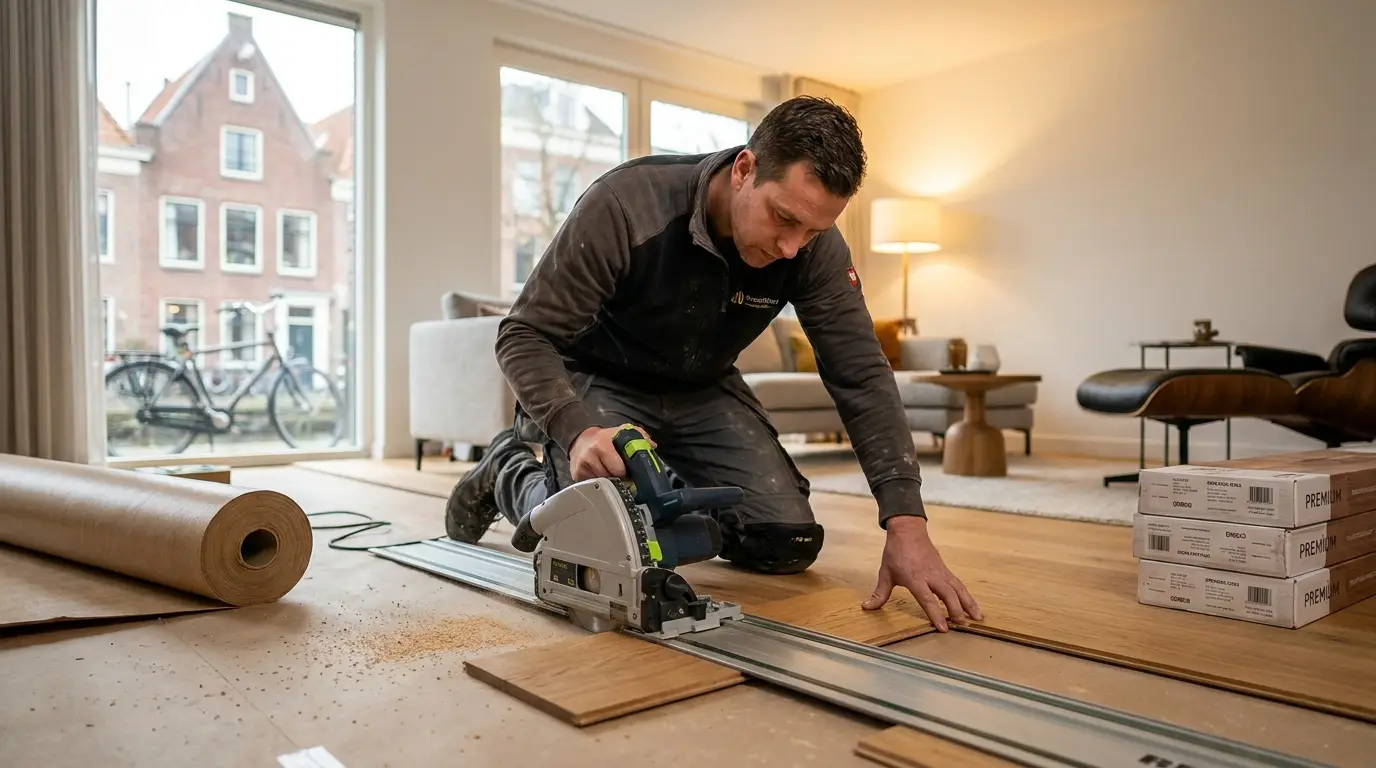
Cost of installing or replacing carpet and flooring: everything you need to know
Installing or replacing carpet and flooring is one of the most requested flooring jobs in the Netherlands: it's done quickly and comes in many types and price ranges. The total price depends on the material (carpet, vinyl, sisal), the floor area, the subfloor, and whether the old flooring has to be removed first. For an average living room or bedroom of 20–30 m², expect €400 to €1,500 all-in, including material and labor.
In this article
- ›What does installing flooring cost on average?
- ›Price overview by type of flooring
- ›Material and labor cost breakdown
- ›Hiring a contractor vs. doing it yourself
- ›How does flooring installation work?
- ›Money-saving tips for flooring
- ›Frequently asked questions
Need a contractor for this?
Describe your job and get quotes from contractors near you.
average price
€850
for a room of approx. 25 m²
average hourly rate
€40
flooring installer (€25–55/hour)
turnaround time
1–2 days
depending on area and type
€ Average price by type
| Type of flooring | Range | Average price |
|---|---|---|
| Budget carpet, loose-laidneedle felt or low-cost bouclé, suitable for a bedroom or kids' room | €250 – €600 | €420avg.incl. installation |
| Standard carpet, stretched or glued (most popular)polypropylene or polyester, 6–10 mm thick, for living rooms and bedrooms | €550 – €1,300 | €850avg.incl. installation |
| Vinyl flooring (PVC roll or tiles)water-resistant, suitable for a kitchen, hallway, or bathroom | €400 – €1,100 | €700avg.incl. installation |
| Premium wool or designer carpethigh-pile wool or designer fabric, extra comfort and insulation | €1,100 – €2,800 | €1,900avg.incl. installation |
| Stair carpet (per staircase)including clips or nails, approx. 13–16 steps | €400 – €1,000 | €650avg.incl. installation |
Prices are all-in for a room of approx. 25 m², including material, carpet pad, installation, and removal of the old floor; excluding any leveling of the subfloor. Based on Google price research.
Material and labor costs
Flooring installer hourly rate on average €25–€55/hour. Per m², €10–€20 is usually charged, depending on the type of flooring and the complexity of the room.
Hiring a contractor vs. doing it yourself
| Job | Do it yourself | Via a contractor | Savings doing it yourself |
|---|---|---|---|
| Installing carpet tiles or loose-laid carpetRectangular room without many obstacles or cutouts | DoableMeasuring, cutting, and laying tiles is easy with a utility knife and a ruler; mistakes are simple to fix | €200–€500 material costs | up to €400 |
| Installing a vinyl or PVC roll in a kitchen or hallwayOne piece of vinyl without seams, rectangular room | DoableMeasuring and cutting precisely is the biggest challenge; with a good hook knife and a template, it's doable | €300–€700 material costs | up to €350 |
| Installing stretched carpet with a stretcher and tack stripsLiving room or bedroom with a stretched finish | With experienceRequires a rentable carpet stretcher (knee kicker or power stretcher) and knowledge of tack strip placement; mistakes lead to wrinkles or uneven tension | €400–€900 all-in with a contractor | up to €300 |
| Installing carpet on stairsStair treads with cutouts, nosings, and balusters | With experienceEach step gets a separate piece; wrong cuts or poor fastening lead to dangerous loose edges and corners that wear quickly | €400–€1,000 with a contractor | up to €200 |
| Removing glued vinyl or carpet and repairing the subfloorFully clearing adhesive residue from concrete or plywood | Not recommendedStubborn adhesive residue requires sanders or special solvents; an unclean subfloor damages the new floor within a few months | €75–€200 with a contractor (25 m²) | No recommended savings |
For simple jobs like carpet tiles or a piece of loose-laid vinyl in a rectangular room, doing it yourself is a real option: you save €200–€400 in labor costs and the margin for error is small. Once stretched carpet with tack strips and a stretcher, vinyl with seams in damp rooms, or stair carpet comes into play, a contractor who installs flooring is strongly recommended. Poorly stretched carpet wrinkles within a few months; badly sealed vinyl seams in a kitchen or bathroom lead to moisture damage to the subfloor. A contractor has the right tools (carpet stretcher, seam weight, notching tool) and knows the specific requirements for each type of material. There are no legal certification requirements for flooring, but for VvE apartments, noise requirements in the deed of division may determine the minimum type of carpet pad needed.
The full process step by step
Measuring, choosing, and ordering material
The contractor or you measure the room precisely: length, width, alcoves, threshold areas, and protruding corners. 10% cutting waste is added on top of the net area. The chosen carpet or vinyl is ordered; popular colors and grades can take 5–10 business days to deliver, so planning ahead is important.
30–60 min measuring + 1–7 days delivery
Clearing the room and moving furniture
All furniture is taken out of the room or pushed against the wall. Doors that rubbed on the old floor are checked against the height of the new finish. Radiators and fixed elements are temporarily detached if needed. The emptier the room, the faster and cheaper the contractor can work.
30–90 min
Removing and disposing of old flooring
The existing flooring is pulled up, rolled up, and hauled away. With stretched carpet, the tack strips along the walls are removed or checked for reuse. Glued carpet or vinyl requires extra work: adhesive residue is scraped off until the bare subfloor is completely clear.
1–4 hours (25 m²)
Checking and preparing the subfloor
The contractor inspects the bare floor for flatness, moisture, and loose elements. Small irregularities are fixed with filler; larger height differences require self-leveling compound (with 12–24 hours of drying time). Wooden subfloors are checked for loose boards, protruding nails, and sagging spots: everything is secured before the new flooring goes down.
1–8 hours incl. drying time
Installing the carpet pad or underlayment
A carpet pad (for carpet) or flat underlayment (for vinyl) is rolled out and cut to size. With stretched carpet, wooden tack strips are nailed along all walls about 10 mm from the baseboard. The carpet pad provides walking comfort, thermal insulation, and sound dampening: a step that's often skipped by people doing it themselves but has a big impact on lifespan.
30–90 min
Laying, stretching, and finishing the flooring
The carpet or vinyl is rolled out, roughly cut to size, and then fitted precisely. Stretched carpet is pulled tight over the tack strips with a knee kicker or power stretcher and tucked in along the walls. Vinyl is laid flat or glued, and seams are sealed watertight with a seam weight or welding strip. Finally, cover baseboards or threshold profiles are installed.
3–6 hours (25 m²)
Inspection, handover, and removal of construction waste
The contractor checks the floor for wrinkles, loose seams, unevenness at threshold transitions, and the fit behind baseboards. You inspect the work together. Leftover material, old flooring, and packaging are taken away. The floor can be walked on right away; with glued installations, a waiting time of a few hours sometimes applies.
30–60 min
6 smart money-saving tips
Frequently asked questions
What does installing flooring cost on average?
On average €15–€45 per m² all-in, including material, underlayment, and labor costs. For 25 m², expect €400–€1,500. Installation alone costs €10–€25 per m².
How long does replacing flooring take?
A contractor installs 20–40 m² per day. A 25 m² room is done in 1 workday. If the old floor has to be removed or the subfloor leveled, expect 1–2 extra days.
Do I need a permit?
No, you don't need a permit for flooring in an existing home. In an apartment with a VvE (the homeowners association of an apartment building), noise rules may apply; check the deed of division.
Can I install flooring myself?
Loose-laid carpet and carpet tiles are doable if you're handy. You save €10–€25 per m² in labor costs. Stretched or glued carpet requires skill and special equipment.
What is the cheapest type of flooring?
Needle felt and budget polypropylene carpet are the cheapest options, starting at €4–€8 per m² for the material. All-in (including installation and carpet pad), expect €15–€25 per m² for budget options.
What does a flooring installer charge per hour?
A flooring installer's hourly rate is on average between €25 and €55 per hour. Per m², they usually charge €10–€15 for installing carpet and €12–€20 for vinyl or more complex work.
Related jobs
Ready to have your flooring installed or replaced?
Describe your job and receive quotes from verified flooring contractors near you.
Within 24 hours
response from a contractor
Verified
all contractors checked
Competitive price
compare quotes