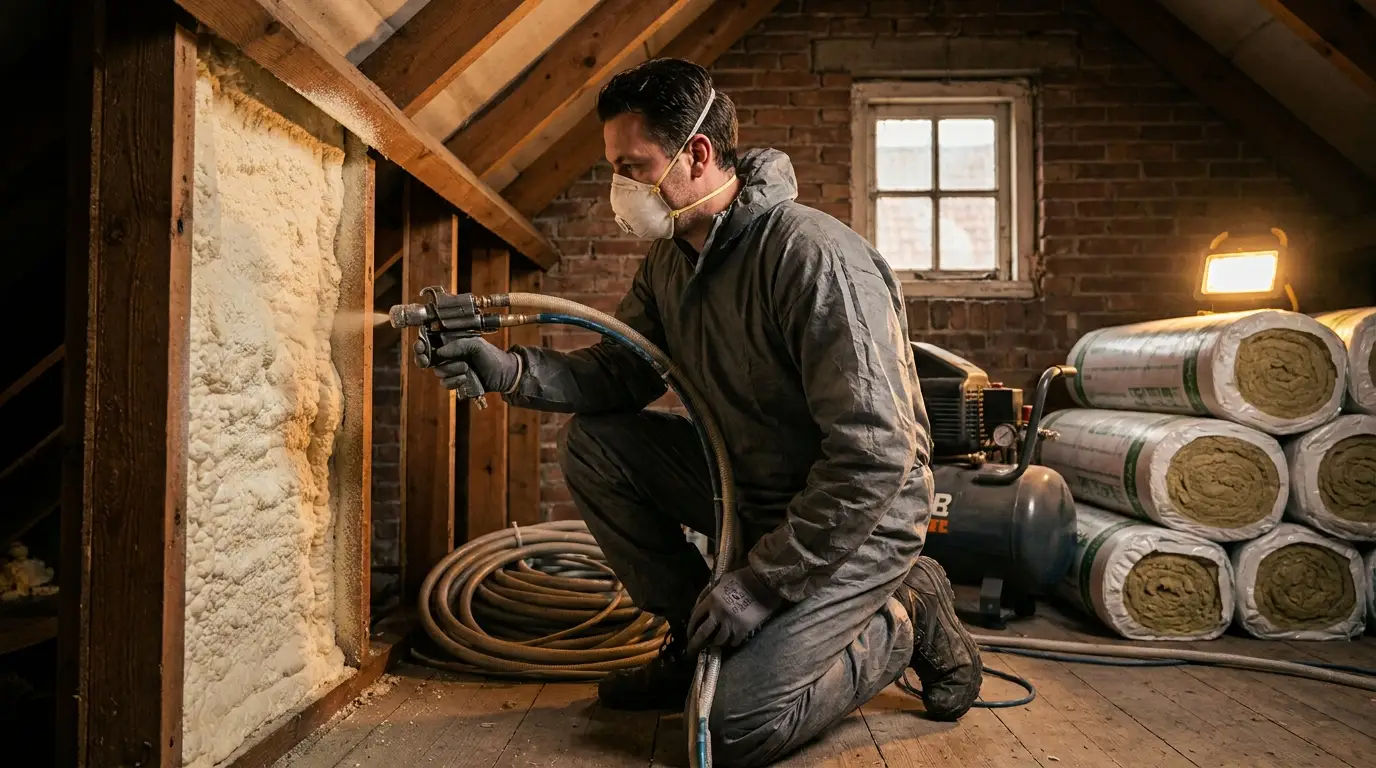
Cost of crawl space floor insulation: everything you need to know
Insulating the floor from the crawl space is one of the most cost-effective energy-saving measures for homes with a wooden ground floor. The cost depends on the size of the crawl space, the insulation method you choose (fiberglass, EPS beads, or spray foam), and how accessible the space is. With the right approach, you can easily save 10–15% on your heating costs.
In this article
- ›What does crawl space floor insulation cost?
- ›Cost by insulation method
- ›Material and labor costs
- ›Hire a contractor or do it yourself?
- ›How does the insulation process work?
- ›Save on crawl space floor insulation
- ›Frequently asked questions
Need a contractor for this?
Describe your job and get quotes from contractors near you.
average price
€1,800
average price for a row house including material and labor
average hourly rate
€45
contractor hourly rate (€38–55/hour)
turnaround time
1–2 days
depending on surface area and accessibility
€ Average price by type
| Crawl space insulation method | Range | Average price |
|---|---|---|
| Fiberglass or mineral wool battsBatts fitted between the floor joists, simple and affordable | €900 – €1,800 | €1,350avg.incl. installation |
| Blown-in EPS beads (most popular)Blown-in polystyrene beads, quick to install and moisture-resistant | €1,400 – €2,600 | €2,000avg.incl. installation |
| PUR spray foamSprayed polyurethane foam, high Rd value and airtight | €1,800 – €3,500 | €2,650avg.incl. installation |
| Ground insulation sheeting (crawl space blanket)Insulating sheeting on the ground, limits moisture and cold air | €700 – €1,400 | €1,050avg.incl. installation |
| Combination: ground insulation + floor insulationComplete package for maximum results in one job | €2,200 – €4,500 | €3,350avg.incl. installation |
Prices include material and labor for an average 60 m² row house; larger areas or hard-to-reach crawl spaces increase the cost. Based on Google price research.
Material and labor costs
Insulation contractor hourly rate averages €38–55/hour. Rates vary by region and the complexity of the crawl space.
Hiring a contractor vs. doing it yourself
| Job | Do it yourself | Via a contractor | Savings doing it yourself |
|---|---|---|---|
| Laying ground insulation sheetingRolling out insulation sheeting and fastening it with overlaps on the crawl space ground | DoableNo special tools needed, but you do need coveralls, knee pads, and a dust mask to work in the confined space | €150–350 | up to €300 |
| Installing fiberglass batts between floor joistsWedging or fastening insulation batts to the underside of the wooden ground floor | With experiencePhysically demanding in a low crawl space; fiberglass fibers irritate skin and airways: an FFP2 mask and disposable coveralls are required protection | €900–1,800 | up to €500 |
| Blowing in EPS beadsBlowing polystyrene beads into the cavity under the floor with professional blowing equipment | Not recommendedRequires a rented blowing compressor and precision when sealing gaps; incomplete filling isn't visible and causes a thermal bridging problem that's hard to correct afterward | €1,400–2,600 | No recommended savings |
| Applying PUR spray foamSpraying polyurethane foam on the underside of the floor for an airtight seal | Not recommendedPUR foam contains isocyanates that can cause serious respiratory damage if misused; application requires BRL 2309 certification and professional respiratory protection | €1,800–3,500 | No legal savings possible |
| Checking ventilation and airtightnessChecking that crawl space ventilation works properly after insulating to prevent condensation and wood rot | With experienceToo little ventilation after insulating is the most common mistake; a moisture meter and basic knowledge of ventilation rules are needed for a proper assessment | €50–200 | up to €150 |
For crawl space floor insulation, there's a clear dividing line: laying ground insulation sheeting is very doable for a handy DIYer, provided you wear protective clothing and the crawl space is dry and accessible. Installing fiberglass batts is feasible with the necessary precautions, but it takes perseverance because of the physically demanding working position. Blown-in EPS and PUR spray foam, however, are always a job for a contractor. With blown-in EPS, professional equipment is essential for uniform filling; improper application is barely detectable afterward without a thermographic inspection. With PUR spray foam, there's also a legal requirement: the product may only be applied by a company with a valid BRL 2309 certification. Beyond the safety issue, the ISDE subsidy can only be applied for if a certified insulation company did the work and issued a completion certificate: doing it yourself means missing out on the subsidy.
The full process step by step
Crawl space inspection and moisture measurement
The insulation contractor crawls into the space and assesses the height, the moisture level of the air and the joists, the condition of any existing insulation, and the presence of mold or wood rot. A moisture meter determines whether the crawl space is dry enough to start right away or needs remediation first.
30–60 min
Measurement and choice of material
The floor area is measured precisely. Based on the clearance in the crawl space, the joist spacing, and the desired result (Rd value), the contractor chooses the insulation method. With limited height, blown-in EPS is preferred over fiberglass batts.
15–30 min
Cleaning and preparing the crawl space
Rubble, loose debris, and old insulation remnants are removed. Cracks or holes in the crawl space wall are sealed to eliminate drafts. If needed, damaged joist sections are repaired or the job is postponed until wood rot repair is complete.
1–2 hours
Installing the insulation material
With fiberglass, batts are cut to size and firmly wedged or nailed between the joist ends. With blown-in EPS, the space under the floor is filled through drill holes or existing openings until the entire cavity is sealed. With spray foam, the PUR is sprayed layer by layer onto the underside of the floor to the desired thickness.
3–8 hours
Installing the vapor barrier and sealing seams
A vapor-permeable sheeting is rolled out over the crawl space ground with at least 30 cm of overlap along the walls and upturned edges. All seams are taped. With spray foam, the foam itself acts as the vapor seal; a separate barrier isn't always needed then.
1–2 hours
Checking ventilation and closing up
The contractor checks that crawl space hatches and vents are configured correctly. Too much ventilation undermines the insulation value; too little causes condensation. If needed, grilles are adjusted or replaced with adjustable vent grilles.
30–45 min
Final inspection and completion certificate
Once finished, the contractor goes through the entire crawl space once more to spot thermal bridges, uncovered areas, or loose seams. You receive a completion certificate stating the material used and the Rd value achieved: both are needed for the ISDE subsidy application with RVO.nl.
30–60 min
6 smart money-saving tips
Frequently asked questions
What does crawl space floor insulation cost on average?
On average €1,800 for a row house with about 60 m² of floor area. The range runs from €900 for simple fiberglass batts to €4,500 for a complete combination package in a detached house.
How many m² of crawl space does an average row house have?
A row house has an average of 50 to 70 m² of ground floor. The crawl space covers the same area. Detached houses usually have 80 to 120 m².
How long does it take to insulate a crawl space?
An average crawl space of 60 m² is done in 1 day with blown-in EPS or spray foam. Installing fiberglass batts sometimes takes 1 to 2 days because it's done by hand.
Do I need a permit?
No. Crawl space floor insulation doesn't require a permit. You don't need to apply for a building permit with the municipality.
How much can I save on my energy bill?
On average 10 to 15% on heating costs, which comes to €150 to €300 per year with average gas use. That means the investment pays for itself in 5 to 10 years, partly depending on any ISDE (a Dutch government subsidy for sustainable energy) subsidy.
What's the difference between floor insulation and ground insulation in the crawl space?
With floor insulation, the underside of the wooden ground floor is insulated (between the joists). With ground insulation, the floor of the crawl space itself is covered with sheeting or insulation panels to keep out moisture and cold air. The two methods complement each other.
Related jobs
Ready to have your crawl space insulated?
Describe your job and get quotes from verified insulation contractors near you.
Within 24 hours
response from a contractor
Verified
all contractors checked
Competitive price
compare quotes