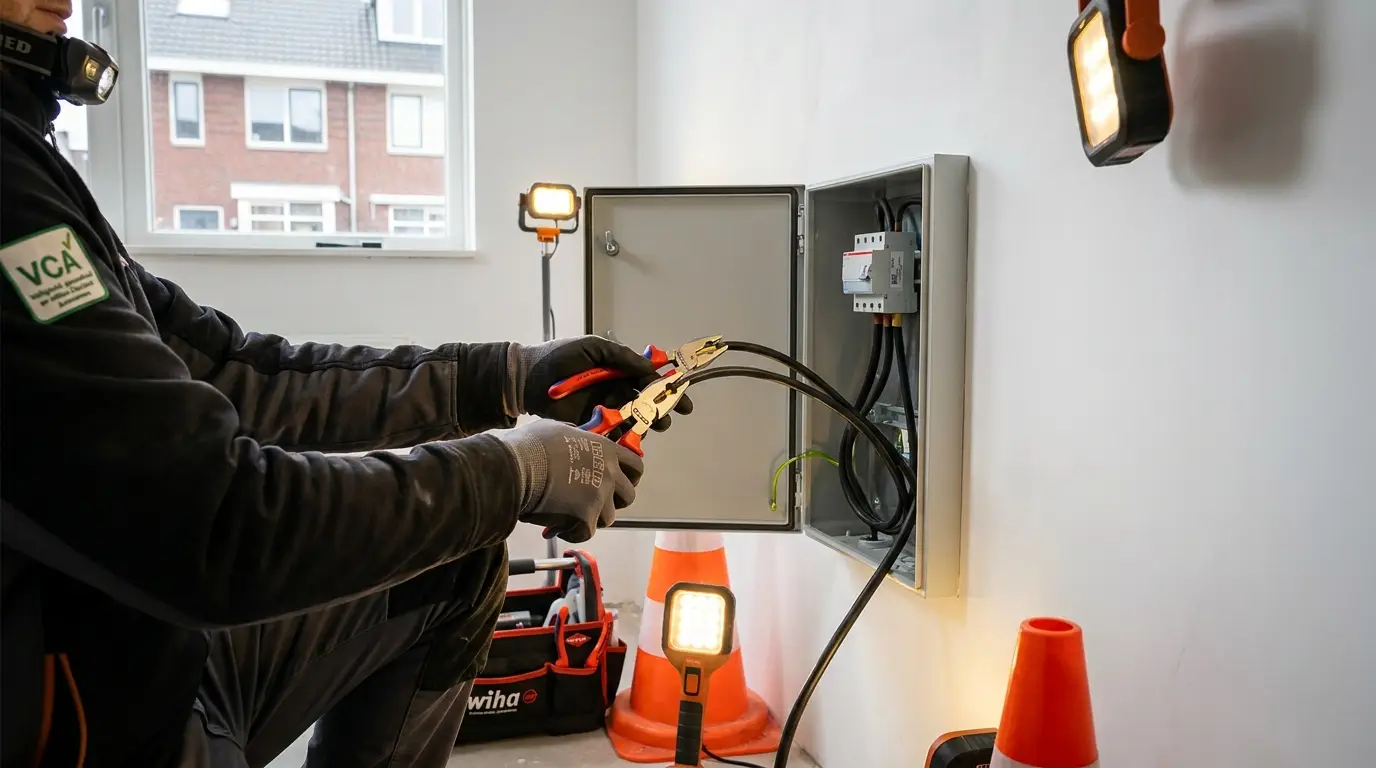
Cost of installing a power cable, underground cable, or outdoor cable: everything you need to know
Installing a power cable, underground cable, or outdoor cable is skilled work that requires the right cable, sufficient burial depth, and a correct connection to the breaker panel. The cost depends on the cable length, the type of project (yard, shed, or garage), and whether digging is needed. A licensed electrician makes sure the installation is safe and passes inspection.
In this article
- ›How much does it cost to install an underground or outdoor cable?
- ›Prices by type of cable project
- ›Material and labor cost breakdown
- ›Hire a contractor or do it yourself?
- ›How does the installation work step by step?
- ›Money-saving tips for installing an underground cable
- ›Frequently asked questions
Need a contractor for this?
Describe your job and get quotes from contractors near you.
average price
€1,100
including cable, digging, and connection
average hourly rate
€65
contractor hourly rate (€55–75/hour)
turnaround time
1–2 days
depending on length and digging
€ Average price by type
| Cable project type | Range | Average price |
|---|---|---|
| Outdoor cable for garden lightingshort cable route up to 15 m, surface-laid or shallowly buried | €250 – €600 | €420avg.incl. installation |
| Underground cable to a garden shed or shed (most popular)cable route 15–30 m, fully buried at 60 cm depth, including RCD circuit | €600 – €1,200 | €900avg.incl. installation |
| Power cable to a garage or carportcable route 20–40 m, connection for lights and outlets | €800 – €1,600 | €1,200avg.incl. installation |
| Underground cable for an EV charger or solar panelsheavy cabling (3x6–16mm²), dedicated circuit, possibly trenches in paving | €1,200 – €2,500 | €1,800avg.incl. installation |
| Outdoor cable over a longer distance (>40 m)extended cable route, multiple connection points or a junction box | €1,500 – €3,000 | €2,200avg.incl. installation |
Prices include YMVK-as cable, digging on your own property, and connection to the breaker panel; they exclude repaving or relaying tiles by a paving contractor. Based on Google price research.
Material and labor costs
Electrician hourly rate averages €55–€75/hour. The connection in the meter cabinet requires an NEN 1010-certified electrician.
Hiring a contractor vs. doing it yourself
| Job | Do it yourself | Via a contractor | Savings doing it yourself |
|---|---|---|---|
| Digging and backfilling cable trenchesDigging by hand to 60–80 cm depth, covering the cable with sand, and restoring the trench | DoableTechnically simple digging with no electrical risk: saves €8–€25 per linear meter | €0 (your own labor) | up to €400 |
| Burying YMVK-as cable and installing protective conduitLaying the underground cable at the correct depth and shielding it at vulnerable points | With experienceCorrect burial depth (60/80 cm), protective conduit at crossings, and the right cable choice are critical for safety and inspection | €50–€150 materials | up to €200 |
| Connection to the breaker panelAdding a new RCD circuit and connecting the power cable to the panel | Not recommendedLegally required to be done by an NEN 1010-certified electrician; without inspection, fire insurance coverage lapses in case of damage | €120–€300 (electrician) | No legal savings possible |
| Mounting a waterproof junction box in the yard or shedInstalling an IP67-rated junction box or splice cover at the end point | With experienceWaterproofing (at least IP44 outdoors, IP67 with ground contact) and proper cable strain relief are essential: incorrect mounting leads to short circuits | €30–€120 materials | up to €100 |
| Filing a KLIC notificationFree notification to the Kadaster to request underground utility lines along the digging route | DoableLegally required for digging deeper than 40 cm; you can easily arrange it yourself via klic.kadaster.nl within 10 minutes | €0 (free) | No recommended savings |
When installing a power cable or underground cable, there's a clear line: anything involving the breaker panel is legally reserved for an electrician certified under NEN 1010 (the Dutch standard for electrical installations). Without this certificate, the installation can't pass inspection, your fire insurer may refuse to pay out for damage, and problems arise during a home inspection or sale. A handy DIYer can do the digging, laying the YMVK-as cable in the trench, and mounting a waterproof junction box at the end point, provided the correct cable gauge and burial depth are maintained. Don't forget the free KLIC notification (a mandatory Dutch dig notice to locate underground lines): for digging deeper than 40 cm, you're legally required to check beforehand whether gas, water, or power lines run along the route.
The full process step by step
On-site inspection and cable route planning
The electrician visits the site to map the route from the breaker panel to the end point (garden shed, garage, EV charger location). They measure the distance, identify obstacles such as roots, paving, and existing lines, and note where a protective conduit or extra burial depth is needed.
30–60 min
Determining cable gauge and materials list
Based on the planned power use at the end point, the right YMVK-as cable gauge is chosen: 3x1.5mm² for garden lighting, 3x2.5mm² for outlets and tools, and 3x6mm² or heavier for an EV charger or solar panel system. The electrician also determines the required RCD circuit.
15–30 min
Verifying the KLIC notification and digging the trench
Before any digging starts, the electrician checks that a valid KLIC notification is available. Then the cable trenches are dug to at least 60 cm deep under lawns and garden paths, and 80 cm under paved surfaces or driveways. Loose paving is carefully lifted and set aside for relaying.
2–6 hours (depending on cable length)
Laying and protecting the underground cable
The YMVK-as cable is laid in the trench. At vulnerable points (under paths, crossings with other lines, or where the cable exits the building), a protective conduit or cable tray is installed. Then the cable is covered with a layer of coarse sand and the trench is backfilled.
1–3 hours
Mounting a waterproof junction box or connection point
At the end point (shed, garage, or in the yard), the electrician installs a waterproof junction box (IP44 or higher), outlets, or the feed for an EV charger. The cable ends are professionally finished with splice connectors or strain relief.
30–60 min
Connecting to the breaker panel and testing
The power cable is connected to a new RCD circuit in the meter cabinet. The electrician measures the insulation resistance and checks that the RCD works correctly. Once approved, an inspection statement (NEN 1010) is drawn up.
1–2 hours
Closing trenches, restoring paving, and handover
The cable trenches are permanently closed, tiles or pavers are relaid, and the work area is cleaned up. The electrician explains the available circuit capacity and advises on possible future expansions, such as extra outlets or a second cable route.
30–90 min
6 smart money-saving tips
Frequently asked questions
How much does it cost to install an underground cable on average?
On average, you'll pay €600 to €1,200 for an underground cable to a garden shed or shed, including materials, digging, and connection to the breaker panel. For heavier uses such as an EV charger or workshop, the price goes up to €1,500–€2,500.
How long does it take to install an outdoor cable?
A simple cable route of up to 20 meters is usually done in a day. Longer routes or projects where paving has to be removed and relaid take 1 to 2 days.
Do I need a permit for an underground cable?
No permit is needed on your own property. However, the connection to the breaker panel must be done by a certified electrician. For a cable across public land, you need permission from the municipality.
Can I install an underground cable myself?
You can dig the cable trenches yourself to save money. The electrical connection in the meter cabinet (where the electricity meter and the breaker panel are) and installing a residual current device (RCD), the European counterpart of a GFCI, must be done by a licensed electrician.
Which cable do I need outdoors?
Always use YMVK-as underground cable for outdoor applications. For lighting, 3x1.5mm² is enough; for outlets and appliances, choose 3x2.5mm². For an EV charger or solar panel system, you need 3x6mm² or heavier.
How much does digging cost per linear meter?
Digging a cable trench by hand costs about €8 to €25 per linear meter, depending on the soil conditions and whether paving needs to be removed and relaid.
Related jobs
Ready to have your underground or outdoor cable installed?
Describe your job and get quotes from verified electricians near you.
Within 24 hours
response from a contractor
Verified
all contractors checked
Competitive price
compare quotes