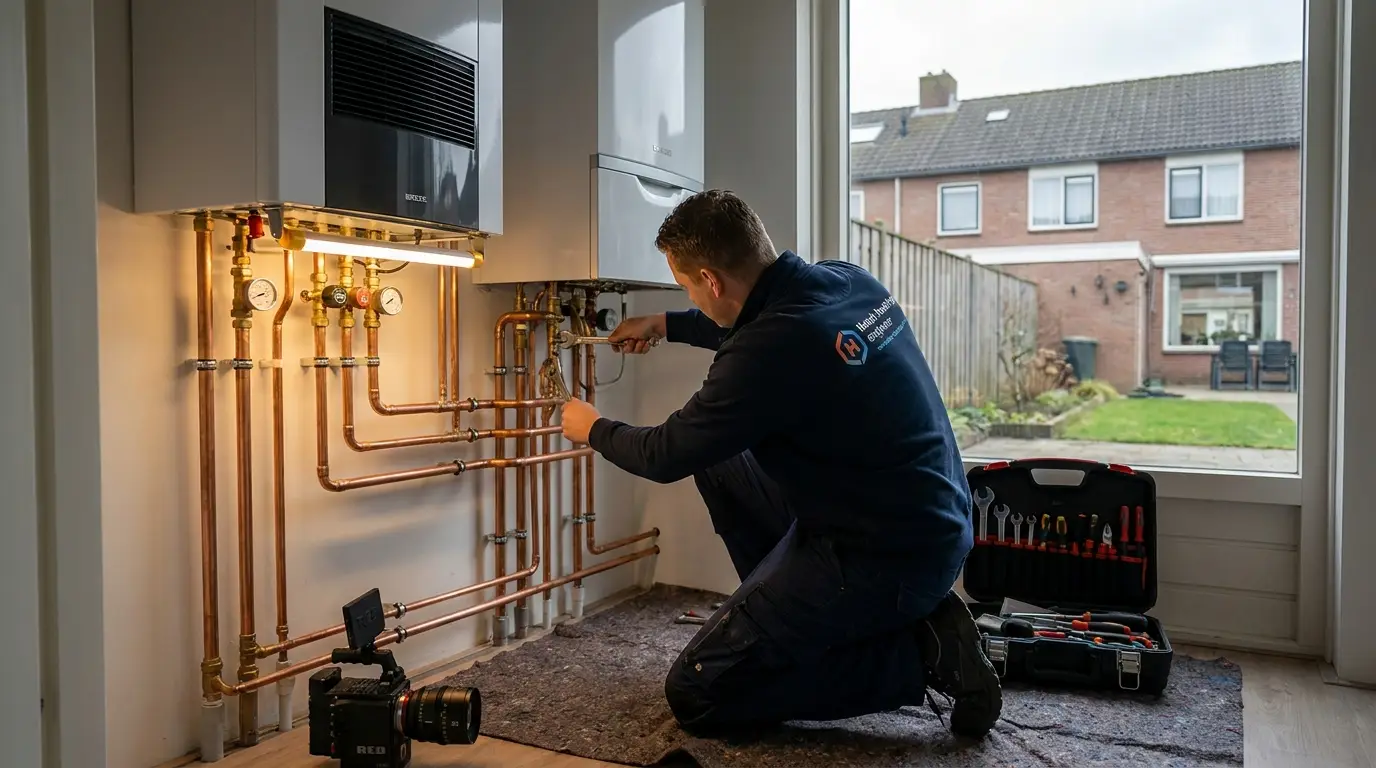
Cost of installing or replacing a heat pump: everything you need to know
A heat pump replaces or supports your central heating boiler and heats your home more sustainably. The total cost depends heavily on the type of heat pump, its capacity, and the condition of your existing system. On average, you'll pay between €6,000 and €25,000 including installation.
In this article
- ›What does installing or replacing a heat pump cost?
- ›Cost by type of heat pump
- ›Material and labor cost breakdown
- ›Hire a contractor or do it yourself?
- ›How does installation work, step by step?
- ›ISDE subsidy and financing
- ›Money-saving tips for your heat pump
Need a contractor for this?
Describe your job and get quotes from contractors near you.
average price
€9,500
hybrid heat pump incl. installation
average hourly rate
€65
heat pump installer hourly rate (€55–75/hour)
turnaround time
1–3 days
depending on type and situation
€ Average price by type
| Heat pump type | Range | Average price |
|---|---|---|
| Hybrid heat pump (most popular)combines a heat pump with your existing boiler, suitable for poorly insulated homes | €6,200 – €8,300 | €7,200avg.incl. installation |
| Air-to-water heat pumpextracts heat from outdoor air, popular alternative to all-electric | €5,000 – €9,000 | €7,000avg.incl. installation |
| All-electric heat pumpfully electric, no gas connection needed, requires a well-insulated home | €12,000 – €25,000 | €17,000avg.incl. installation |
| Ground source heat pump (geothermal)highest efficiency, ground drilling needed, higher installation costs | €20,000 – €30,000 | €24,000avg.incl. installation |
| Air-to-air heat pumpblows heated air into the room, suitable as a supplement, no central heating | €2,000 – €5,000 | €3,200avg.incl. installation |
Prices include standard installation and exclude any changes to the pipework, breaker panel, or radiant floor heating; always request an itemized quote. Based on Google price research.
Material and labor costs
Heat pump installer hourly rate averages €55–75/hour. Drilling for a ground source heat pump is usually charged per meter (€40–70/m).
Hiring a contractor vs. doing it yourself
| Job | Do it yourself | Via a contractor | Savings doing it yourself |
|---|---|---|---|
| Connecting the heat pump to the central heating systemconnecting the outdoor and indoor units to the pipework, buffer tank, and circulation pump | Not recommendedLegally reserved for a licensed heat pump installer; required for the ISDE subsidy | €1,500–3,000 | No legal savings possible |
| Electrical upgrades for the heat pumpinstalling a heavy-duty circuit (16–25A), checking wiring and grounding | Not recommendedLegally requires a licensed electrician; a grounding fault creates a fire or shock risk | €200–800 | No legal savings possible |
| Installing larger radiatorsreplacing existing radiators with low-temperature models for better heat output | With experienceRemoving and rehanging a radiator is doable, but hydraulic balancing requires expertise | €300–2,000 | up to €600 |
| Applying for the ISDE subsidy via RVOfilling out and submitting the subsidy form after completion | DoableThe RVO portal is open to private individuals; you have 24 months after installation | Free | €1,700–3,700 subsidy |
| Setting the heating curve and setpointsconfiguring supply temperature, buffer temperature, and heating curve on the display or app | Not recommendedToo high a supply temperature drastically lowers the COP and raises your energy bill | Part of installation | No recommended savings |
Installing or replacing a heat pump is legally reserved for licensed heat pump installers: both the connection to the central heating system and the electrical connection may only be done by certified contractors. On top of that, the ISDE subsidy is only paid out if a licensed company did the installation and provides a certificate for it. A DIYer lacks this certification and therefore loses the right to thousands of euros in subsidy. Where you as a resident can do something yourself: replacing individual radiators is doable with some hands-on experience, although hydraulic balancing of the whole system requires expertise. You can submit the ISDE application through the RVO portal yourself after completion; this is even recommended, so you stay in control of the progress of your subsidy application.
The full process step by step
Home assessment and system choice
The heat pump installer assesses your home's insulation value, the existing heating system (radiators or radiant floor heating), the capacity of the meter cabinet (where the electricity meter and the breaker panel are), and the available outdoor space for the unit. Based on this, the right type and capacity of heat pump is determined, a step that directly affects efficiency and payback period.
1–2 hours
Quote and ISDE subsidy check
You receive an itemized quote with the appliance, all necessary materials, and labor. The heat pump installer checks whether the chosen model is on the ISDE subsidy list and calculates the expected subsidy amount based on type and capacity.
1–3 business days
Placing the heat pump units
The outdoor unit is placed on a stable base (stand or brackets) with enough distance from walls and neighbors. The indoor unit or hydraulic module is mounted in the meter cabinet or utility room. For a ground source heat pump, the ground drilling is done at this stage by a specialized drilling crew.
4–8 hours
Connecting to pipework and electrical
The refrigerant line (for split systems), the central heating pipes, and the buffer tank are connected. The electrician installs a heavy-duty circuit in the breaker panel and connects the heat pump. Existing pipes and radiators are updated for low-temperature heating if needed.
2–4 hours
Tuning and optimizing
The heat pump installer programs the heating curve based on the outdoor temperature curve, sets the setpoints for room and hot water temperature, and checks the hydraulic balance. The heat pump is then put into operation and tested in different modes.
1–3 hours
Handover and user instructions
You get an explanation of how to operate the display or app, how to adjust the nighttime temperature, and when to report a malfunction. The heat pump installer hands over the warranty documents and the installation certificate you need for the ISDE subsidy application.
30–60 min
Applying for the ISDE subsidy via RVO
After completion, you submit the subsidy application through RVO's online portal with the installation certificate and the invoice. The subsidy is usually paid into your account within a few weeks.
30 min
6 smart money-saving tips
Frequently asked questions
What does installing a heat pump cost on average?
On average, you'll pay €7,200 for a hybrid heat pump including installation. The range runs from €2,000 for an air-to-air heat pump to well over €30,000 for a ground source heat pump.
How long does it take to install or replace a heat pump?
A hybrid or air-to-water heat pump is usually installed in 1 to 2 days. A ground source heat pump with ground drilling can take 2 to 3 days, depending on soil conditions.
Do I need a permit for a heat pump?
In most cases, no permit is required for an air-to-water or hybrid heat pump. For a ground source heat pump, you must notify the municipality, and sometimes a permit is also required for the drilling.
Can I install a heat pump myself?
No. Connecting a heat pump to the central heating system and the electrical system requires a licensed heat pump installer. A certified technician is also required for the ISDE (a Dutch government subsidy for sustainable energy) application.
How much subsidy can I get for a heat pump?
Through the ISDE subsidy, you receive between €1,700 and €3,700, depending on the type of heat pump and its capacity. You apply via the website of RVO (the Netherlands Enterprise Agency) after installation.
When does a heat pump pay for itself?
A hybrid heat pump pays for itself in 7 to 10 years on average through lower energy costs. An all-electric heat pump has a longer payback period of 10 to 15 years, but saves more as gas prices rise.
Related jobs
Ready to have your heat pump installed or replaced?
Describe your job and receive quotes from verified heat pump installers near you.
Within 24 hours
response from a contractor
Verified
all contractors checked
Competitive price
compare quotes