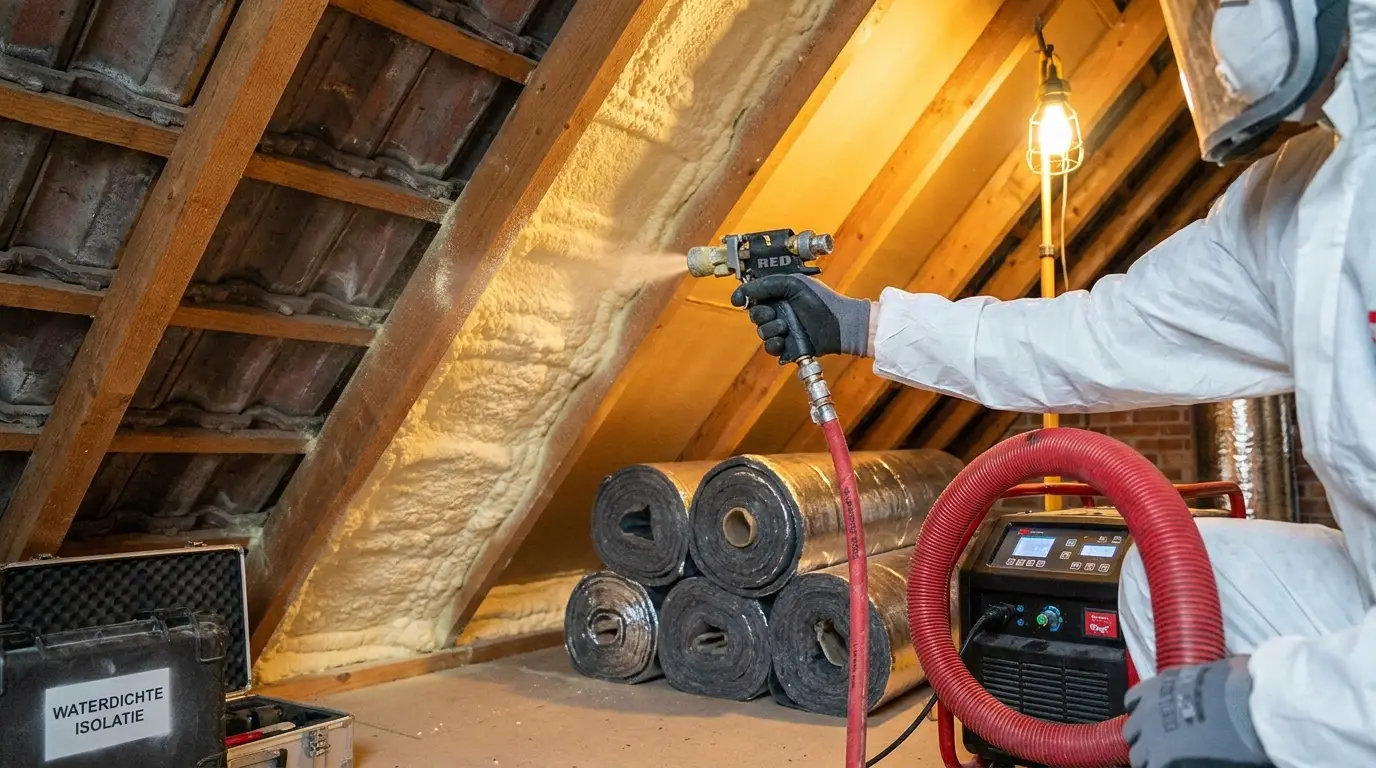
Cost of waterproof insulation: everything you need to know
Waterproof insulation protects your home against moisture and water penetration damage by combining insulation material with a vapor barrier or waterproofing layer applied to the basement, crawl space, or roof. The cost depends on the surface to be treated, the area, and the chosen system: from bitumen sheeting to PUR spray foam. Well-executed waterproof insulation extends the life of your home and lowers your heating consumption.
In this article
- ›What does waterproof insulation cost?
- ›Prices by type (crawl space, basement, roof)
- ›Material and labor costs
- ›Hire a contractor or do it yourself?
- ›Step-by-step process
- ›Money-saving tips
- ›Frequently asked questions
Need a contractor for this?
Describe your job and get quotes from contractors near you.
average price
€2,800
average project (material + labor)
average hourly rate
€48
contractor hourly rate (€42–58/hour)
turnaround time
1–3 days
depending on area and system
€ Average price by type
| Type of waterproof insulation | Range | Average price |
|---|---|---|
| Waterproof insulation of a crawl space€35–€45 per m², sheeting + insulation boards on the floor | €800 – €2,000 | €1,300avg.incl. installation |
| Waterproof insulation of a basement wall (most popular)€40–€60 per m², bitumen coating or PUR spray foam | €1,500 – €4,000 | €2,500avg.incl. installation |
| Waterproof insulation of a flat roof€50–€80 per m², warm roof with EPDM or bitumen | €2,500 – €6,500 | €4,000avg.incl. installation |
| Waterproof insulation of a basement slab (floor)€30–€50 per m², PE sheeting + insulation layer | €1,000 – €3,000 | €1,800avg.incl. installation |
| Complete basement waterproofed + insulatedBasement walls, floor, and ceiling combined | €3,500 – €8,000 | €5,500avg.incl. installation |
Prices include material and labor; the area and the chosen system (sheeting, coating, or spray foam) determine the final cost. Based on Google price research.
Material and labor costs
Insulation contractor/roofer hourly rate averages €42–58/hour. Prices may be higher for hard-to-reach locations or if old insulation must first be removed or mold treated.
Hiring a contractor vs. doing it yourself
| Job | Do it yourself | Via a contractor | Savings doing it yourself |
|---|---|---|---|
| Laying PE sheeting in a crawl spaceRolling out and overlapping vapor barrier sheeting on the crawl space floor | DoableNo special equipment needed. Make sure of at least 15 cm overlap and run the sheeting 20 cm up the walls for a proper seal. | €200–€500 materials | up to €700 |
| Installing XPS insulation boards on a basement wallGluing or anchoring moisture-resistant XPS boards to concrete or masonry basement walls | With experienceRequires knowledge of sealing details at corners, penetrations, and the connection to the floor slab. Sloppy work leads to thermal bridges. | €500–€1,200 materials | up to €900 |
| Applying bitumen coating or PUR spray foamSpraying liquid waterproofing coating or PUR spray foam on the basement, crawl space walls, or roof | Not recommendedRequires professional spray equipment, protective gear, and expertise in mixing ratio and layer thickness. Thin or uneven layers aren't waterproof. | €1,500–€4,000 contractor | No recommended savings |
| EPDM or bitumen membrane on a flat roofApplying a waterproof roofing layer with thermal insulation on a flat roof | Not recommendedWorking at height with an open flame (torch) or adhesive, complex seals at roof edges, penetrations, and skylight openings. A mistake means leaks and high repair costs. | €2,500–€6,500 contractor | No recommended savings |
| Waterproofing a basement floor (PE sheeting + screed)Laying PE sheeting under a new screed to prevent rising ground moisture | With experienceLaying the sheeting yourself is doable, but pouring and leveling the screed on top requires tools and experience to prevent settling. | €800–€2,000 contractor | up to €500 |
With waterproof insulation, there's a clear dividing line: simple sheeting in the crawl space or on a basement floor is a realistic job for a motivated do-it-yourselfer with some construction experience. Once PUR spray foam, bitumen coating, or a flat roof is involved, a certified insulation contractor or roofer is essential. PUR spraying requires not only expensive professional equipment but also knowledge of the correct mixing ratio and layer buildup: applied too thin, the material immediately loses its waterproofing effect. On a flat roof, the contractor works with an open flame (for bitumen) or chemical adhesives (for EPDM), which come with safety protocols. A faulty seal at a roof edge or penetration leads to internal leak damage that sometimes only becomes visible years later, and then costs many times what the original job would have cost. Always ask whether the contractor is BRL 4702 certified (a Dutch quality certification for roofing work) for roof renovations, and whether they offer a warranty on watertightness.
The full process step by step
Inspection and analysis of the cause of moisture penetration
The insulation contractor inspects the space to be treated (crawl space, basement walls, or flat roof) for active damp spots, salt efflorescence, cracks, and damaged existing insulation or roofing. They determine whether there's rising damp, groundwater pressure, condensation, or a leaking membrane, because the cause determines which waterproof system is the right solution.
1–2 hours
Preparing and remediating the surface
Loose concrete, old coating, or damaged roofing is removed. Cracks and seams are pre-repaired with pressure-resistant waterproof sealing mortar or hydraulic cement. Any salt efflorescence is treated so the new coating can adhere. On a flat roof, damaged roofing is stripped down to the supporting structure.
2–4 hours
Applying primer for adhesion
On basement walls and roofs, a suitable primer is applied to the cleaned and dry surface. The primer ensures optimal adhesion of the waterproofing layer and seals finely porous surfaces so the coating isn't absorbed. Drying time is usually two to four hours.
1–2 hours (excl. drying time)
Applying the waterproofing layer
Depending on the chosen system, the waterproofing layer is now applied: liquid bitumen coating (brushed or sprayed), PUR spray foam at the correct thickness, or EPDM membrane with glued seams and roof edge connections. Penetrations, corners, and connections get extra attention with sleeves or seam filler.
3–6 hours
Installing the insulation material
Once the waterproofing layer has cured, XPS or EPS insulation boards are attached to basement walls and floors. In the crawl space, vapor barrier PE sheeting is rolled out with at least 15 cm overlap and run 20 cm up the walls. On the flat roof, insulation panels are installed as part of the 'warm roof' system.
2–5 hours
Finishing, sealing seams, and final inspection
All seams, penetrations (gas, water, electrical cables), roof edge connections, and corners are carefully finished with sealant or sleeves. The contractor visually checks complete watertightness and clears away construction waste. If in doubt, they perform a water test by temporarily placing water on the roof.
1–2 hours
6 smart money-saving tips
Frequently asked questions
What does waterproof insulation cost on average?
On average €2,800 for a standard project. The range runs from €1,000 for a small crawl space to €8,000 for a complete basement with walls, floor, and ceiling. The system and the area determine the final price.
How long does it take to apply waterproof insulation?
Crawl space insulation is usually done in one day. Treating a basement wall takes one to two days. A complete flat roof or basement can take two to three days, depending on the drying time of the coating.
Do I need a permit for waterproof insulation?
For interior applications (crawl space, basement walls), you don't need a building permit. For work on the exterior of the roof or facade, that may be different. Check with your municipality or the Omgevingsloket (the Dutch online permit portal) beforehand.
Can I apply waterproof insulation myself?
Simple PE sheeting in the crawl space is something you can install yourself. PUR spray foam, bitumen coating, or EPDM systems, however, require specialized equipment and know-how. Mistakes lead to moisture problems that cost more to fix than the original job.
Which insulation material is best suited for waterproof insulation?
XPS boards (extruded polystyrene) are highly moisture-resistant and suitable for basement walls and floors. PUR spray foam seals seams completely and is ideal for irregular surfaces. Bitumen membrane is the standard for flat roofs.
Is there a subsidy available for waterproof insulation?
Waterproof insulation on its own doesn't always qualify for ISDE (a Dutch government subsidy for sustainable energy). If the measure is part of a broader insulation approach (floor or roof insulation), you may be able to apply for a subsidy through RVO.nl (the Netherlands Enterprise Agency). Ask your insulation contractor about the options beforehand.
Related jobs
Ready to have your home insulated and waterproofed?
Describe your job and receive quotes from verified insulation contractors near you.
Within 24 hours
response from a contractor
Verified
all contractors checked
Competitive price
compare quotes