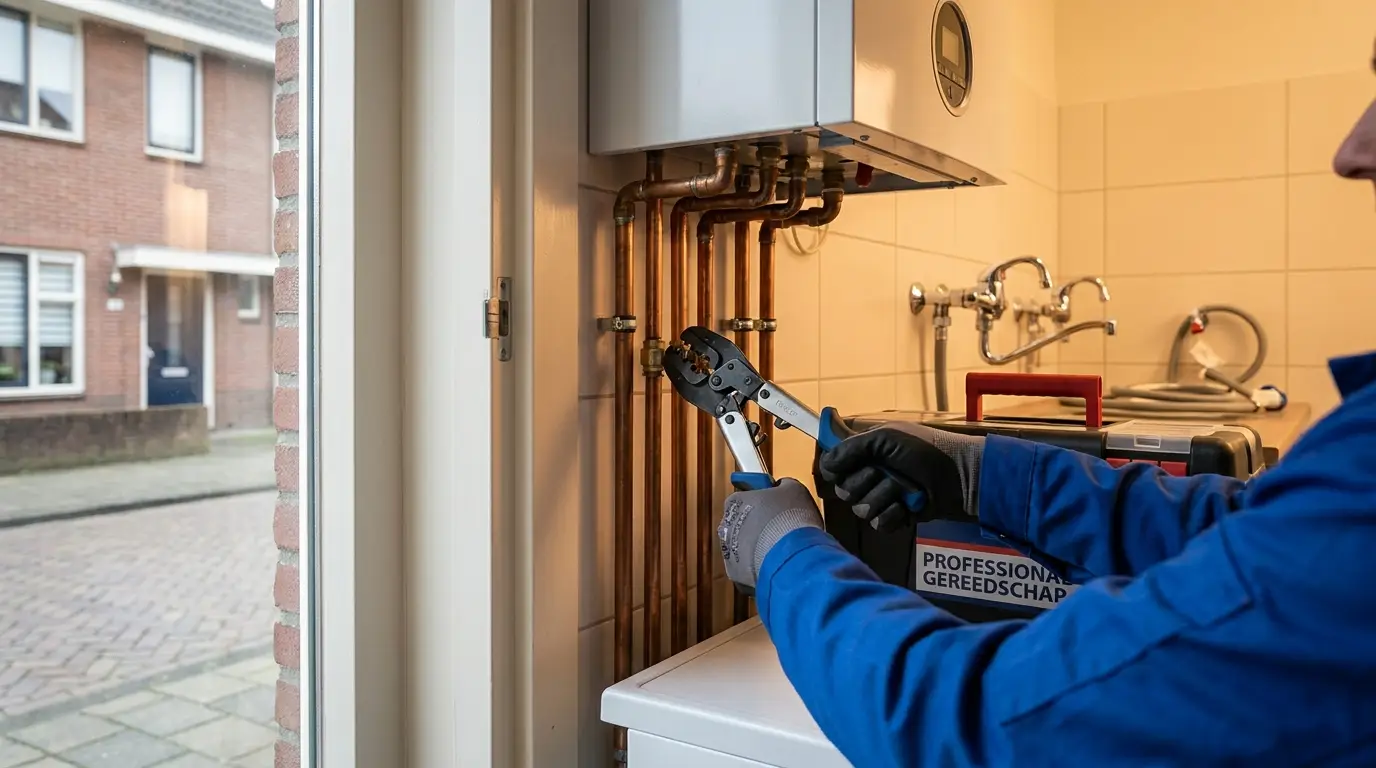
Cost of moving or replacing water pipes and sewer lines: everything you need to know
Old or leaking water pipes and sewer lines can cause major damage if you don't move or replace them in time. The total cost depends on the type of pipe, the length of the run, accessibility, and whether demolition work is needed. In this overview, you'll find current prices for water pipes and sewer lines in Dutch homes, including labor and materials.
In this article
- ›What does moving water pipes or sewer lines cost?
- ›Prices by type of piping
- ›Material and labor costs
- ›Hire a plumber or do it yourself?
- ›How does the replacement process work?
- ›Money-saving tips for piping
- ›Frequently asked questions
Need a contractor for this?
Describe your job and get quotes from contractors near you.
average price
€2,800
partial replacement incl. installation
average hourly rate
€65
plumber hourly rate (€55–80/hour)
turnaround time
1–5 days
depending on scope and demolition work
€ Average price by type
| Type of piping | Range | Average price |
|---|---|---|
| Partial water pipe replacementReplacing 1 circuit or section; e.g., bathroom or kitchen | €600 – €1,500 | €1,000avg.incl. installation |
| Complete water pipe system, apartment (most popular)Complete pipe system up to approx. 80 m2; plastic or copper including labor | €1,500 – €3,500 | €2,500avg.incl. installation |
| Complete water pipe system, detached houseLonger run, multiple floors, and more meters of piping | €3,000 – €8,000 | €5,000avg.incl. installation |
| Moving or replacing sewer lines per meterIndoor sewer lines including material and labor, excl. demolition work | €40 – €80 | €60avg.incl. installation |
| Complete indoor sewer line replacementIncluding floor or wall demolition and repair; average row house | €3,500 – €8,000 | €5,500avg.incl. installation |
Prices include labor and standard materials; demolition work and repair of floors or walls are estimated separately. Based on Google price research.
Material and labor costs
Plumber hourly rate averages €55–80/hour. Prices exclude VAT; for private customers, the reduced 9% VAT rate applies to labor costs in homes older than 2 years.
Hiring a contractor vs. doing it yourself
| Job | Do it yourself | Via a contractor | Savings doing it yourself |
|---|---|---|---|
| Replace a fitting or short water pipe (< 1 m)For example, a flexible hose under the sink or a short coupling at the boiler | DoableEasy with the right wrench and sealing tape; temporarily shut off water pressure at the shutoff valve | €15–60 (material) | up to €150 |
| Replace lead pipesLead pipes in homes built before 1960; health risk from lead leaching | Not recommendedLead is dangerous if removed incorrectly; a licensed plumber is required for safe disposal and proper replacement | €600–1,400 (plumber) | No legal savings possible |
| Replace the complete water pipe systemMultiple circuits in kitchen, bathroom, and toilet; copper or PEX across multiple floors | Not recommendedPress fittings and pressure tests require expertise; faulty piping leads to hidden leaks and mold behind walls | €1,500–8,000 (plumber) | No recommended savings |
| Replace a small section of sewer pipe or a P-trapFor example, the P-trap under the kitchen sink or a short drain section in an accessible space | With experienceThreaded connections can be installed without soldering; mind the correct slope (at least 1:50) and use new rubber washers | €20–80 (material) | up to €180 |
| Replace complete indoor sewer linesSewer pipes through floors and walls, connection to municipal sewer, including demolition work | Not recommendedSlope, diameter, and venting must comply with the Bouwbesluit; connecting to the municipal sewer requires coordination with the municipality | €3,500–8,000 (plumber) | No recommended savings |
For water pipes, there's a clear line: simple connections under a sink or replacing a flexible supply hose can be done yourself with some technical skill, provided you can shut off the water supply at the shutoff valve. Once it involves several meters of piping, press fittings, or copper pipes that need to be soldered or pressed, a licensed plumber is essential: an incorrectly installed press fitting can leak unnoticed for weeks behind your wall tiles. For sewer lines, the distinction is similar. Replacing a P-trap or a short drain pipe is doable for a handy DIYer. But a complete sewer replacement, connecting to the municipal sewer, and work where floors or walls must be opened up are beyond the reach of the average DIYer. In addition, the Bouwbesluit (the Dutch building code) sets requirements for the slope, diameter, and venting of indoor sewer lines. A plumber bears the liability and provides a workmanship warranty on their work; with DIY work, the manufacturer's warranty on the materials used usually becomes void.
The full process step by step
Inspection and diagnosis
The plumber inspects the existing water pipes and sewer lines for corrosion, leaks, clogs, or incorrect slope. For sewer lines, a sewer camera is often used to map the condition of hard-to-reach pipes without immediate demolition. With lead pipes, the material is checked visually and, if needed, with a water sample.
1–2 hours
Quote and material planning
Based on the inspection, you'll receive an itemized quote: pipe length, type of material (PEX, copper, or PVC), required fittings, and a schedule. Demolition in floors or walls and the related repair work are estimated separately, so you see the full cost picture.
Same day or next business day
Shutting off water or drainage
The main water shutoff valve or the relevant section is closed and the remaining water in the pipes is drained. For sewer work, the drain is temporarily blocked to prevent wastewater backflow. Neighbors or other residents are informed about the water interruption.
15–30 minutes
Demolition and access to pipes
Where pipes run behind tiles, in the floor, or in walls, the necessary tiles or floor sections are removed. This demolition is done carefully and kept to a minimum to limit repair costs. The old pipes are removed and set aside for disposal.
2–8 hours (depending on scope)
Installing new pipes and sewer lines
The new water pipes are installed using press, solder, or compression fittings, depending on the material. PVC sewer pipes are laid at the correct slope (at least 1 cm per 50 cm) and connected. All joints, elbows, and transitions are cut to size and secured.
3–12 hours (depending on scope)
Pressure test and leak check
The new water pipe system is pressurized and tested for leaks for at least 30 minutes. All connection points are visually checked. For sewer lines, water is run through the system to verify drainage and slope before the floor or walls are closed up.
30–90 minutes
Repair work and completion
Opened floors and walls are repaired and cleaned up (tile repair is often done by a separate contractor). The plumber completes the job, shows you where the new pipes run and how the shutoff valves work, and hands over a written warranty statement.
30–60 minutes (excl. tile work)
6 smart money-saving tips
Frequently asked questions
What does replacing water pipes or sewer lines cost on average?
On average, you pay €2,800 for a partial replacement including labor and materials. The range runs from €600 for a small repair to €8,000 for a complete sewer line replacement in a detached house.
How long does moving water pipes or sewer lines take?
A partial replacement takes 1 to 2 workdays. A complete replacement of the pipe system takes 3 to 5 days, depending on the amount of demolition work and the repair of floors or walls.
Do I need a permit?
Work inside your own home usually doesn't require a permit. If a connection to the municipal sewer is made or digging in the public road is needed, coordination with the municipality is required.
Can I replace water pipes or sewer lines myself?
Small jobs such as a short pipe or a drain can sometimes be done yourself. For larger runs, lead pipes, or sewer work, a licensed plumber is essential to prevent water damage, health risks, and loss of warranty.
What are lead pipes and should I have them replaced?
Lead pipes are found in homes built before 1960 and release lead into the drinking water, which is harmful to your health. Replacement is strongly recommended. The cost is on average between €600 and €1,400, depending on the amount of piping.
Which pipe material is best?
Plastic pipes (PEX or HDPE) are cheaper, more flexible, and low-maintenance. Copper pipes are more durable and antimicrobial, but cost more. PVC is always used for sewer lines. The plumber will advise you based on your situation.
Related jobs
Ready to have your water pipes or sewer lines moved or replaced professionally?
Describe your job and receive quotes from verified plumbers near you.
Within 24 hours
response from a contractor
Verified
all contractors checked
Competitive price
compare quotes