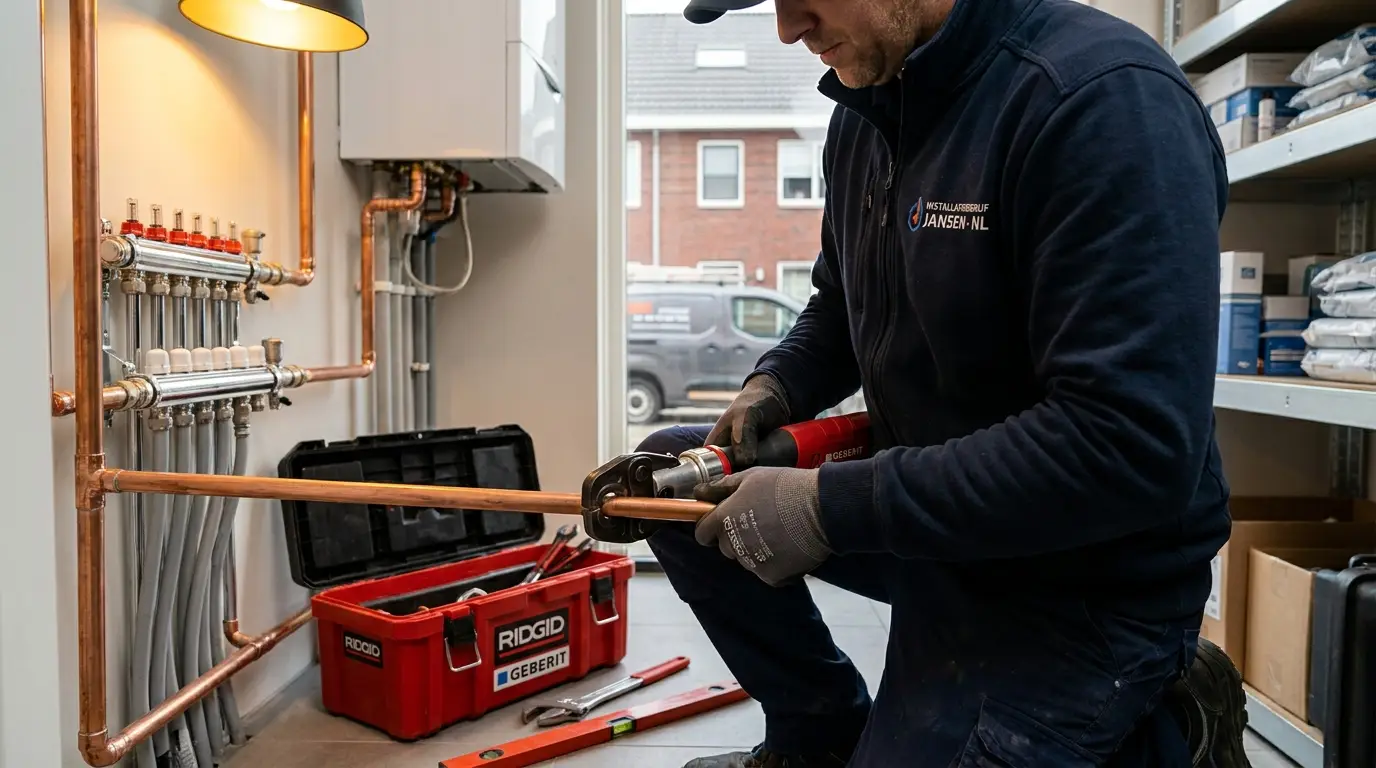
Cost of installing a water softener: everything you need to know
Hard water causes limescale buildup in pipes, on faucets, and in appliances such as the washing machine and dishwasher. A water softener solves this by removing calcium and magnesium ions from the water through ion exchange. The total installation cost depends on the type of system, its capacity, and how complex the connection to your existing plumbing is.
In this article
- ›Average cost of installing a water softener
- ›Prices by type of system
- ›Material and labor costs
- ›Hire a plumber or do it yourself?
- ›How does the installation work?
- ›Money-saving tips for installing a water softener
- ›Frequently asked questions
Need a contractor for this?
Describe your job and get quotes from contractors near you.
average price
€1,500
ion exchanger incl. installation
average hourly rate
€65
plumber hourly rate (€50–75/hour)
turnaround time
1–2 days
depending on plumbing and type
€ Average price by type
| Water softener type | Range | Average price |
|---|---|---|
| Magnetic systemClamps onto the pipe, no salt, no drain; reduces scale formation but doesn't remove ions | €50 – €400 | €200avg.incl. installation |
| Compact ion exchanger (most popular)Salt-based; true softening for 1–4 people, incl. installation by a plumber | €900 – €2,000 | €1,500avg.incl. installation |
| Ion exchanger for large householdsHigher capacity for 4+ people or high water use; dual resin tank possible | €1,800 – €3,000 | €2,300avg.incl. installation |
| CO2 water softener (salt-free)Works without salt or electricity; neutralizes limescale without adding sodium | €1,200 – €2,500 | €1,700avg.incl. installation |
| Professional duplex systemTwo resin tanks; uninterrupted 24/7 softening, suitable for large homes or businesses | €2,500 – €4,500 | €3,300avg.incl. installation |
Prices include standard installation by a plumber; extra plumbing or a pressure regulator is charged separately. Based on Google price research.
Material and labor costs
Plumber hourly rate averages €50–75/hour. Includes travel costs for smaller jobs.
Hiring a contractor vs. doing it yourself
| Job | Do it yourself | Via a contractor | Savings doing it yourself |
|---|---|---|---|
| Installing a magnetic systemClamp fitting directly on the cold water line; no drain, electrical, or salt required | DoableNo plumbing work or special tools needed; install with a screwdriver | €50–€300 | up to €100 |
| Installing a small inline softenerMounted on the cold water line under the countertop or by the meter cabinet; requires simple fittings | With experienceBasic knowledge of pipe fittings and pressure-tight work is required; risk of leaks if you're inexperienced | €250–€600 | up to €150 |
| Connecting an ion exchanger to the main water lineInstall the bypass kit, run a drain for regeneration water, check pressure adjustment | Not recommendedThe NEN 1006 standard requires a correct bypass and backflow preventer; the warranty is void if you install it yourself | €900–€2,000 | No recommended savings |
| Running the regeneration water drain lineDrain line to the sewer connection; an air gap is required to prevent backflow | Not recommendedAn incorrect drain without an air gap is prohibited under drinking water regulations | €50–€150 | No legal savings possible |
| Setup and commissioningProgram capacity for hardness and household size, fill salt, run a regeneration test | With experienceTechnically doable if you follow the manual, but a wrong setting wastes hundreds of euros' worth of salt per year | €0 (with your own unit) | up to €80 |
Connecting a water softener to the main water line isn't an ordinary do-it-yourself job. The bypass kit, the backflow preventer, and the regeneration water drain must comply with NEN 1006 (the Dutch drinking water standard). An incorrect installation can void the unit's warranty and, in the worst case, contaminate your drinking water with salty regeneration water. Correct setup also requires knowledge of the local water hardness (dH value) and your household's actual water use. Magnetic systems and small inline softeners under the countertop are doable for a do-it-yourselfer with basic plumbing experience: no bypass is needed and the connection is standard. In that case, always consider measuring the water pressure after installation: a drop of more than 0.5 bar points to an incorrect installation.
The full process step by step
Measure water hardness and choose the location
The plumber measures or checks the water hardness (dH value) using data from the drinking water company or an on-site test kit. They then determine the best installation spot: usually right after the main water shutoff valve, before the central heating boiler and the water heater, so all tap water gets softened.
15–30 min
Shut off the water and prepare the pipe
The main water shutoff valve is closed and the pipe is drained. A section of the cold water line is removed to make room for the bypass kit. The plumber checks that there's enough space for the unit and for future maintenance of the salt tank.
20–40 min
Install the bypass kit and backflow preventer
The bypass kit (3-way valve) is installed. This lets the softener be bypassed during maintenance without shutting off your water supply. In line with NEN 1006, a backflow preventer is also fitted to keep salty regeneration water from flowing back into the drinking water system.
30–60 min
Connect the softener and run the regeneration water drain
The unit is connected to the bypass kit via its inlet and outlet. A separate drain line for the regeneration water is then run to the nearest sewer connection. A required air gap prevents sewer gas or water from flowing back.
30–60 min
Set capacity for hardness and household size
The plumber programs the softener for the measured hardness value and estimated daily water use. This determines how often and how long the regeneration cycle runs. A wrong setting wastes salt or doesn't soften the water enough.
15–25 min
Fill salt, start up, and test the system
The salt tank is filled with the first load of regeneration tablets. The plumber starts the system, checks the water pressure before and after the softener (a difference of up to 0.5 bar is acceptable), and runs a manual regeneration test to confirm it works.
20–35 min
User instructions and handover
You'll get an explanation of refilling salt (how often depends on use), reading the display, and what to do in case of an alarm or power outage. The plumber hands over the warranty certificate and notes the settings for future maintenance.
10–20 min
6 smart money-saving tips
Frequently asked questions
How much does it cost to install a water softener on average?
On average €1,500 including the unit and installation. The range runs from €50 for a simple magnetic clamp system to €4,500 for a professional duplex system. An ion exchanger for an average household costs €900 to €2,000.
How long does it take to install a water softener?
A standard installation takes 2 to 4 hours. With extra plumbing or a complex connection, it can take a full workday.
Do I need a permit?
No, you don't need a permit. The installation does have to comply with NEN 1006 (the Dutch drinking water standard) and have a proper bypass. A licensed plumber installs it in line with this standard.
Can I install a water softener myself?
You can install a magnetic system or a small inline softener yourself. For an ion exchanger on the main water line, a licensed plumber is strongly recommended because of the pressure requirements and the correct bypass installation.
What are the annual maintenance costs?
Expect €80 to €200 per year for regeneration salt and an annual service visit. Salt use averages 5 to 10 kg per month, depending on household use and the hardness of the tap water in your region.
When does a water softener make sense in the Netherlands?
In regions with hard water (above 15 dH, e.g., Amsterdam, Utrecht, and Zeeland), a water softener is well worth considering. It extends the life of your pipes, central heating boiler, washing machine, and dishwasher, and reduces limescale residue on faucets and glass.
Related jobs
Ready to have a water softener installed?
Describe your job and get quotes from verified plumbers near you.
Within 24 hours
response from a contractor
Verified
all contractors checked
Competitive price
compare quotes